
Explore the critical mechanical firewalls—Type-C and Type-D distance pieces—that isolate explosive process gases, prevent crankcase detonations, and guarantee ultimate plant safety in heavy-duty compression.
Published by Extreme Engineering Authority | Technical Depth: Advanced | Est. Read Time: 17 mins
In petrochemical refineries, syngas facilities, and megawatt-scale green hydrogen plants, the handling of highly volatile, toxic, or explosive gases under immense pressure is a routine but highly hazardous necessity. Within these environments, the reciprocating compressor acts as the dynamic heart of the process loop. However, the fundamental kinematic nature of a reciprocating piston rod moving in and out of a high-pressure gas cylinder creates an inherent vulnerability: fugitive gas emissions. As premier heavy-duty compressor engineers at oxygen-compressor-machine.com, we know that preventing these emissions from migrating into the mechanical crankcase or the plant atmosphere is not an option—it is a strict safety mandate.
For EPC contractors, safety managers, and plant process engineers, relying merely on standard rod packing to contain 55-bar hydrogen or oxygen is an invitation to disaster. To achieve absolute environmental isolation and prevent catastrophic crankcase explosions, the compressor must be engineered with a highly specific structural architecture known as the API-618 Distance Piece. This comprehensive guide dissects the mechanics of gas migration, decodes the different API-618 distance piece classifications, and explains how active inert purging systems create an impenetrable mechanical firewall.
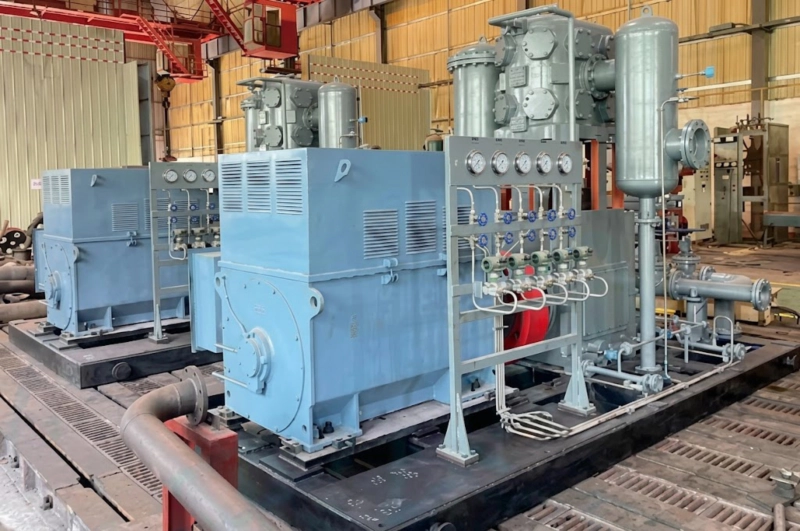
Figure 1: A heavy-duty symmetrically balanced API-618 compressor. Notice the elongated structural sections (distance pieces) separating the gas cylinders from the main central crankcase housing.
1. The Anatomy of a Gas Leak: The Crankcase Explosion Risk
To understand the vital necessity of the distance piece, we must first analyze how a standard reciprocating compressor operates. The piston is driven back and forth by a piston rod, which connects the high-pressure gas cylinder to the oil-lubricated mechanical crankcase via a crosshead. As the rod reciprocates hundreds of times per minute, it passes through a series of dynamic sealing rings known as the rod packing.
No dynamic mechanical seal is 100% perfect indefinitely. Over thousands of hours of operation, microscopic wear occurs on the PTFE packing rings. When compressing a molecule as impossibly small as hydrogen (H₂) at 55-bar, minute trace amounts of gas will inevitably bypass the primary sealing rings. In a standard, tightly coupled commercial compressor, this fugitive gas travels directly along the piston rod and enters the mechanical crankcase.
This creates a lethal scenario. The crankcase is filled with vaporized lubricating oil and ambient oxygen. If a combustible process gas (like hydrogen, methane, or syngas) accumulates in this confined space, it only takes a single microscopic spark—perhaps from a worn crosshead bearing or a static discharge—to ignite the mixture. The resulting crankcase explosion will violently blow the heavy cast-iron inspection doors off the machine, causing catastrophic damage and severe risk to plant personnel.
2. Decoding API-618 Classifications: The Mechanical Firewall
To entirely eliminate the risk of crankcase explosions and toxic gas release, the American Petroleum Institute (API) Standard 618 dictates strict architectural geometries to physically separate the cylinder from the crankcase. This separation chamber is the distance piece. For hazardous processes, EPCs must specify the correct type:
- Type A & B (Short Distance Pieces): Typically used for non-hazardous, non-toxic gases (like standard plant air or low-pressure nitrogen). They provide basic access to the rod packing but do not offer complete isolation. Not suitable for explosive or toxic refinery applications.
- Type C (Extra-Long Single Compartment): The gold standard for highly flammable or toxic gases. The critical engineering rule of a Type-C distance piece is that its physical length must strictly exceed the complete stroke length of the compressor. This geometric law mathematically guarantees that no specific part of the piston rod can ever enter both the oily crankcase wiper seals and the gas cylinder packing. Oil cannot migrate in, and gas cannot migrate out along the rod.
- Type D (Extra-Long Double Compartment): Utilized for the most extreme, highly toxic, or ultra-pure applications (such as lethal H₂S sour gas or breathing-grade pure oxygen). It features two distinct chambers separated by an intermediate partition packing. This allows for multi-stage gas purging, ensuring that any fugitive emission is trapped and neutralized long before it reaches the atmosphere or the crankcase.
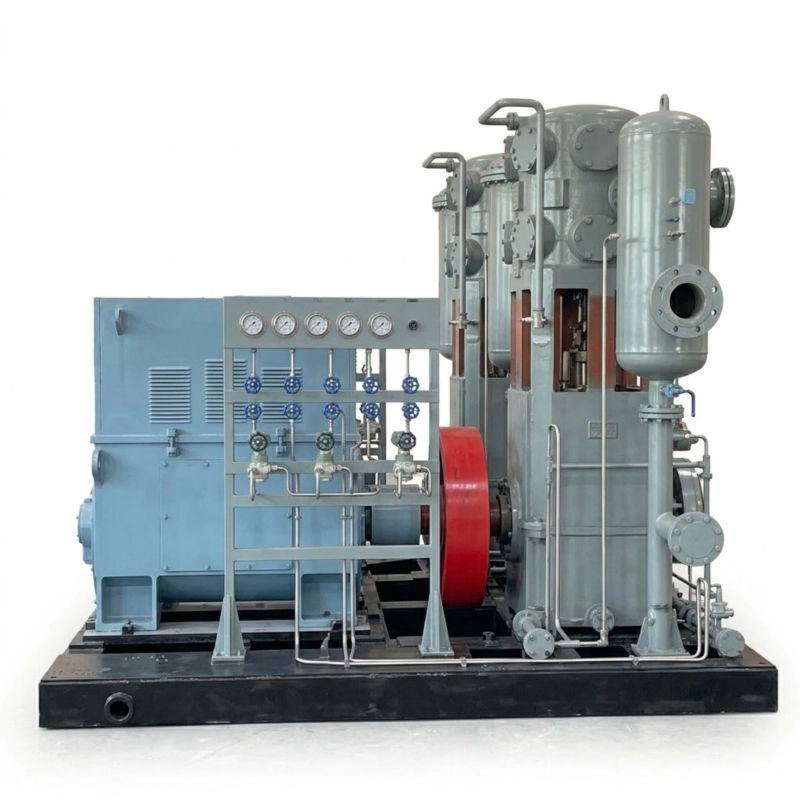
Figure 2: Precision-machined distance piece structures physically isolating the high-pressure gas cylinder (left) from the lubricated driving mechanics, ensuring zero cross-contamination.
Engineering Truth: The Stroke-Length Rule
“A distance piece only provides absolute isolation if it adheres to the stroke-length rule. If the compressor has a 300mm stroke, the distance piece compartment must be greater than 300mm. If it is shorter, the wetted rod acts as a microscopic conveyor belt, dragging crankcase oil into the cylinder, or toxic gas into the crankcase on every single rotation.”
3. Active Defense: Inert Gas Purging and Venting Systems
While the physical geometry of the distance piece stops the rod from acting as a conveyor belt, it does not stop pressurized gas from simply filling the void of the distance piece chamber. To actively manage these fugitive emissions, API-618 Type-C and Type-D architectures are equipped with highly sophisticated Purge and Vent Systems.
The distance piece is sealed with intermediate packing and connected to the plant’s closed flare system or safe-vent headers. To ensure absolute Ex-d (explosion-proof) safety, we inject an inert buffer gas—almost always Nitrogen (N₂)—into the intermediate packing chambers at a slightly higher pressure than atmospheric.
This continuous nitrogen purge creates a positive pressure differential barrier. If any process gas (like hydrogen) leaks past the primary high-pressure seals, it hits this nitrogen barrier. The inert nitrogen safely sweeps the explosive hydrogen molecules out through the vent lines to the plant flare, diluting it below its Lower Explosive Limit (LEL) instantly. This guarantees a 100% safe, leak-free, and inert operating perimeter around the entire machine, protecting personnel from asphyxiation or explosion.
4. Cross-Industry Synergies: Why the PET Industry Relies on API-618 Isolation
While the catastrophic risks of crankcase explosions and toxic gas leaks are unique to petrochemical refining and syngas processing, the strict engineering demand for absolute physical isolation between crankcase oil and compression gas spans far beyond the refinery fence line. The food packaging, pharmaceutical, and high-end medical device manufacturing industries face identical mechanical challenges regarding continuous-duty purity.
Consider the production of sterile pharmaceutical vials or pristine medical-grade IV containers. These advanced manufacturing facilities operate relentless pneumatic machinery that requires massive, instantaneous pulses of high-pressure, totally pure compressed air. Driving a modern, high-speed injection blow molding machine strictly demands up to 40-bar of Class 0, 100% oil-free air.

Figure 3: The exact same Type-C oil-free structural architecture designed to prevent refinery explosions is deployed globally to safeguard clean-room medical plastics and sensitive pneumatic processes from oil contamination.
If a standard compressor lacking a Type-C distance piece is used, crankcase oil will migrate along the rod, bypass the seals, and enter the pneumatic blow molding system. The heated oil embeds itself directly into the molten polymer. The entire production batch of medical-grade plastics becomes critically contaminated, failing FDA/CE quality control, resulting in massive financial write-offs. The design synergies are absolute: whether isolating explosive hydrogen from a crankcase or isolating crankcase oil from pure medical air, the API-618 distance piece is the only acceptable mechanical solution.
5. Rigorous Testing & FAT Validation
Designing an extra-long distance piece on a CAD screen is straightforward; manufacturing it to maintain absolute rigidity under 55-bar of dynamic reciprocating force is an elite engineering challenge. The elongation of the compressor frame introduces potential bending moments and vibration resonance.
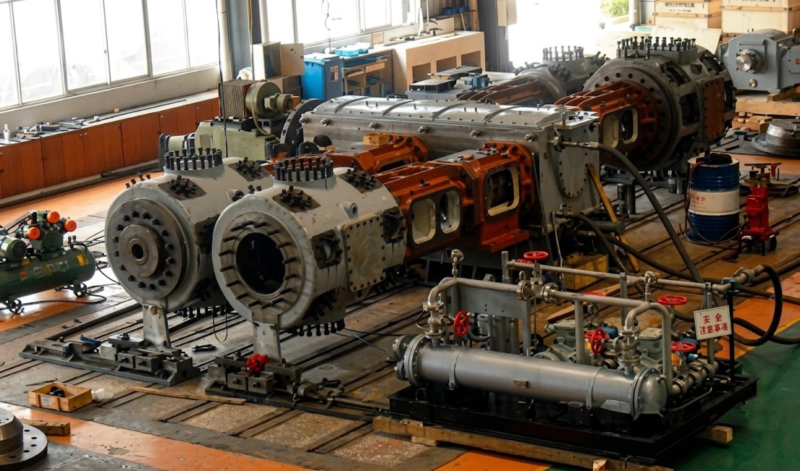
Figure 4: Rigorous Factory Acceptance Testing (FAT) validates the structural rigidity of the elongated distance pieces, proving absolute gas containment and vibration compliance before the unit is shipped to the refinery.
To guarantee structural integrity, we conduct extensive Factory Acceptance Testing (FAT). This includes precision Rod Drop Measurements to ensure the heavy piston rod does not sag within the extended distance piece. Furthermore, because explosive process gases are incredibly difficult to contain, the manufacturer must perform dynamic FAT using high-pressure Helium (which mimics hydrogen’s extreme penetrative properties) to guarantee absolute packing integrity and zero leakage into the distance piece venting system before the unit is ever shipped to a client facility.
6. The EPC Procurement Checklist for Explosive Gas Compression
When EPC total contractors and plant safety managers specify equipment for critical, explosive gas loops, protecting the immense CAPEX investment and the lives of plant personnel requires strict adherence to API standards. We recommend ensuring your vendor can unequivocally meet the following criteria:
- ☑
Verified API-618 Type-C or Type-D Architecture: Demand certified engineering drawings proving that the physical length of the inner distance piece compartment exceeds the maximum piston stroke length. - ☑
Active Nitrogen Purging Integration: The distance piece must not simply be a hollow void. It must come pre-engineered with precision purge panels, pressure regulators, and vent headers designed to interface seamlessly with your plant’s flare system. - ☑
Oversized Crosshead Guides: Because the distance piece extends the length of the piston rod, the crosshead guide must be structurally oversized and heavily lubricated to absorb the increased cantilevered weight and prevent rod deflection. - ☑
Helium Leak FAT Reports: Demand comprehensive Vendor Data Requirements (VDR), specifically including certified Helium FAT reports, proving the absolute seal integrity of the intermediate partition packing.
By enforcing strict API-618 distance piece standards, facility operators erect an impenetrable mechanical firewall between their explosive process gas and the ignition sources of the mechanical crankcase. The result is unparalleled continuous production, total environmental compliance, and absolute operational peace of mind.
Enforce Absolute Plant Safety.
Our elite engineering team specializes in designing, manufacturing, and strictly testing 100% absolute oil-free, API-618 reciprocating compressors equipped with advanced Type-C and Type-D isolation architecture. Tailored specifically for extreme high-pressure hazardous gas loops. Do not gamble your facility’s safety on inferior mechanics.