
Explore the molecular defense mechanisms of austenitic metallurgy. Discover how forged 316L stainless steel prevents hydrogen embrittlement, defeats sulfide stress cracking, and guarantees the structural survival of heavy-duty API-618 compressors.
In the vanguard of modern energy transition—specifically within coal gasification plants, waste-to-energy facilities, and advanced hydrocracking complexes—Synthesis Gas (Syngas) is the foundational feedstock. However, syngas is rarely clean. It is a violently reactive cocktail primarily composed of Hydrogen (H₂) and Carbon Monoxide (CO), fiercely contaminated with Carbon Dioxide (CO₂), trace moisture, and highly lethal Hydrogen Sulfide (H₂S). When compressed to pressures exceeding 150-bar, this gas stream becomes an extreme metallurgical predator. As premier heavy-duty compressor engineers at oxygen-compressor-machine.com, we understand the immense pressure EPC contractors and plant reliability managers face. Specifying the wrong materials for this environment doesn’t just result in premature wear; it leads to rapid, catastrophic mechanical disintegration and deadly gas release.
Deploying a heavy-duty reciprocating compressor into a sour syngas loop requires absolute mastery of molecular metallurgy. The “wetted parts”—the cylinders, valves, piston rods, and internal gas passages directly exposed to the process stream—must be forged from an alloy capable of withstanding extreme dynamic fatigue while simultaneously repelling chemical attack. This comprehensive engineering guide dissects the complex corrosive chemistry of syngas, the atomic superiority of 316L Austenitic Stainless Steel, and the uncompromising NACE standards required to ensure decades of failsafe operation in the world’s most aggressive environments.
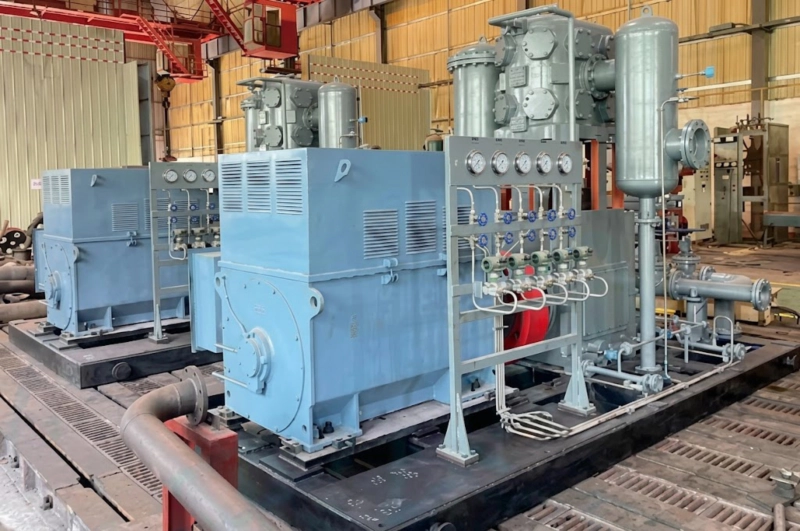
Figure 1: A heavy-duty, symmetrically balanced API-618 syngas compressor. Every single component in contact with the gas stream is forged from elite 316L stainless steel to guarantee absolute corrosion immunity.
1. The Chemical Threat: Decoding Sour Syngas Attacks
To engineer a defensive metallurgy, we must mathematically and chemically define the hostile forces at play. Raw syngas presents a multi-front assault on standard carbon steel and lower-grade alloys, primarily driven by three distinct mechanisms:
- Carbonic Acid Corrosion: Syngas inherently contains moisture (H₂O) and Carbon Dioxide (CO₂). Under the extreme pressures of the compression cycle, these two compounds aggressively dissolve to form carbonic acid, as defined by the equilibrium reaction:
$CO_2 + H_2O \rightleftharpoons H_2CO_3 \rightleftharpoons H^+ + HCO_3^-$
This highly localized acidic environment strips away the natural iron oxide layers of standard steels, leading to massive, deep pitting corrosion within the cylinder liners.
- Sulfide Stress Cracking (SSC): The presence of Hydrogen Sulfide (H₂S) defines a gas as “sour.” H₂S aggressively attacks standard steel, forming brittle Iron Sulfide ($FeS$) scale. More dangerously, this reaction releases free atomic hydrogen directly at the metal’s surface, which under the immense cyclic tensile stress of the compressor, causes spontaneous, catastrophic cracking of the cylinder valves and piston rods.
- High-Velocity Erosion-Corrosion: A reciprocating compressor forces gas through tight valve ports at extreme velocities. If a corrosive scale (like $FeS$) forms, the sheer kinetic energy of the gas stream rips the scale away, exposing fresh bare metal to immediate chemical attack. This cycle exponentially accelerates material loss.
2. The Molecular Defense: The Anatomy of 316L Stainless Steel
To defeat this multifaceted chemical assault, extreme engineering demands the exclusive use of UNS S31603, universally known as 316L Austenitic Stainless Steel. The defensive capabilities of 316L are not accidental; they are precisely engineered at the atomic level.
The foundation of 316L is a chromium-nickel-iron matrix, featuring approximately 16-18% Chromium and 10-14% Nickel. The high chromium content is responsible for passivation—the instantaneous formation of a self-healing, microscopic Chromium Oxide ($Cr_2O_3$) barrier that physically blocks corrosive agents from reaching the underlying iron.
However, what truly elevates 316L above standard alloys like 304 stainless steel are two critical additions:
- Molybdenum (2-3%): Molybdenum acts as the ultimate shield against chloride and acid attacks. It drastically increases the alloy’s resistance to localized pitting and crevice corrosion, directly neutralizing the threat posed by carbonic acid formation during high-pressure gas cooling phases.
- The “L” for Low Carbon (Max 0.03%): Standard 316 stainless contains up to 0.08% carbon. When subjected to the immense heat of welding or heavy forging, standard carbon binds with chromium to form Chromium Carbides along the grain boundaries. This depletes the local chromium levels, creating a phenomenon called sensitization, which leads to rapid intergranular corrosion. By restricting carbon to a maximum of 0.03%, 316L mathematically prevents carbide precipitation, guaranteeing absolute corrosion resistance even in heavy, multi-pass welded pulsation dampeners.
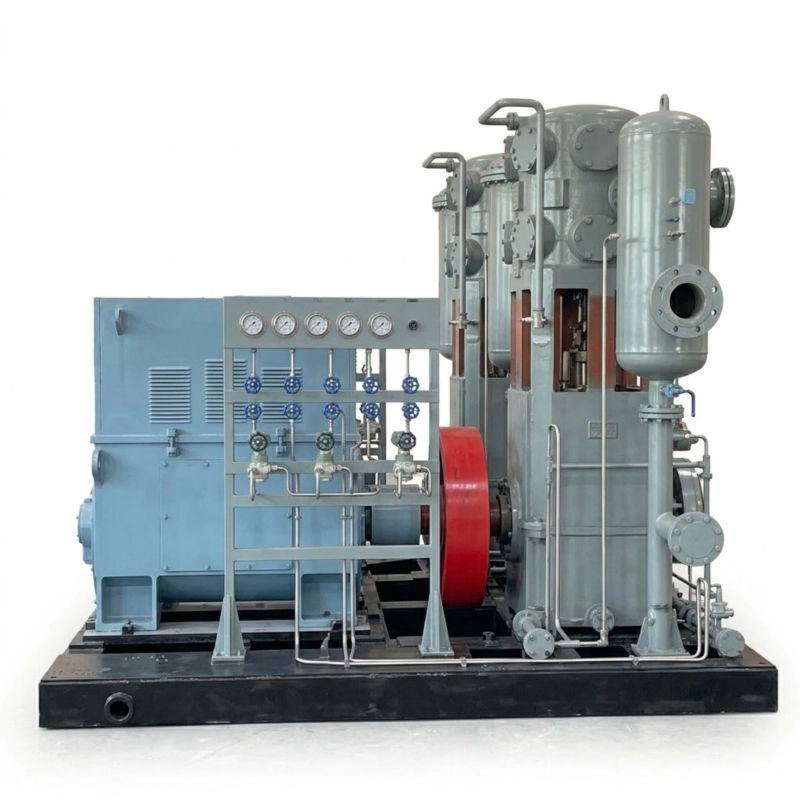
Figure 2: A precision-forged 316L stainless steel cylinder block. Notice the extreme wall thickness required to handle not only the 150-bar kinetic stress but to provide absolute immunity against syngas pitting corrosion.
Engineering Truth: NACE MR0175 Compliance
“In the presence of H₂S, standard materials fail without warning. The global petroleum industry enforces the strict NACE MR0175 / ISO 15156 standard for sour gas environments. 316L stainless steel is fully NACE compliant, provided its hardness is strictly controlled during manufacturing to fall below 22 HRC (Rockwell C). This maximum hardness threshold ensures the metal remains perfectly ductile, preventing Sulfide Stress Cracking under massive alternating compressor loads.”
3. Surviving the Hydrogen Threat: Lattice Permeation and Embrittlement
While H₂S and CO₂ provide the corrosive attack, the raw Hydrogen (H₂) content in syngas presents a completely different mechanical threat. Hydrogen atoms are the smallest in the universe. At 150-bar of pressure, these tiny atoms can actually diffuse directly into the crystalline lattice of the steel itself.
In standard carbon steels (which possess a Body-Centered Cubic or BCC lattice), the permeated hydrogen atoms accumulate at microscopic defects, combining into H₂ gas molecules. This builds immense internal pressure, causing the steel to become brittle and eventually fracture—a process known as Hydrogen Embrittlement. In a machine vibrating at 600 RPM, embrittlement is a fatal diagnosis.
316L, however, possesses a Face-Centered Cubic (FCC) austenitic microstructure. This FCC lattice has lower hydrogen permeability and significantly higher solubility. Instead of trapping hydrogen and causing internal blistering, the 316L austenitic matrix can safely absorb and allow hydrogen to pass without altering its exceptional tensile ductility. This makes 316L not merely a corrosion resistor, but the ultimate mechanical armor against high-pressure hydrogen attack.
4. Cross-Industry Synergies: Why Medical Plastics Demand Pristine Metallurgy
The absolute engineering necessity for extreme, uncompromised wetted metallurgy extends beyond toxic petrochemical refineries. In the advanced medical manufacturing and sterile food-packaging sectors, the identical 316L metallurgical principles are strictly enforced—not to protect the machine from the gas, but to protect the gas from the machine.
Consider the production of ultra-pure medical IV containers, sterile pharmaceutical vials, or premium optical-grade PET packaging. These clean-room facilities operate relentless pneumatic machinery that demands massive volumes of high-pressure, Class 0 breathable air. Driving a modern, precision injection blow molding machine strictly requires up to 40-bar of air that is 100% free of rust, particulate scale, and oil.
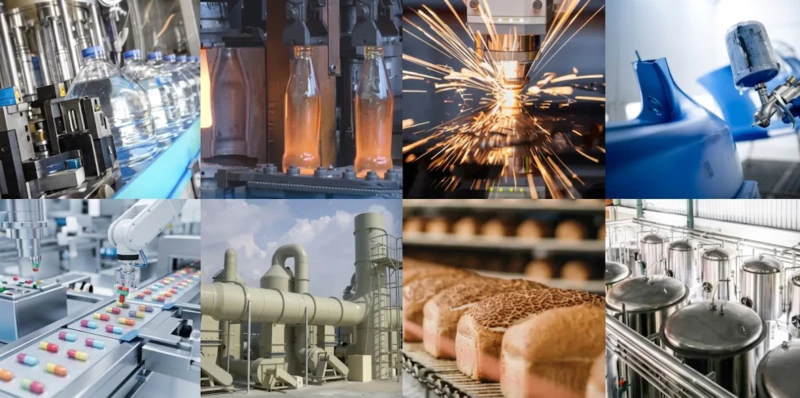
Figure 3: The exact same 316L austenitic architecture designed to survive refinery acids is globally deployed to guarantee absolute pneumatic purity and rust-free operation for medical blow molding processes.
If standard carbon steel cylinders were utilized, the trace moisture in the compressed air would instantly form iron oxide (rust). Under 40-bar of pressure, microscopic rust flakes would be blasted downstream, embedding permanently into the expanding medical plastic during the blow molding cycle. The entire batch fails FDA/CE sterility checks. The design synergies are absolute: whether containing toxic sour syngas or preserving the pristine purity of medical air, 316L stainless steel provides the only acceptable mechanical boundary.
5. Manufacturing Rigor: Forging Over Casting
Specifying 316L is only half the engineering battle; the method of manufacturing determines its ultimate structural integrity. In high-pressure syngas applications, casting is strictly prohibited for critical wetted pressure vessels.
Castings inherently possess microscopic porosities, shrink defects, and unpredictable grain structures. Under 150-bar of highly penetrative syngas, these microporosities become active leak paths and ideal breeding grounds for localized pitting corrosion. To guarantee absolute molecular density, all 316L wetted parts for severe-duty compressors must be Precision Forged.
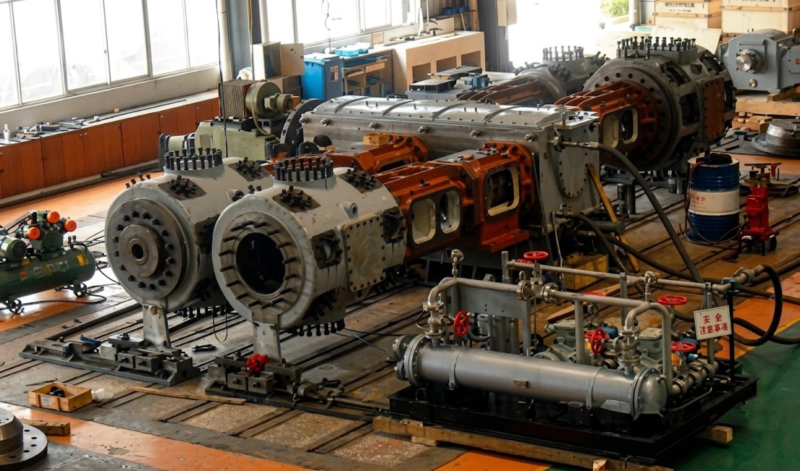
Figure 4: Factory Acceptance Testing (FAT) includes intense hydrostatic pressurization up to 1.5x design pressure to scientifically validate the structural integrity of the forged 316L cylinder blocks.
The forging process applies immense compressive tonnage to the heated alloy, physically crushing out any internal voids and aggressively aligning the metallic grain structure along the axis of mechanical stress. This results in a pressure boundary that is fundamentally impervious to gas permeation, exceptionally fatigue-resistant, and chemically bulletproof.
6. The EPC Procurement Checklist for Sour Syngas
When EPC total contractors, corrosion engineers, and plant reliability directors specify reciprocating compressors for sour syngas, relying on generic “stainless steel” specs leads directly to catastrophic failure. We strongly recommend verifying the following metallurgical criteria with your vendor:
- ☑
100% Positive Material Identification (PMI): Demand certified PMI reports for every single wetted component (cylinders, piston rods, valves, dampeners). This uses X-ray fluorescence to scientifically prove the alloy is genuinely 316L, not a cheaper substitute. - ☑
Certified NACE MR0175 Compliance: Ensure the material test reports (MTRs) explicitly document that the hardness of the final machined components does not exceed 22 HRC, guaranteeing resistance to Sulfide Stress Cracking in H₂S environments. - ☑
Forged Over Cast Construction: Reject any cast wetted parts. Demand forged 316L (e.g., ASTM A182 F316L) to completely eliminate the risk of syngas permeation through micro-porosities. - ☑
Nitric Acid Passivation: After machining, all 316L components must undergo strict chemical passivation (typically per ASTM A380). This process actively strips free iron from the surface and rapidly thickens the protective chromium oxide layer before the machine ever touches process gas.
By enforcing strict API-618 architectural standards and demanding uncompromising 316L metallurgical purity, facility operators build an impenetrable molecular fortress against corrosive syngas. The result is total asset protection, unparalleled mechanical longevity, and continuous high-yield production in the most aggressive operational theaters on earth.
Defeat Corrosion. Command the Process.
Our elite metallurgical engineers specialize in designing, forging, and rigorously testing 100% absolute oil-free, API-618 reciprocating compressors with strict NACE-compliant 316L architecture. Tailored specifically for extreme high-pressure sour syngas, hydrocracking, and advanced hydrogen loops. Do not gamble your facility’s survival on inferior metals.