
Master the advanced tribology of completely oil-free kinematics. Discover how precision-engineered Polytetrafluoroethylene and Polyetheretherketone enforce zero gas leakage, prevent auto-ignition, and guarantee millions of cycles at 320-bar.
The fundamental premise of high-pressure compression relies on sealing a dynamic, rapidly moving metal piston against a stationary metal cylinder wall. For over a century, the industrial answer to the resulting immense friction has been hydrodynamic liquid lubrication—flooding the cylinder with viscous hydrocarbon oils. However, in modern critical process engineering, this traditional methodology is entirely forbidden. When compressing pure oxygen (O₂) to 320-bar, the presence of hydrocarbon oil triggers catastrophic auto-ignition. When compressing ultra-pure hydrogen (H₂) for fuel cells, oil vapor poisons the delicate platinum catalysts downstream. As premier heavy-duty compressor engineers at oxygen-compressor-machine.com, our mandate is clear: the compressor kinematics must operate 100% dry.
Achieving continuous, extreme-pressure compression without a single drop of liquid lubrication pushes mechanical engineering into the elite realm of solid-state tribology. For EPC contractors, materials scientists, and rotating equipment engineers, specifying the correct polymer compounds for piston rings, rider bands, and API-618 rod packing is the single most critical factor in determining the machine’s Mean Time Between Failures (MTBF). This comprehensive guide dissects the molecular physics, operational limits, and strategic deployment of the industry’s two most critical sealing polymers: filled PTFE and high-modulus PEEK.
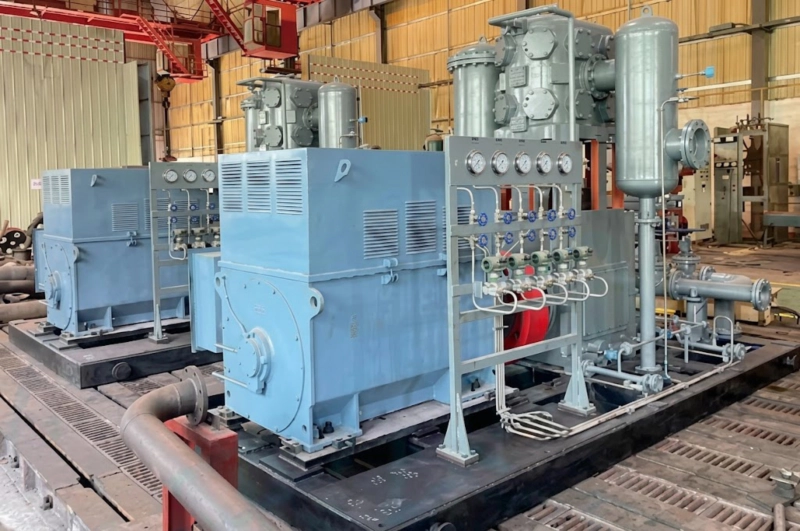
Figure 1: A heavy-duty, symmetrically balanced API-618 compressor engineered for absolute oil-free gas processing. The internal sealing integrity relies entirely on advanced high-performance polymers.
1. The Tribology of Dry-Running Kinematics: The PV Limit
To engineer a dry-running seal, we must quantitatively analyze the destructive forces acting upon it. The survival of any polymer ring in a reciprocating compressor is dictated by its PV Limit—the mathematical product of the differential pressure ($P$) acting across the ring and the sliding velocity ($V$) of the piston.
The localized frictional heat generated at the microscopic interface between the polymer seal and the cylinder wall is proportional to this PV value. In advanced mechanical wear modeling, the volume of material lost over time can be approximated by Archard’s wear equation:
Where $Q$ is the total volume of wear, $K$ is the dimensionless wear coefficient of the polymer, $W$ is the normal load (proportional to gas pressure), $L$ is the sliding distance, and $H$ is the hardness of the counter-face (the cylinder liner). In a 320-bar compressor running at 600 RPM, $W$ and $L$ are massive. Without liquid oil to carry away the resulting frictional heat, standard plastics melt instantly. We require materials with an exceptionally low $K$ factor and extraordinary thermal stability.
2. PTFE (Polytetrafluoroethylene): The Foundation of Frictionless Sealing
For the vast majority of dry-running applications, PTFE is the undisputed king of solid lubricants. With one of the lowest coefficients of friction of any known solid (often less than 0.04), it behaves as if it were perpetually wet. Furthermore, PTFE is chemically inert, making it the only acceptable base material for compressing highly reactive gases like pure oxygen or corrosive hydrogen sulfide (H₂S).
However, virgin PTFE has a critical mechanical flaw: it is excessively soft. Under the extreme, continuous pressure of an API-618 compression cycle, virgin PTFE undergoes severe viscoelastic deformation, commonly known as cold flow or creep. The polymer literally extrudes out of the piston groove and smears into the gas ports, rapidly destroying the seal.
To combat cold flow and enhance the PV limit, extreme-engineering mandates the use of Filled PTFE Compounds. By alloying the PTFE matrix with structurally robust micro-powders, we radically alter its mechanical properties:
- Carbon & Graphite Fillers: Provides excellent wear resistance, high thermal conductivity, and eliminates static charge buildup. It is the gold standard for high-pressure bone-dry Hydrogen and Nitrogen applications. (Note: Strictly prohibited in Oxygen applications due to combustion risk.)
- Bronze & Glass-Fiber Fillers: Glass-filled PTFE offers supreme chemical resistance and is non-combustible, making it the mandatory specification for multi-stage high-pressure Oxygen compression. Bronze fillers provide unmatched compressive strength and thermal dissipation for massive rider bands in non-corrosive environments.
- Molybdenum Disulfide (MoS₂): Often added in micro-percentages alongside glass or bronze to further suppress the static coefficient of friction during the brutal startup phase of the compressor before dynamic momentum is established.
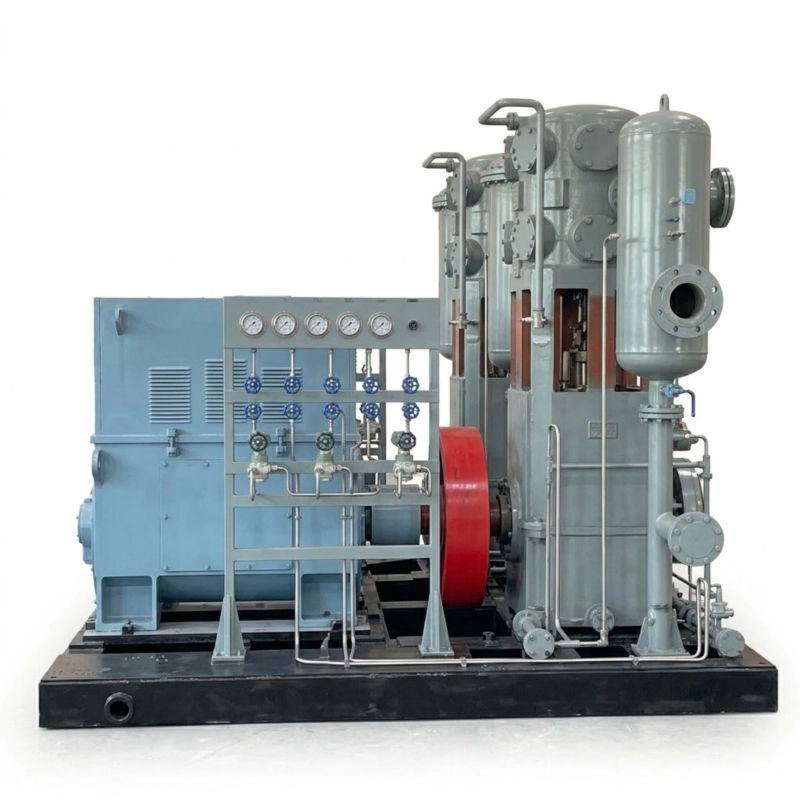
Figure 2: A precision-machined oil-free piston assembly. The wide, dark bands are carbon-filled PTFE rider rings designed to carry the kinetic weight of the piston, preventing any metal-to-metal contact with the cylinder wall.
Engineering Truth: The Transfer Film Mechanism
“A dry-running compressor is technically not running ‘dry’ against bare metal. During the initial break-in period, the frictional heat causes the PTFE rings to purposefully shed microscopic layers of polymer. This material aggressively bonds into the micro-honing crosshatch of the 316L stainless steel cylinder liner. Within a few hours, the compressor achieves its ultimate operational state: PTFE sliding smoothly on a highly polished microscopic film of PTFE. Disrupting this film through excessive adiabatic heat or particulate contamination results in instantaneous, cascading seal failure.”
3. PEEK (Polyetheretherketone): The High-Pressure Structural Enforcer
While heavily filled PTFE compounds perform flawlessly up to approximately 150-bar, the physical reality of ultra-high-pressure compression (e.g., 250-bar to 320-bar final stages) exceeds the structural yield point of any fluoropolymer. The pressure forces the PTFE into the microscopic clearance gap between the piston and the cylinder, shearing the ring apart in minutes.
Enter PEEK. Polyetheretherketone is an advanced, high-performance engineering thermoplastic characterized by extraordinary tensile strength, immense dimensional stability, and a melting point exceeding 340°C. PEEK exhibits practically zero cold flow under extreme mechanical loads. It is essentially synthetic metal.
However, PEEK possesses a notably higher coefficient of friction than PTFE. If a solid PEEK piston ring were utilized in a high-speed cylinder, it would run dangerously hot and score the steel liner. Therefore, PEEK is rarely used as the primary sealing interface. Instead, it is deployed as an Anti-Extrusion Architecture. By placing a rigid, precisely machined PEEK backup ring directly behind the softer, highly lubricous PTFE seal ring, the PTFE provides the frictionless gas seal, while the PEEK wall physically blocks the PTFE from extruding into the clearance gaps under 320-bar of explosive force.
4. Cross-Industry Synergies: Why Medical Plastics Demand PTFE/PEEK Tribology
The absolute engineering necessity for extreme-pressure, 100% oil-free kinematics extends far beyond the perimeter of petrochemical refineries and hydrogen fuel depots. The high-end medical manufacturing and premium food-packaging industries are entirely dependent on the exact same PTFE and PEEK tribology to guarantee zero-defect purity.
Consider the high-speed production of sterile pharmaceutical packaging or pristine, optical-grade PET IV containers. These clean-room facilities operate continuous, high-speed pneumatic machinery that requires massive, instantaneous pulses of up to 40-bar of Class 0 pure air. Driving a modern, precision injection blow molding machine strictly demands absolute absence of hydrocarbon oil.
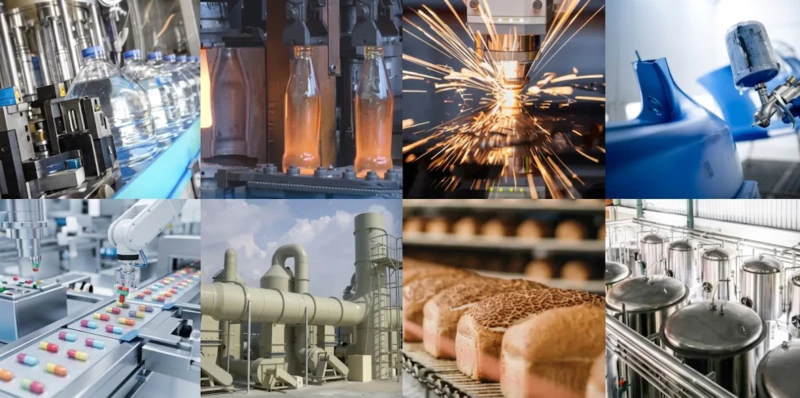
Figure 3: The exact same carbon-filled PTFE and PEEK anti-extrusion architectures designed to prevent refinery hydrogen explosions are deployed globally to safeguard medical-grade plastics from devastating oil contamination.
If a standard oil-lubricated compressor were used, microscopic aerosols of burned crankcase oil would travel through the pneumatic lines and embed themselves permanently into the hot, expanding medical plastic during the blow molding cycle. The entire batch would fail FDA sterility and quality assurance checks. The design synergies are absolute: whether containing 320-bar oxygen safely or maintaining absolute pneumatic purity for a medical vial, the precise formulation of dry-running polymers is the only acceptable mechanical solution.
5. Hybrid Architectures: API-618 Rod Packing Design
The most rigorous test of polymer engineering in a reciprocating compressor is the Rod Packing Case. Unlike a piston ring that moves with the piston, the rod packing is a stationary series of precision-machined metal cups. Inside these cups, sets of specialized polymer rings clamp tightly around the reciprocating piston rod, forming the primary barrier between the explosive process gas and the ambient atmosphere.
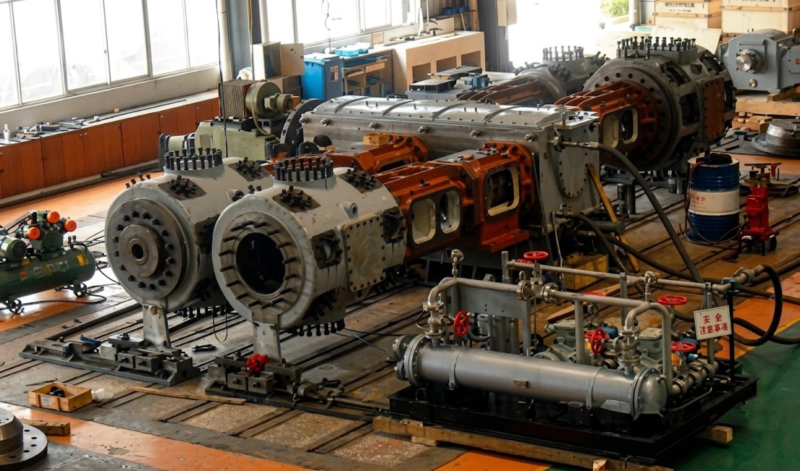
Figure 4: Factory Acceptance Testing (FAT) utilizing ultra-penetrative Helium to prove the absolute sealing efficiency of the dry-running, multi-stage hybrid polymer rod packing cases before field deployment.
Advanced API-618 rod packing utilizes complex geometric cuts to ensure continuous sealing as the polymer inevitably wears over thousands of hours. A standard high-pressure configuration pairs a radially cut ring with a tangentially cut ring. The radial ring seals the rod but leaves micro-gaps at the segment joints; the tangential ring precisely overlaps these gaps. For pressures exceeding 150-bar, our engineers integrate a tertiary PEEK anti-extrusion backup ring into the cup sequence. Furthermore, every packing cup is aggressively water-cooled. Because PTFE is an exceptional thermal insulator, it traps the frictional heat at the rod surface. High-velocity chilled water circulating through the packing case is mandatory to conduct this heat away from the rod, ensuring the PV limit of the polymer is never breached.
6. The EPC Procurement Checklist for Dry-Running Seals
When EPC total contractors and plant reliability engineers specify oil-free compressors for critical gas networks, generic seal specifications lead directly to catastrophic downtime. Demand exacting, gas-specific tribological engineering from your vendor. Verify the following parameters:
- ☑
Gas-Specific Filler Formulation: Ensure the material data sheets explicitly state the filler compounds. Carbon/graphite filled PTFE for hydrogen and nitrogen; highly specified glass/bronze filled PTFE strictly for oxygen service to prevent oxidation fires. - ☑
PEEK Anti-Extrusion Integration: For any compression stage discharging above 150-bar, demand certified cross-sectional drawings proving the integration of high-modulus PEEK backup rings to prevent catastrophic seal extrusion. - ☑
Direct Water-Cooled Packing Cases: The physical rod packing housing must be ported for continuous, high-velocity chilled water circulation. Without aggressive thermal stripping, dry-running polymer seals will melt regardless of their compound. - ☑
Cylinder Micro-Honing Specifications: The wetted metallic parts (cylinder liners and piston rods) must be precision honed to specific surface roughness values (Ra) optimized specifically for polymer transfer film adhesion, not generic metal-to-metal lubrication standards.
By enforcing strict molecular material science—deploying sophisticated filled PTFE for frictionless dynamic sealing and rigid PEEK architectures for structural defense—facility operators establish absolute mastery over high-pressure tribology. The result is millions of safe, 100% oil-free compression cycles, uncompromising plant safety, and unparalleled continuous production.
Command the Limits of Oil-Free Tribology.
Our elite materials engineers specialize in formulating, testing, and deploying the industry’s most advanced PTFE and PEEK sealing architectures for completely oil-free API-618 reciprocating compressors. Engineered specifically to survive the extreme temperatures and pressures of megawatt-scale hydrogen, oxygen, and critical process gas loops. Do not compromise your process purity with inferior plastics.