
Discover how elite Ex-d engineering, intrinsically safe instrumentation, and uncompromising API-618 design paradigms guarantee continuous-duty compression in the world’s most hazardous petrochemical and hydrogen environments.
Published by Extreme Engineering Authority | Technical Depth: Advanced | Est. Read Time: 18 mins
In the elite echelons of petrochemical refining, offshore platform operations, and modern megawatt-scale green hydrogen infrastructure, standard industrial machinery is entirely obsolete. These facilities process highly volatile gases under extreme pressures, creating environments where a single rogue spark can instantly level a multi-million-dollar facility. As premier heavy-duty compressor engineers at oxygen-compressor-machine.com, we fundamentally understand that surviving in these atmospheres requires more than just mechanical durability—it requires absolute, certified electrical and mechanical Ex-compliance.
For EPC (Engineering, Procurement, and Construction) project managers, safety directors, and instrument engineers, specifying a compressor for an ATEX Zone 1 or Class I Division 1 (NEC) hazardous area is a high-stakes endeavor fraught with strict regulatory hurdles. Deploying machinery in an area where an explosive atmosphere is likely to occur in normal operation demands a holistic engineering approach: from flameproof motor enclosures to non-sparking kinematics and intrinsically safe monitoring systems. This comprehensive engineering guide dissects the complex regulatory landscape and technical architecture required to safely deploy high-pressure reciprocating compressors into explosive Zone 1 environments.
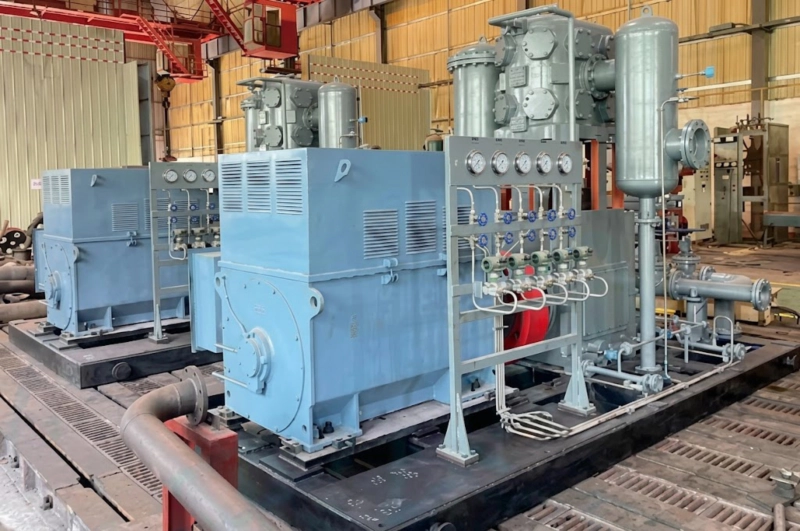
Figure 1: A heavy-duty, symmetrically balanced API-618 compressor engineered for ATEX Zone 1 compliance, featuring flameproof motors and isolated instrumentation panels.
1. Decoding the ATEX Zone 1 Reality: Gas Groups and Temperature Classes
Under the European ATEX directive (2014/34/EU) and global IECEx standards, a Zone 1 hazardous area is defined as a place where an explosive atmosphere consisting of a mixture with air of dangerous substances in the form of gas, vapor, or mist is likely to occur in normal operation occasionally. To engineer a compressor for this environment, we must address three fundamental variables: the Fire Triangle (fuel, oxygen, ignition).
Because the process gas (fuel) and ambient air (oxygen) are already present, our engineering mandate is to entirely eliminate the third pillar: the ignition source. This requires rigorous classification based on the specific gas being compressed:
- Gas Group IIC (Hydrogen & Acetylene): This is the most severe and dangerous gas group. Hydrogen has an incredibly low Minimum Ignition Energy (MIE) of just 0.017 millijoules. A compressor engineered for Gas Group IIC must feature the tightest electrical flame paths and the strictest non-sparking materials.
- Temperature Class (T-Class): Every volatile gas has an Auto-Ignition Temperature (AIT). Hydrogen’s AIT is 500°C, but other refinery gases ignite at much lower temperatures. A compressor certified for T3 (200°C) or T4 (135°C) guarantees that no surface of the machine—neither the electrical casings nor the bare metal cylinder heads—will ever exceed that temperature, even under worst-case failure scenarios.
2. Ex-d Flameproof Enclosures: Containing the Unthinkable
Compressors are driven by massive electrical motors and controlled by local panels, both of which contain contactors and switches that arc during normal operation. In Zone 1, these arcs are guaranteed ignition sources. To protect the plant, we employ Ex-d (Flameproof) engineering.
An Ex-d motor or control panel is not completely airtight. Gas from the environment will eventually seep inside. The engineering brilliance of Ex-d lies in its structural containment. The heavy cast-iron or thick-walled aluminum enclosure is built to physically withstand the immense internal pressure of a gas explosion occurring inside the box.
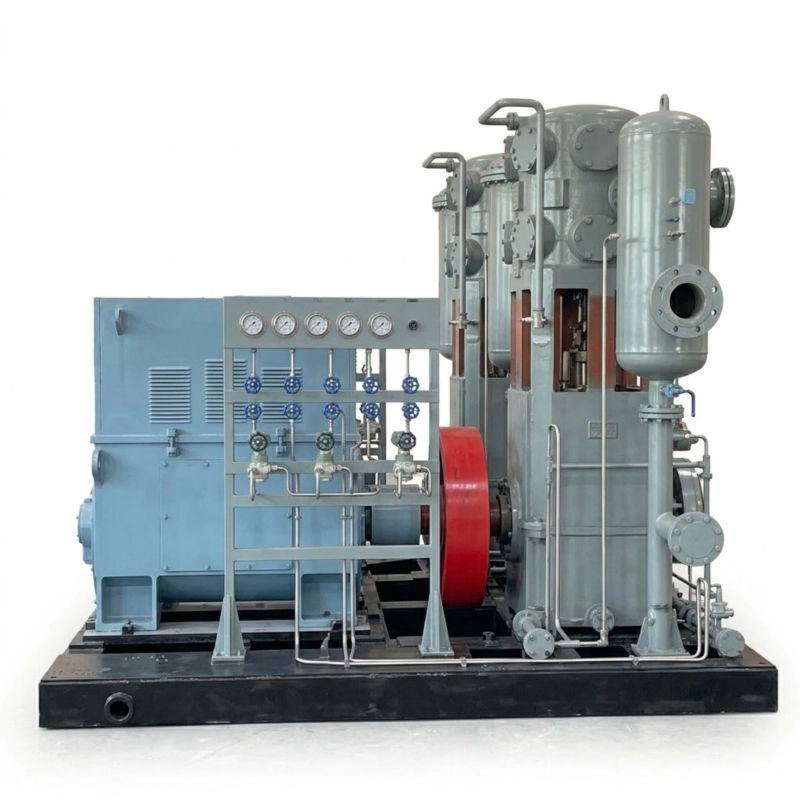
Figure 2: Close-up of heavy-duty, explosion-proof components. The precisely machined structural joints are designed to cool escaping flames below the gas ignition threshold.
More importantly, the flanges and joints of an Ex-d enclosure are machined to exacting tolerances, creating a highly specific “flame path.” If an internal explosion occurs, the escaping hot gases are forced through these tight, long metallic gaps. By the time the gas exits the enclosure into the Zone 1 plant atmosphere, it has been rapidly cooled well below the Auto-Ignition Temperature of the external gas, preventing a chain-reaction plant explosion.
Engineering Truth: Ex-d vs. Ex-p
“While Ex-d contains an explosion, Ex-p (Pressurized) enclosures prevent it entirely by continuously pumping inert nitrogen or clean instrument air into the panel to keep hazardous gases out. For complex local control panels on our mega-compressors, we often utilize Ex-p with active pressure monitoring logic to provide the highest echelon of safety.”
3. Intrinsically Safe (Ex-i) Instrumentation: Starving the Spark
A heavy-duty API-618 compressor is covered in delicate sensors: pressure transmitters, RTD temperature probes, and vibration monitors. Putting heavy Ex-d cast-iron housings on every single sensor is physically impossible and financially prohibitive. The solution is Ex-i (Intrinsic Safety).
Intrinsic safety takes the opposite approach to flameproof enclosures. Instead of containing an explosion, Ex-i engineering ensures that the electrical circuit simply does not possess enough raw energy (in terms of voltage and current) to generate a spark capable of igniting the gas, even during a dead short-circuit or a cut wire.
To achieve this, all sensors on the compressor are routed through Zener Barriers or Galvanic Isolators located safely in the non-hazardous control room (or inside an Ex-d/Ex-p panel). These barriers act as strict energy limiters. If a wrench falls and severs a high-pressure transmitter cable in the middle of a hydrogen cloud, the energy released will be mathematically lower than hydrogen’s 0.017 millijoule Minimum Ignition Energy. No spark, no fire, no catastrophe.
4. Cross-Industry Synergies: Why Medical Plastics Rely on Zone 1 Rigor
While ATEX Zone 1 compliance is strictly enforced in petrochemical refining and hydrogen processing, the underlying engineering philosophies—specifically uncompromising control system reliability, fail-safe instrumentation, and 100% oil-free purity—are universally demanded across other critical, non-explosive manufacturing sectors.
Consider the production of highly sensitive pharmaceutical packaging, medical aerosols, or food-grade PET containers. These advanced manufacturing facilities operate relentless pneumatic machinery that requires massive, instantaneous pulses of high-pressure, totally pure Class 0 compressed air. Driving a modern, high-speed injection blow molding machine strictly demands up to 40-bar of deeply dried, oil-free air.
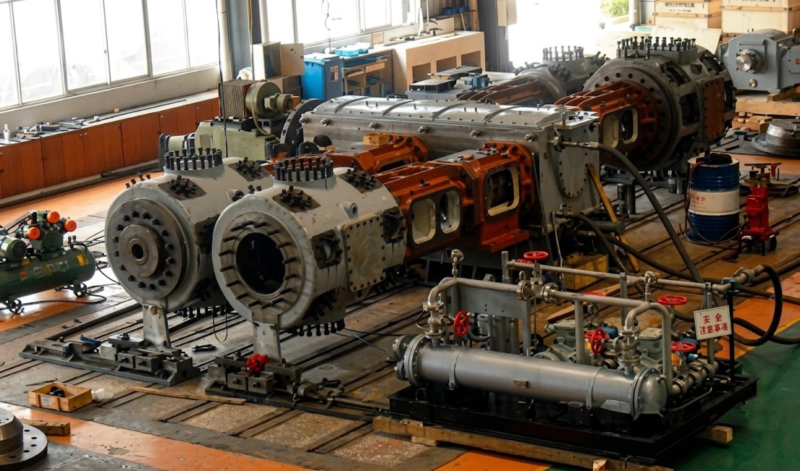
Figure 3: Rigorous Factory Acceptance Testing (FAT) validates the integrity of intrinsically safe control loops and automated emergency shutdown (ESD) systems prior to deployment.
Although a standard medical PET plant may not be classified as a Zone 1 explosive atmosphere, the automated safety logic, vibration monitoring, and zero-fault tolerance pioneered for ATEX machinery are directly ported over. The same intrinsically safe (Ex-i) vibration sensors used to prevent a refinery compressor from shaking itself apart are used to ensure the blow molding compressor delivers perfectly stable, uninterrupted pneumatic pressure. The design synergies are absolute: extreme mechanical rigor translates perfectly from hazardous fire safety to uncompromised medical quality control.
5. Mechanical Spark Prevention & API-618 Firewalls
Electrical safety alone is insufficient; physical friction causes sparks. In a Zone 1 compressor, every moving part must be engineered for non-sparking compliance. This involves material science and strict API-618 architectural rules.
First, all exposed moving components, such as flywheel guards, coupling guards, and cooling fan blades, are manufactured from non-sparking materials like brass, bronze alloys, or specialized anti-static composites. Even if a metal tool is accidentally dropped into the spinning flywheel, these materials will not generate a high-temperature incendiary spark.
Second, we employ the ultimate mechanical firewall: the API-618 Type-C or Type-D Distance Piece. By mandating an elongated isolation chamber equipped with continuous inert Nitrogen (N₂) purging, we physically guarantee that highly explosive process gases (like hydrogen) can never migrate along the piston rod and enter the mechanical crankcase. The crankcase remains a safe, non-explosive zone, entirely separated from the hazardous compression chamber.
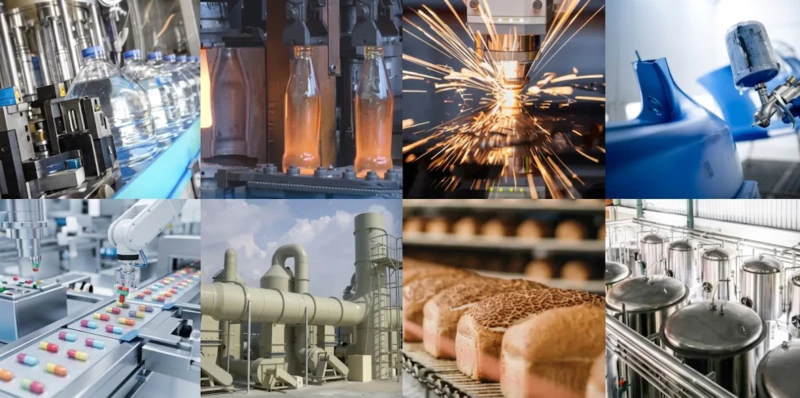
Figure 4: The ATEX Zone 1 compressor seamlessly integrated into an offshore or refinery processing environment, providing silent, spark-free, and continuous 24/7 heavy-duty operation.
6. The EPC Procurement Checklist for ATEX Zone 1 Systems
When EPC contractors, instrumentation engineers, and plant safety managers specify equipment for Zone 1 hazardous areas, protecting the lives of plant personnel and the immense CAPEX investment requires strict adherence to international directives. Protect your liability by verifying these critical parameters:
- ☑
Certified Ex-d Main Motors: Ensure the main drive motor carries genuine ATEX/IECEx certificates for Ex-d (Flameproof) or Ex-e (Increased Safety) matching the specific Gas Group (IIB or IIC) of your process. - ☑
Fully Ex-i Compliant Instrumentation: Demand wiring schematics that clearly show galvanic isolation or Zener barriers for every single RTD, pressure transmitter, and vibration probe on the skid. - ☑
Anti-Static & Non-Sparking Mechanics: Verify that V-belts (if used) are certified anti-static, and that all rotating guards are manufactured from bronze or approved non-sparking alloys. - ☑
API-618 Type-C Distance Pieces: The structural design must mathematically prevent the piston rod from carrying explosive gas into the crankcase, supplemented by an active nitrogen purge system.
By enforcing strict ATEX and IECEx compliance alongside uncompromising API-618 mechanical architectures, facility operators erect an impenetrable barrier against explosions. The result is continuous, high-yield production, absolute regulatory compliance, and total operational peace of mind.
Command Safety in the Danger Zone.
Our elite engineering team specializes in designing, manufacturing, and strictly certifying 100% ATEX Zone 1 compliant, API-618 reciprocating compressors. Tailored specifically for extremely hazardous hydrogen processing and explosive petrochemical applications. Do not gamble your plant’s survival on standard machinery.