
Explore the thermodynamic engineering, multi-stage intercooling, and 100% oil-free kinematics required to prevent auto-ignition and safely compress medical and industrial oxygen to extreme pressures.
In the specialized field of Air Separation Units (ASU), medical gas production, and aerospace propulsion, compressing pure oxygen (O₂) to 320-bar (approximately 4,640 PSI) represents one of the most hazardous mechanical operations in the industrial world. Oxygen itself is not flammable, but at 320-bar, its oxidative power is magnified exponentially. Almost any material—including carbon steel and aluminum—can become highly combustible fuel. As elite heavy-duty compressor engineers at oxygen-compressor-machine.com, we recognize that the primary trigger for catastrophic failure in these systems is unmanaged thermal energy.
For EPC contractors, ASU facility managers, and safety directors, deploying a high-pressure oxygen cylinder filling station requires mastering adiabatic compression heating. When a gas is compressed rapidly, its temperature spikes violently. If this heat is not strictly mathematically controlled and structurally dissipated, it will initiate a deadly auto-ignition sequence inside the compressor cylinder. This authoritative guide dissects the thermodynamics of high-pressure oxygen, the absolute necessity of 100% oil-free kinematics, and the elite multi-stage cooling architectures required to guarantee continuous, failsafe operation.
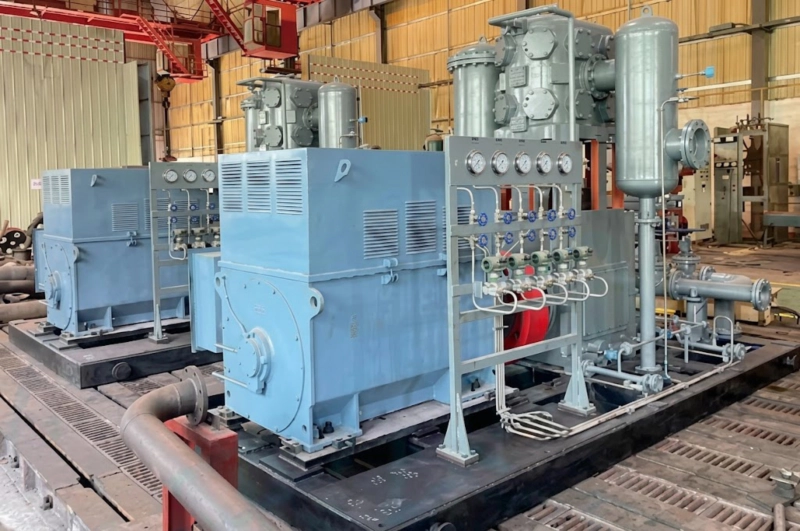
Figure 1: A heavy-duty, symmetrically balanced API-618 oxygen compressor engineered for high-pressure cylinder filling, featuring extensive thermodynamic cooling jackets.
1. The Thermodynamics of Adiabatic Heating
To understand the mechanical threat, we must first look at the fundamental physics of gas compression. In a reciprocating compressor, the piston rapidly reduces the volume of the gas to increase its pressure. Because this process occurs at high speeds (hundreds of RPMs), there is insufficient time for the generated heat to naturally transfer to the surrounding environment. This is known as an adiabatic process.
The theoretical discharge temperature can be modeled using the isentropic compression formula: $T_2 = T_1 \left( \frac{P_2}{P_1} \right)^{\frac{\gamma – 1}{\gamma}}$
Where $T_1$ and $T_2$ are the absolute initial and final temperatures, $P_1$ and $P_2$ are the initial and final pressures, and $\gamma$ (gamma) is the heat capacity ratio of oxygen (approximately 1.4). If we attempted to compress oxygen from atmospheric pressure (1-bar) to 320-bar in a single stage, the theoretical temperature spike would exceed 1,000°C. At this temperature, the forged steel of the compressor cylinder itself would ignite and burn violently in the oxygen-rich environment, vaporizing the machine instantly.
2. Multi-Stage Compression: Breaking the Heat Curve
Because single-stage high-ratio compression is physically impossible without causing a metallurgical fire, 320-bar oxygen compressors rely on Multi-Stage Compression Architecture. By breaking the 320-bar journey into three, four, or even five distinct sequential compression stages, the pressure ratio per cylinder ($P_2/P_1$) is drastically reduced.
However, multi-staging alone does not solve the heat problem; the heat must be actively removed between each stage. This is achieved through rigorous Intercooling and Aftercooling:
- High-Efficiency Intercoolers: After the oxygen leaves the Stage 1 cylinder (e.g., at 5-bar and 130°C), it is routed through a massive shell-and-tube or finned-tube heat exchanger. Cold process water rapidly strips the adiabatic heat away, dropping the oxygen temperature back down to near-ambient (e.g., 35°C) before it enters the Stage 2 cylinder.
- Thermodynamic Cylinder Jackets: The cylinders themselves, particularly in the extreme high-pressure final stages (Stage 4 and Stage 5), are cast or forged with internal cooling labyrinths. High-velocity chilled water circulates directly around the cylinder liners and valve pockets, continuously suppressing the metal’s surface temperature.
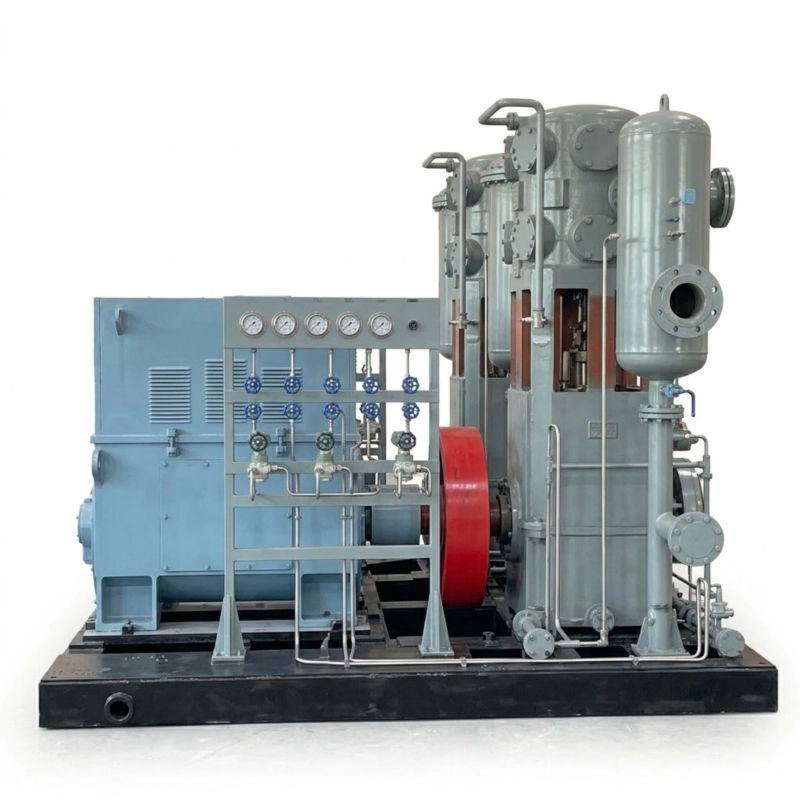
Figure 2: Precision-machined dry-running cylinders encased in oversized, mathematically verified water-cooling jackets to aggressively dissipate adiabatic heat and prevent oxygen combustion.
The 130°C Redline Protocol
“In world-class oxygen compression engineering, the strict API-618 standard dictates that the discharge temperature of any single stage must never exceed 130°C to 150°C. Exceeding this thermal redline vastly increases the probability of auto-ignition of internal non-metallic seals. Every stage must be strictly monitored by intrinsically safe RTD temperature probes linked to automated ESD (Emergency Shutdown) logic.”
3. The 100% Oil-Free Mandate: Eradicating the Fuel Source
Managing the heat is only half of the safety equation. The other half is entirely eliminating any combustible fuel from the compression chamber. Standard industrial compressors utilize hydrocarbon lubricating oil for piston friction reduction. In a 320-bar oxygen environment, even a microscopic aerosol droplet of this oil will undergo instantaneous thermal cracking and auto-ignition.
To achieve absolute Class 0 purity and total fire safety, the internal thermodynamics must operate completely dry. We utilize proprietary blends of PTFE (Polytetrafluoroethylene) rider rings and piston seals. These self-lubricating composites transfer a frictionless, microscopic film onto the polished cylinder walls. Furthermore, the compressor utilizes an API-618 distance piece to physically separate the oily mechanical crankcase from the pure oxygen cylinders, mathematically guaranteeing zero cross-contamination.
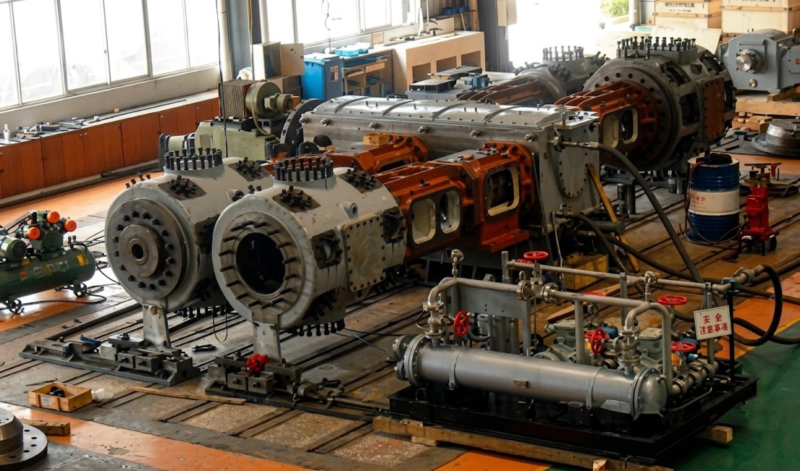
Figure 3: Rigorous Factory Acceptance Testing (FAT) tracking real-time interstage temperature differentials, proving the thermodynamic cooling efficiency before deployment to an ASU plant.
4. Cross-Industry Synergies: Thermal Management in Plastics Manufacturing
While compressing 320-bar oxygen requires specialized Ex-compliance, the underlying engineering philosophies—specifically 100% oil-free kinematics and aggressive adiabatic heat management—are universally demanded across other critical, high-volume manufacturing sectors.
Consider the production of sterile pharmaceutical packaging or pristine food-grade PET beverage containers. These high-speed facilities operate continuous pneumatic machinery that demands massive volumes of high-pressure, totally pure Class 0 compressed air. Driving a modern, precision injection blow molding machine strictly requires up to 40-bar of oil-free air to shape the molten plastic flawlessly.
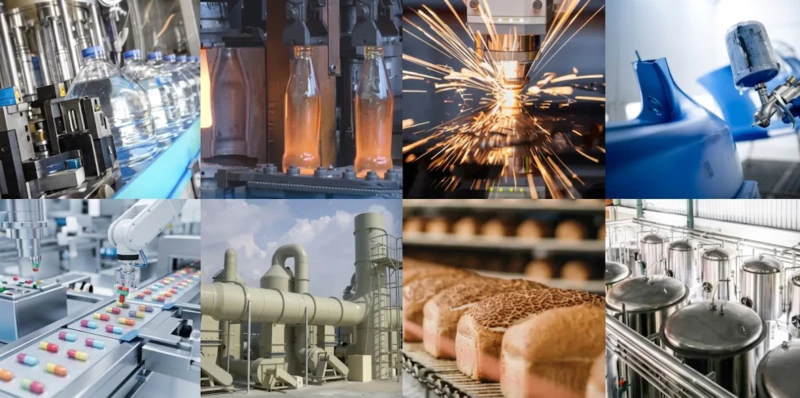
Figure 4: The identical oil-free architectural principles used to prevent oxygen fires are globally deployed to protect medical-grade plastics from oil contamination and heat deformation.
If the adiabatic heat from a 40-bar air compressor is not properly mitigated through intercooling, the excessively hot air will prematurely melt or deform the PET preforms inside the blow molding machine, ruining the production batch. Furthermore, if oil is present, it will embed into the plastic, failing medical FDA/CE regulations. The design synergies are absolute: extreme mechanical rigor in thermal management translates perfectly from hazardous oxygen fire safety to uncompromised medical quality control.
5. Metallurgy for 320-Bar Oxygen: The Final Line of Defense
At 320-bar, the sheer velocity of the oxygen gas passing through the compressor valves can strip away the natural oxide layers on standard metals, causing particle impingement sparks. Therefore, the wetted metallurgy must be fundamentally non-sparking and highly resistant to oxidation.
For low-pressure stages, Austenitic 316L stainless steel is utilized. However, for the extreme high-pressure final stages (approaching 320-bar), specialized alloys such as Monel 400 (a nickel-copper alloy) or high-grade Naval Brass are strictly required for valve components and high-velocity gas ports. These metals have exceptionally high ignition energy thresholds and possess outstanding thermal conductivity, aiding in the rapid dissipation of adiabatic heat away from the critical sealing zones.
6. The EPC Procurement Checklist for High-Pressure Oxygen
When EPC contractors and ASU plant managers specify cylinder filling compressors for 320-bar oxygen loops, protecting the facility from metallurgical fires requires relentless technical vetting. Ensure your vendor meets the following uncompromising safety criteria:
- ☑
Strict Temperature Monitoring (ESD Linked): Every single compression stage must be equipped with intrinsically safe RTD sensors. The PLC logic solver must instantly trigger an Emergency Shutdown if any stage approaches 130°C. - ☑
Oversized Interstage Cooling (Approach Temperatures): The water-cooling heat exchangers must be mathematically oversized to guarantee an “approach temperature” (gas exit temp vs. water inlet temp) of less than 10°C, ensuring the gas enters the next stage perfectly chilled. - ☑
Absolute Oil-Free Kinematics (API-618 Type-C): Demand absolute structural separation between the crankcase and the oxygen cylinders via elongated distance pieces, alongside pure PTFE dry-running piston rings. - ☑
Oxygen Cleaning Certification: Prior to assembly, every single wetted component must undergo strict solvent-based oxygen cleaning and black-light UV inspection to guarantee absolute absence of microscopic hydrocarbon dust or machining oils.
By enforcing strict multi-stage thermodynamic cooling, demanding 100% oil-free architecture, and utilizing non-sparking metallurgy, ASU operators essentially eradicate the risk of oxygen auto-ignition. The result is continuous, high-yield cylinder filling operations that prioritize uncompromised safety and maximum profitability.
Command Safety in High-Pressure Oxygen Environments.
Our elite engineering team specializes in designing, manufacturing, and strictly testing 100% absolute oil-free, API-618 reciprocating compressors. Tailored specifically for extreme 320-bar oxygen cylinder filling and critical Air Separation Unit (ASU) applications. Do not gamble your facility’s safety on unmanaged thermal dynamics.