
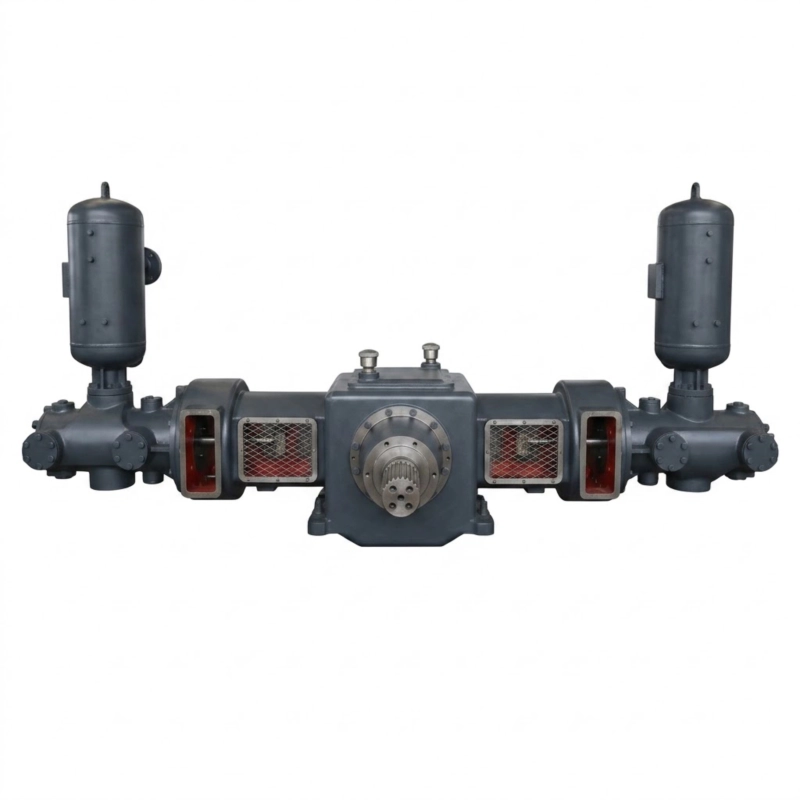
DW-40/4.9-10 Oil-Free Oxygen Circulation Compressor
Discover the DW-40/4.9-10 Oil-Free Oxygen Circulation Compressor. Engineered to boost 49-bar Oxygen to 100 bar at 2400 Nm³/h. API618 & EIGA compliant.
1. The Macro-Economics of Extreme-Pressure Oxygen Circulation Loops
The global macroeconomic landscape of heavy industrial chemical synthesis and ultra-high-pressure aerospace testing is heavily dependent on the ability to manage and continuously circulate highly reactive pure Oxygen (O₂) within massive, closed-loop reactor systems. In next-generation oxidation processes—such as the continuous mass-production of Purified Terephthalic Acid (PTA) and Ethylene Oxide (EO)—pure oxygen must be injected and circulated at extreme pressures to force chemical reactions to completion at mega-scale yields. However, maintaining these loops introduces a uniquely terrifying fluid-dynamic challenge: the highly volatile gas must be drawn into the compressor already at an intensely high background pressure (49 bar) and forcefully circulated back into the reactor grid at an astonishing 100 bar.
Achieving a 100 bar (10.0 MPa) discharge pressure while operating entirely within a 49 bar (4.9 MPa) pressurized loop at 2400 Nm³/h completely shatters the physical limitations of standard reciprocating compressors. A booster compressor like the DW-40/4.9-10 is an entirely different class of mega-machine. Its intake manifolds and primary cast structures are constantly subjected to a crushing 49 bar of latent suction pressure before the mechanical compression stroke even begins. At these pressure states, pure oxygen becomes a hyper-dense, aggressively reactive oxidizing fluid. A microscopic trace of hydrocarbon lubricating oil migrating from the crankcase would instantaneously trigger a catastrophic metal fire capable of vaporizing the processing loop.
To flawlessly process 2400 Nm³/h of this hyper-reactive cryogenic derivative between the thresholds of 49 bar and 100 bar requires uncompromising mastery of advanced metallurgical containment and immense D-Type kinetic load management. The DW-40/4.9-10 utilizes a highly conservative, mathematically optimized extreme-pressure cylinder architecture enveloped in an ironclad, EIGA-mandated 100% absolute oil-free PTFE sealing matrix. Deploying the DW-40/4.9-10 secures an unstoppable circulatory heart for your most financially critical chemical synthesis projects.
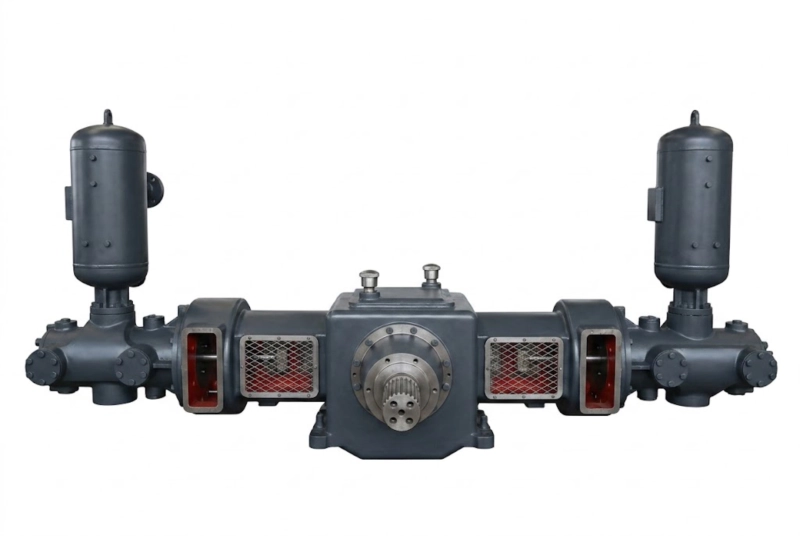
Figure 1: The DW-40/4.9-10 Heavy-Duty D-Type Assembly – Delivering an unprecedented 2400 Nm³/h continuous circulation flow, operating seamlessly between 49 bar suction and 100 bar discharge.
2. Exhaustive Technical Specifications & 100-Bar Operating Envelope
Precision extreme-pressure mechanical engineering at a 100-bar terminal scale dictates that the machine’s physical capabilities must be perfectly mapped to the demanding laws of high-density gas containment. Forcing an already dense 49-bar gas to 100 bar requires immense kinetic energy from a colossal electrical powertrain, typically requiring a main drive motor rating ranging from 450 kW to 650 kW. The following parameters define the strict operational envelope of the DW-40/4.9-10 model.
| Technical Parameter | Nominal Value / Engineering Specification |
|---|---|
| Model Designation Architecture | DW-40/4.9-10 (Extreme-Pressure Circulation Series) |
| Approved Circulation Mediums | Pure Oxygen (O₂), Ultra-Dry Nitrogen (N₂), Synthetic Gas Blends |
| Volumetric Flow Rate (Capacity) | 40.0 Nm³/min (2400 Nm³/hour) – Continuous Loop Duty |
| Nominal Suction (Inlet) Pressure | 4.9 MPa (49.0 bar / approx. 710 psi) – Constant highly pressurized intake |
| Target Discharge Pressure | 10.0 MPa (100.0 bar / approx. 1450 psi) |
| Kinematic Frame & Layout | Heavy-Duty D-Type (Symmetrical Balanced-Opposed Horizontal) |
| Lubrication Integrity | 100% Absolute Oil-Free (Utilizing high-density PTFE/Bronze/PEEK matrix) |
| Extreme Pressure Containment | Multi-Chamber Double-Distance Piece with Nitrogen Purge Recovery |
| Thermal Management Protocol | High-Pressure Heavy-Wall Shell-and-Tube Water Cooling Integration |
| Main Drive Motor Power | 450 kW to 650 kW (Engineered based on precise loop friction drops) |
| Manufacturing Compliance Codes | API618, EIGA IGC 10/07/E, ATEX Zone 1, CE / GOST-R |
Critical Fluid Containment & Mechanical Sizing Notice: Drawing in 2400 Nm³/h of highly reactive pure oxygen that is already pressurized to 49 bar requires a bespoke crankcase sealing architecture. The immense internal kinetic forces generated by 100 bar of terminal resistance strictly demand specialized dynamic load calculations. We mandate a direct technical consultation with our fluid dynamics department to configure exact EIGA-compliant physical specifications prior to procurement.
3. The Deep Physics of Extreme-Pressure Circulation & Heavy D-Type Kinetic Balancing
Mechanically managing 40 cubic meters of hyper-dense oxygen every minute and continuously boosting it from 49 bar to 100 bar demands an engineering methodology foreign to standard compression physics. While the total compression ratio is relatively low (roughly 2.04:1), the absolute mechanical forces acting upon the internal running gear are cataclysmic. When the forged steel piston pushes against a 100-bar wall of dense oxygen, the dynamic rod load translating down to the crankshaft is colossal.
To conquer these destructive internal kinetic forces, the DW-40/4.9-10 eschews standard vertical frames. Instead, it is built upon our hyper-rigid D-Type Symmetrical Balanced-Opposed Kinematic Architecture. The foundational crankcase is poured from ultra-high-density nodular cast iron. By strategically arranging the forged high-pressure cylinders horizontally and exactly opposite to each other, the heavy reciprocating masses move in a perfectly opposed sequence. When one piston thrusts outward against 100 bar, the opposite piston identically thrusts in the reverse direction. This geometric configuration mathematically cancels out both the primary and secondary shaking forces. The result is a megawatt-class machine that operates exceptionally smoothly, devoid of low-frequency vibrations that would otherwise shatter sensitive 100-bar pipework.
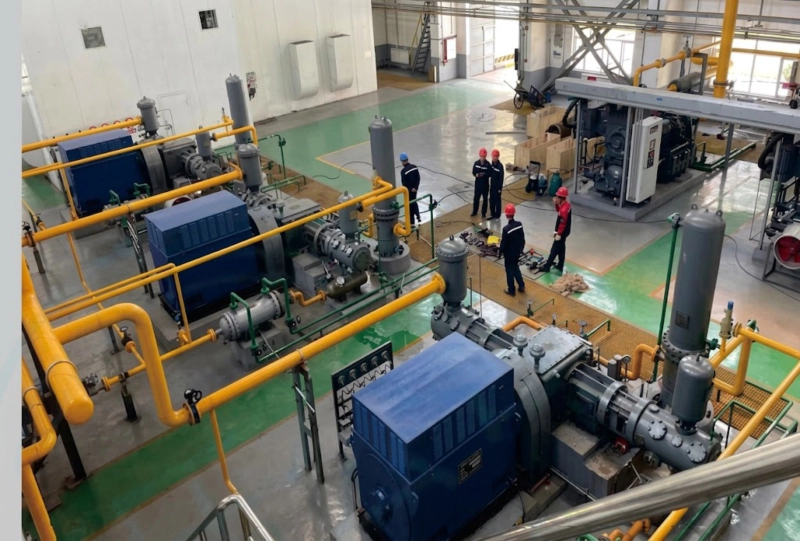
Figure 2: Real-world heavy operational deployment explicitly demonstrating the sprawling D-Type horizontal balanced-opposed structural rigidity, ensuring completely vibration-free extreme-pressure containment.
The single most complex fluid-dynamic challenge lies within the primary piston rod packing seals. The latent internal suction pressure is constantly maintained at a crushing 49 bar. The packing matrix must flawlessly seal and contain 49 bar of reactive pure oxygen 24/7, preventing it from blasting down the rod shaft and mixing with flammable crankcase oil. We achieve this through a proprietary, multi-chambered, pressure-cascading PTFE sealing matrix, utilizing advanced pressure-breaker rings and scavenged API-618 purge gas containment zones.
4. Extreme Material Science: Neutralizing 100-Bar Particle Impingement Ignition
When engineering the DW-40/4.9-10 specifically for continuously circulating Pure Oxygen at 100 bar, standard industrial safety paradigms are rendered obsolete. At 100 bar, the physical density of oxygen is immense, and its chemical reactivity is exponentially magnified. If ordinary carbon steel is utilized within the gas path, microscopic flakes of iron oxide inevitably detach due to the 2400 Nm³/h turbulent flow. Propelled at dangerous aerodynamic velocities, these metallic particles become incendiary projectiles. Upon striking a pipe bend, the kinetic impact sparks an instantaneous, devastating metal fire that cannot be extinguished.
To mathematically neutralize this threat and achieve strict compliance with EIGA IGC 10/07/E guidelines, our engineering teams deploy an uncompromising materials matrix:
- Massive Solid Billet 316L Austenitic Stainless Steel: We strictly prohibit the use of cast iron or standard carbon steel in all 100-bar oxygen-wetted zones. The ultra-thick extreme-pressure cylinders, pulsation dampeners, and heavy piping manifolds are CNC-machined entirely from heavily forged, medical-grade solid billets of 316L austenitic stainless steel. The extreme chromium and elevated nickel content guarantees absolute chemical immunity to high-pressure oxidation, ensuring zero particle generation.
- Hyper-Density PTFE/Bronze/Glass-Fiber Matrix Seals: Liquid lubricating oil is legally prohibited by EIGA codes near the 100-bar oxygen path due to the uncontrollable detonation hazard. Creating a flawless dynamic hermetic seal relies entirely on advanced dry composite technology. We utilize a hyper-dense matrix of virgin PTFE reinforced with aerospace-grade milled glass fiber and bronze powder. This self-lubricating labyrinth seal contains 100 bar without mechanical extrusion while transferring frictional heat safely away.
- Extreme-Duty PEEK High-Pressure Valve Assemblies: The high-pressure gas valves violently snap open and shut against an unyielding 100-bar wall millions of times per month. Traditional commercial stainless steel valves shatter rapidly due to severe high-cycle impact fatigue. We strictly employ massively oversized valve plates machined entirely from raw PEEK (Polyether ether ketone)—an advanced thermoplastic aerospace polymer offering unmatched flexural impact strength and absolute chemical inertness to 100-bar pure oxygen.
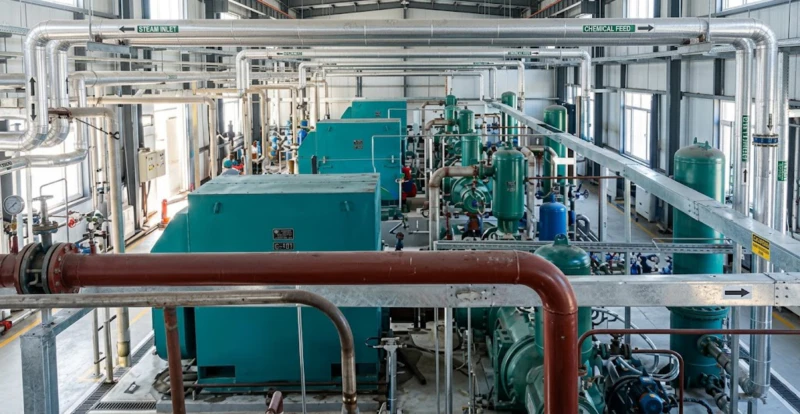
Figure 3: Close-up of the massively anchored D-Type structural design. Heavily forged 316L austenitic stainless steel is mandated for all extreme-pressure manifolds to completely prevent particle impingement ignition.
5. Core Operational Advantages and Total Cost of Ownership (TCO) Annihilation
In massive heavy petrochemical manufacturing, capital-intensive heavy equipment must be evaluated on its true Total Cost of Ownership (TCO) across a grueling 15-to-25-year lifecycle. The DW-40/4.9-10 is holistically engineered to dismantle the OPEX burdens associated with continuous 100-bar circulation.
Massive Energy Savings via VFD Loop Synchronization
The dynamic friction losses within a massive 100-bar oxidation loop fluctuate widely based on catalytic processing schedules. Running a colossal 600 kW main motor at a fixed 100% speed 24/7 is financially ruinous. Strategically integrating a massive Variable Frequency Drive (VFD) allows the central Siemens PLC to dynamically modulate the rotational velocity of the crankshaft in real-time, perfectly synchronizing the 2400 Nm³/h swept flow capacity with the exact live pressure-drop demands, aggressively slashing annual operational electrical expenditures.
Double Distance-Piece 100% Zero-Leak Recovery
Violently venting highly reactive 100-bar gas into a petrochemical facility due to cheap packing leaks is unacceptable and illegal under ATEX and EIGA safety mandates. The DW-40/4.9-10 aggressively employs engineered API-618 Type-C double-compartment distance pieces. Any high-pressure gas that migrates past the primary PTFE packing seals is immediately trapped in an intermediate chamber, forcefully swept by a low-pressure Nitrogen purge line, and securely piped back into a safe recovery loop. This eliminates deadly environmental gas leakage.
6. Strategic Industrial Synergies: High-Pressure Synthesis to Advanced Polymer Packaging
As a comprehensive global industrial engineering provider, we recognize that violently circulating pure oxygen at 100 bar to drive massive chemical oxidation loops (such as the extreme-pressure processing of Purified Terephthalic Acid or specialized polycarbonates) is merely the foundational phase of the supply chain. The highly refined liquid or specialized raw polymer derivatives originating from these reactors must ultimately be transformed into secure, rigid finished products for global distribution.
To fully support our EPC clients’ complete end-to-end vertical integration strategies, we design and manufacture complementary, ultra-high-precision polymer processing equipment. For heavy industrial facilities extracting high-value pharmaceutical-grade resins or specialized medical PET polymers utilizing our high-pressure circulation networks, we recommend seamlessly integrating our advanced Blow Molding Machine technology directly into your final downstream packaging lines. This injection stretch blow molding system is the definitive solution for manufacturing leak-proof, highly sterile, high-barrier medical bottles and rigid pharmaceutical packaging from synthesized polymers, ensuring your high-value derivatives are safely hermetically packaged for transit.
7. Extreme Industry 4.0 Automation, 100-Bar Safety Integration, and SCADA Connectivity
Relying on traditional manual human operator oversight for a mechanical system circulating 2400 cubic meters of hyper-reactive pure Oxygen at 100 bar every hour is a catastrophic safety risk. To scientifically mitigate all dynamic operational risks, the DW-40/4.9-10 is governed by a state-of-the-art, SIL-rated Industry 4.0 digital automation architecture. The central digital brain is a premium, ultra-high-speed programmable logic controller, typically deploying the advanced Siemens S7-1500 series. Because 100-bar Oxygen is hyper-reactive, all local field sensor arrays, heavy pneumatic actuators, and the PLC cabinet itself are certified to strict ATEX Zone 1 / Zone 2 Ex d standards to permanently eliminate any potential electronic ignition source.
The Siemens PLC is continuously fed live, micro-second data from a dense array of specialized industrial sensors. High-precision RTDs actively monitor gas temperatures, while extreme high-pressure transmitters and kinetic vibration monitors ensure the machine operates flawlessly within its mechanical envelope. This exhaustive digital sensor matrix enables a fail-safe multi-tiered safety protocol. If critical parameters rapidly breach physical limits (e.g., a 105-bar overpressure event indicating a dangerous downstream reactor loop blockage), the PLC instantaneously severs main power, violently activates pneumatically-piloted blowdown valves to safely vent trapped 100-bar gas, and mechanically isolates the machine to neutralize the hazard. Utilizing standard Modbus TCP/IP protocols via secure fiber-optic networks, the compressor skid seamlessly integrates into the petrochemical mega-plant’s primary DCS (Distributed Control System).
8. Deep-Dive Industry Use Cases & Extreme-Pressure Circulation Scenarios
The unmatched mechanical combination of a robust 100-bar terminal discharge pressure, a 2400 Nm³/h continuous flow rate, and a fully automated oil-free thermal safety architecture tailored for 49-bar foundational suction makes the DW-40/4.9-10 the definitive circulation solution for powering advanced chemical processes.
Case Study A: Massive Petrochemical Oxidation Loops (PTA / EO Production)
The Extreme Challenge & Solution: In modern advanced mega-scale petrochemical plants synthesizing massive quantities of Purified Terephthalic Acid (PTA) or Ethylene Oxide (EO), highly purified oxygen must be continuously circulated through a catalytic reactor vessel already pressurized to 49 bar. The chemical reaction depends entirely on maintaining continuous extreme high-pressure turbulence. Deployed as the primary circulatory heart, the DW-40/4.9-10 precisely draws the unreacted 49-bar pure oxygen safely from the massive separator vessel and forcefully boosts it to exactly 100 bar, continuously injecting it back into the reactor base to successfully sustain the massive chemical yield.
Case Study B: Advanced High-Pressure Syngas and Hydrogen Blend Circulation
The Extreme Challenge & Solution: Experimental advanced clean-energy facilities rely on the continuous circulation of complex Synthetic Gas (Syngas) or highly dangerous Hydrogen/Oxygen blends at extreme high-pressures strictly for complex carbon-capture loops or aerospace fuel-cell testing. The severe mechanical D-Type balanced architecture provides a zero-leak, structurally secure containment vessel. The DW-40/4.9-10 safely secures this heavy high-pressure circulation process through its reliable API-618 containment technology and advanced purge gas recovery system, ensuring completely safe operation in volatile environments.
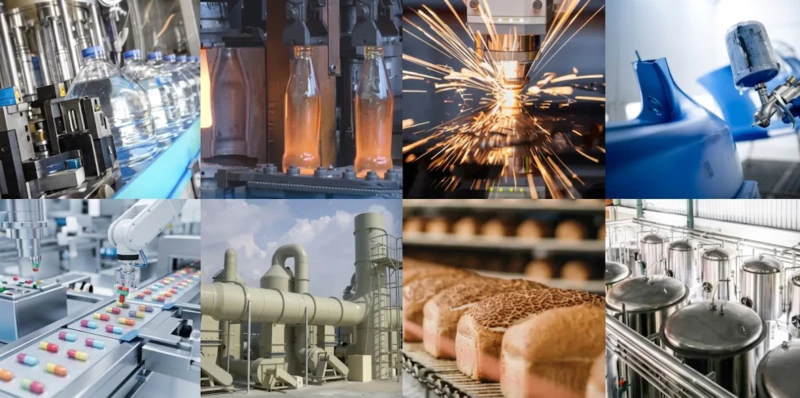
Figure 4: The DW-40/4.9-10 serving as the centralized mega-volume extreme-pressure circulation booster for a massive integrated chemical plant.
9. Global Procurement, Complex Logistics, and Heavy Site Civil Engineering
Executing a successful, highly profitable EPC procurement strategy for a colossal 2400 Nm³/h, extreme-pressure 100-bar circulation machine requires uncompromising engineering diligence. The physical, real-world installation of the massive DW-40/4.9-10 demands highly advanced heavy-duty site civil engineering preparation. When dealing with a massive reciprocating mass pushing continuously against an unrelenting 100 bar of aerodynamic resistance, driven by a megawatt-class motor, the structural engineering focus shifts entirely to safely managing immense dynamic rod loads and destructive kinetic vibration.
Proper, vigorously validated heavy civil foundation preparation is absolutely critical. While the mathematically perfect balanced geometry of the D-Type frame naturally cancels out primary and secondary shaking forces well, the massive overall static and dynamic weight of the skid strictly requires a deeply excavated, vibrationally isolated reinforced concrete foundation block. During the initial procurement phase, our senior engineering team provides exhaustive 3D civil foundation CAD blueprints directly to your EPC contractors. The heavy concrete block must be poured precisely, incorporating deep-set J-style steel anchor bolts and specialized high-strength epoxy grout. The physical mass of the concrete block is mathematically calculated to be typically 5 to 7 times the total static weight of the compressor skid to effectively absorb and nullify residual low-frequency vibrations that could damage the 100-bar piping network.
For global logistics, our optimized standard manufacturing lead time is exceptionally lean for customized extreme-pressure equipment—averaging merely 160 to 180 days from approved corporate order confirmation to rigorous Factory Acceptance Testing (FAT). To mathematically guarantee absolute zero downtime over the machine’s multi-decade lifecycle, we advise all international EPC clients to heavily invest in our comprehensive “5-Year Turnkey Operational Spare Parts Kit” concurrently. By actively shipping critical consumable parts (massive PTFE heavy piston rings, oversized high-pressure PEEK valve assemblies, and 100-bar packing sealing sets) inside the original crating, clients bypass future international shipping costs and complex border customs delays.
10. Executive Technical FAQ: DW-40/4.9-10 Mega-Volume 100-Bar Circulation
To actively support rapid engineering evaluation by massive global EPC firms and extreme-pressure cryogenic chemical process designers, our senior technical team has distilled the ten most critical technical inquiries regarding the global deployment of the 2400 Nm³/h, 100 bar DW-40/4.9-10 circulation compressor system.
1. Why is circulating 49-bar Oxygen to 100 bar mechanically dangerous compared to standard 1-bar compression?
2. Why is the D-Type Symmetrical Balanced-Opposed frame mandatory for 100-bar circulation?
3. How do you absolutely prevent particle impingement ignition at 100 bar?
4. What is the function of the “Double Distance Piece with Nitrogen Purge”?
5. How do the PTFE dry-running seals survive continuous 100-bar pressure without liquid oil?
6. Why is aerospace-grade PEEK strictly required for the 100-bar gas valves?
7. Can the DW-40/4.9-10 accurately adapt to changing pressure drops in the chemical loop?
8. What are the specific thermal management requirements for an extreme-pressure circulation compressor?
9. Is the entire compressor control system fully ATEX certified for hazardous chemical zones?
10. How does the compressor integrate into the petrochemical plant’s central DCS?
Command Extreme-Pressure Chemical Loops with Absolute Authority
Master the most highly demanding, deeply critical extreme-pressure closed-loop oxidation processes in the global petrochemical sector. Power your massive PTA and EO chemical reactors with the unrelenting 2400 Nm³/h, 100-bar extreme circulation capacity of the DW-40/4.9-10. Secure world-class 100% absolute oil-free EIGA-compliant containment and disruptive factory-direct heavy equipment pricing today.
Request a Factory-Direct Technical Quote
Our dedicated senior high-pressure fluid dynamics engineering team will rigorously review your specific 49-bar to 100-bar flow requirements, exact purified gas composition, critical chemical loop velocity metrics, and site civil engineering constraints, responding confidently within 24 hours with mathematically verified severe-duty sizing data.