3ZW-13.5/30.4 High-Pressure Oil-Free Oxygen Compressor
3ZW-13.5/30.4 high-pressure oil-free oxygen compressor (810 Nm³/h, 30.4 bar). 3-stage booster ideal for heavy laser cutting & chemical synthesis. API618.
1. The Macro-Economics of High-Pressure Oxygen Transfer & Comprehensive Product Overview
For decades, heavy industrial facilities requiring high-pressure oxygen (exceeding 20 bar) were completely dependent on predatory, highly expensive liquid oxygen (LOX) supply chains. Facilities were forced to purchase super-cooled liquid oxygen, store it in massive cryogenic tanks, and utilize energy-intensive evaporators to achieve the high pressures required for their processes. Today, the industrial paradigm has completely fractured this outdated model. The rise of highly efficient, massively scalable on-site Vacuum Pressure Swing Adsorption (VPSA) and advanced Pressure Swing Adsorption (PSA) generation plants allows factories to produce their own pure oxygen at a fraction of the cost. However, VPSA plants inherently produce oxygen at extremely low pressures. The critical, undeniable engineering bottleneck of the 21st century is bridging this gap: taking massive volumes of low-pressure on-site generated oxygen and safely, continuously boosting it to the extreme high pressures required by modern advanced manufacturing, typically around 3.04 MPa (30.4 bar).
Enter the 3ZW-13.5/30.4 High-Pressure Oil-Free Oxygen Compressor. This towering achievement in high-pressure pneumatic engineering represents the absolute vanguard of heavy-duty, multi-stage industrial gas compression. Operating on an exceptionally rigid, highly advanced 3-stage vertical Z-Type kinematic framework, the 3ZW-13.5/30.4 is meticulously engineered to ingest massive volumes of low-pressure gas from on-site generators and violently compress it to a staggering 3.04 MPa (30.4 bar / approx. 440 psi). It achieves this immense pressure spike while continuously processing an extraordinary 13.5 Normal cubic meters per minute (13.5 Nm³/min), which mathematically equates to an immense 810 Nm³ per hour (or nearly 19,440 Nm³ per standard 24-hour cycle). Compressing highly reactive oxygen to 30.4 bar at this massive volumetric scale requires absolute thermodynamic mastery, uncompromising structural rigidity, and total metallurgical perfection.
What decisively elevates the 3ZW-13.5/30.4 above standard industrial compressors is its highly sophisticated, mathematically perfect 3-stage thermodynamic cycle and its absolute, ironclad 100% oil-free guarantee. When dealing with pure oxygen at 30.4 bar, the gas density is extreme, and its reactivity as an oxidizer is magnified exponentially. Even a microscopic, aerosolized droplet of hydrocarbon lubricating oil at this pressure presents an immediate, catastrophic, and completely unacceptable thermal auto-ignition hazard. By entirely eliminating hydrocarbon-based oil lubrication from the compression cylinders utilizing aerospace-grade PTFE/Bronze composite seals, and employing unyielding physical structural isolation via extended API618 distance pieces, this unit guarantees 100% pure, uncontaminated, and flawlessly safe high-pressure gas delivery. For EPC contractors, chief chemical engineers, and global procurement directors, deploying the 3ZW-13.5/30.4 represents the ultimate strategic economic maneuver: permanently cutting the tether to highly expensive liquid oxygen suppliers and fully securing an unstoppable, heavily armored pipeline of high-pressure pneumatic energy.
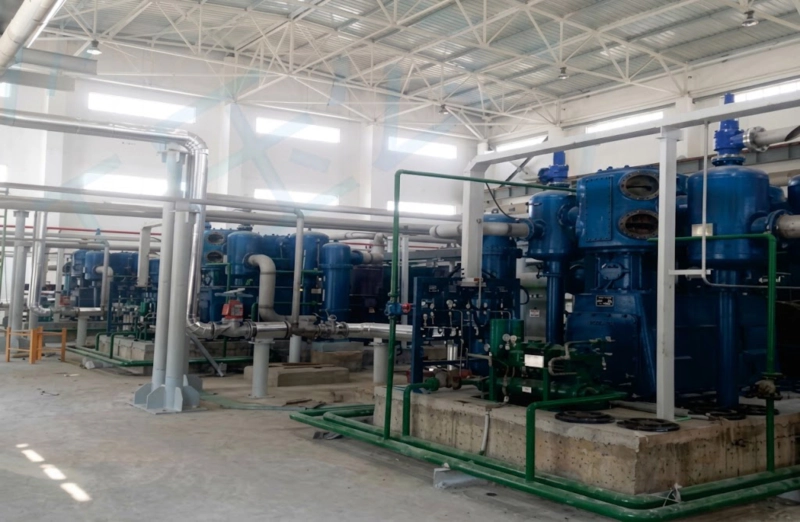
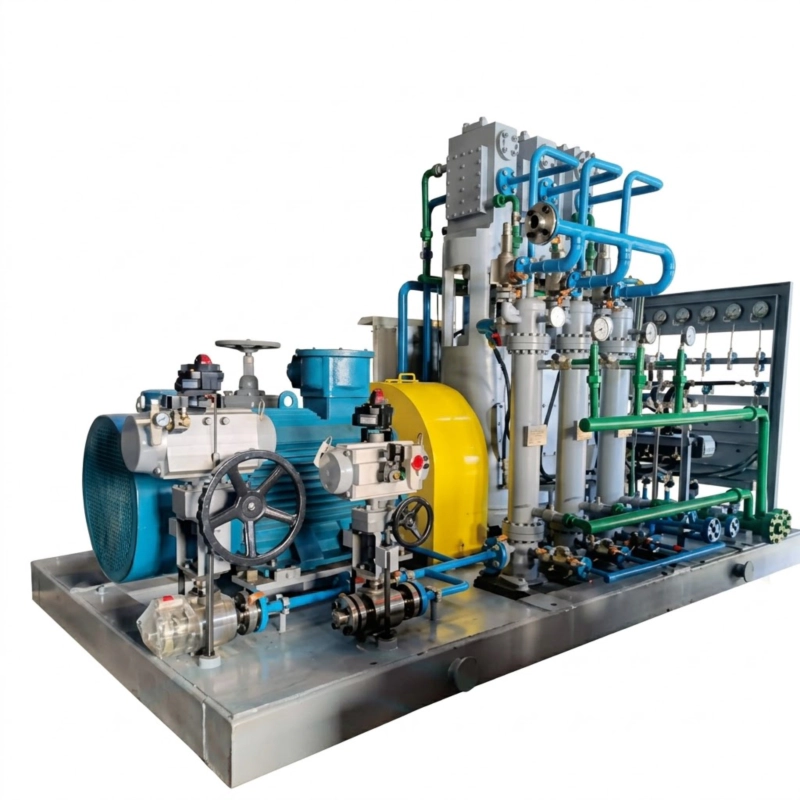
Figure 1: The 3ZW-13.5/30.4 Heavy-Duty 3-Stage Assembly – Delivering an unprecedented 810 Nm³/h continuous flow at an extreme 30.4 bar for global high-pressure industrial applications.
2. Exhaustive Technical Specifications & Operating Envelope
Precision mechanical engineering at this extreme pressure scale dictates that the machine’s capabilities must be perfectly mapped to the incredibly demanding laws of high-pressure thermodynamics. At 30.4 bar, standard pneumatic rules entirely collapse, replaced by severe density challenges and immense dynamic rod loads. The following highly comprehensive technical parameters define the strict operational envelope of the 3ZW-13.5/30.4 model. Designed explicitly for extreme-duty, continuous 24/7/365 baseload operation, this unit strictly adheres to international API618 design codes for heavy machinery and EIGA IGC 10/07/E rigorous safety mandates for extreme high-pressure oxygen environments.
| Technical Parameter | Nominal Value / Engineering Specification |
|---|---|
| Model Designation Architecture | 3ZW-13.5/30.4 (High-Pressure 3-Stage Vertical Z-Type Series) |
| Approved Compression Mediums | Pure Oxygen (O₂), Pure Nitrogen (N₂), High-Purity Dry Air |
| Volumetric Flow Rate (Capacity) | 13.5 Nm³/min (810 Nm³/hour) – Base-load Continuous Duty |
| Nominal Suction (Inlet) Pressure | Atmospheric (0 MPa) to 0.2 MPa (Dynamically matched to massive VPSA output) |
| Target Discharge Pressure | 3.04 MPa (30.4 bar / approx. 440.9 psi) |
| Thermodynamic Architecture | Strict 3-Stage Compression (Mandatory for safe 30.4 bar heat management) |
| Kinematic Frame & Layout | Heavy-Duty Vertical Z-Type, multi-cylinder configuration for primary force balancing |
| Lubrication Integrity | 100% Absolute Oil-Free (Utilizing high-density aerospace PTFE/Bronze seals) |
| Thermal Management Protocol | Massive Multi-Stage Shell-and-Tube Water Cooling (Intercooling 1-2, 2-3, & Aftercooler) |
| Main Drive Motor Power | 132 kW to 160 kW (Dependent on exact site inlet pressure and ambient altitude) |
| Manufacturing Compliance Codes | API618, EIGA IGC 10/07/E, ATEX (Optional), ISO 9001:2015, CE / GOST-R |
Critical 3-Stage Thermodynamic & High-Velocity Pipeline Notice: Forcing 810 Nm³/h to an extreme 30.4 bar introduces terrifyingly high gas densities and massive velocity challenges in downstream piping. If piping is improperly sized, the high-pressure oxygen velocity will exceed EIGA mandated safe limits, causing catastrophic friction ignition. We absolutely mandate a direct, highly technical consultation with our senior fluid dynamics department to configure exact pipeline diameter specifications and verify 3-stage thermodynamic performance curves prior to final corporate procurement.
3. The Deep Physics and Mechanics of 3-Stage High-Pressure Thermodynamics
Mechanically displacing 13.5 cubic meters of oxygen per minute and brutally forcing it to a 30.4 bar pressure state demands an engineering approach that completely rejects standard compressor designs. To understand the 3ZW-13.5/30.4, one must understand the unyielding laws of adiabatic compression. When a gas is compressed, the mechanical work performed by the 132 kW motor is instantly converted into intense thermal energy. Attempting to compress oxygen from 1 bar (atmospheric) to 30.4 bar is a staggering 30:1 compression ratio. If attempted in a single cylinder, or even two cylinders, the localized temperature would violently spike to well over 300°C. In an oxygen-rich environment, this extreme temperature instantly vaporizes PTFE seals and pushes the entire high-pressure steel chamber past the auto-ignition threshold, resulting in an immediate, devastating explosion.
The 3ZW-13.5/30.4 comprehensively eliminates this physical impossibility by employing a mathematically perfected 3-Stage Vertical Z-Type Architecture. The total 30:1 compression ratio is elegantly divided across three entirely distinct compression cylinders, yielding a highly safe inter-stage ratio of roughly 3.1:1 per stage.
The 3-Stage Cycle: In the massive 1st-stage cylinder, the 810 Nm³/h volume of incoming gas is compressed to roughly 3.1 bar. This generates moderate, easily controlled heat. The gas is forcefully expelled into a massive shell-and-tube water intercooler, instantly stripping the heat away and returning the gas to near-ambient temperature (≤40°C). This dense, cooled gas then enters the smaller 2nd-stage cylinder, where it is compressed to approximately 9.7 bar. Again, it is immediately cooled in a second intercooler. Finally, this highly dense, 9.7 bar gas enters the 3rd-stage high-pressure cylinder, where the immense power of the machine thrusts it to the final target of 30.4 bar. It passes through a final, massive high-pressure aftercooler before exiting the skid. This deeply calculated, stepped thermodynamic cycle ensures that at no point does the pure oxygen ever approach dangerous temperature limits, strictly maintaining the EIGA-mandated maximum of 130°C throughout the entire extreme-pressure process.
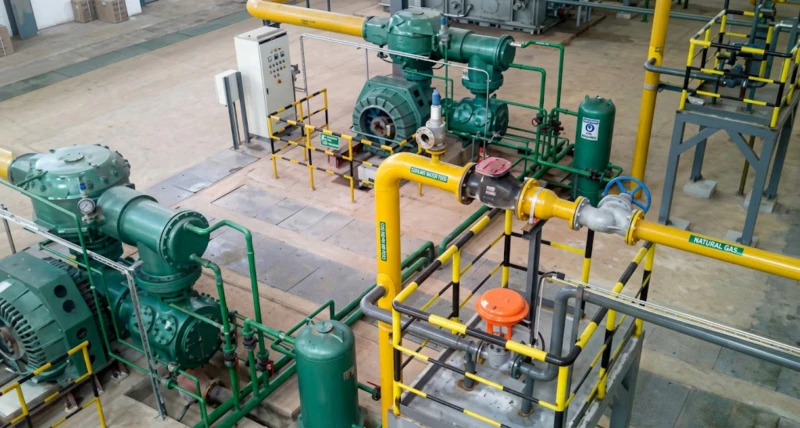
Figure 2: Real-world operational deployment explicitly demonstrating the towering vertical Z-Type structural rigidity, the massive multi-stage intercooler banks, and the extremely heavy flanged piping arrays rigorously required to safely contain 30.4 bar pressures.
Beyond thermodynamics, managing the kinetic energy of a 132 kW motor driving high-pressure pistons is a monumental mechanical challenge. The 3rd-stage piston must overcome an immense 30.4 bar of backpressure on every single stroke, generating punishing dynamic rod loads. The Vertical Z-Type Kinematic Frame is explicitly designed for this exact brutal punishment. The foundation crankcase is poured from ultra-high-density nodular cast iron. By orienting the cylinders vertically, the immense weight of the pistons and rods is naturally supported in a straight line, completely eliminating the asymmetrical oval-wear inside the cylinder bore that plagues horizontal compressors. This vertical alignment ensures the massive kinetic shockwaves are transmitted directly downward into the heavy concrete foundation, resulting in a 132 kW mega-machine that runs exceptionally smoothly, vastly extending the operational lifespan of the high-pressure bearings and delicate 30.4 bar utility piping.
4. Advanced Material Science: Defeating 30.4 Bar Extreme High-Velocity Oxidation
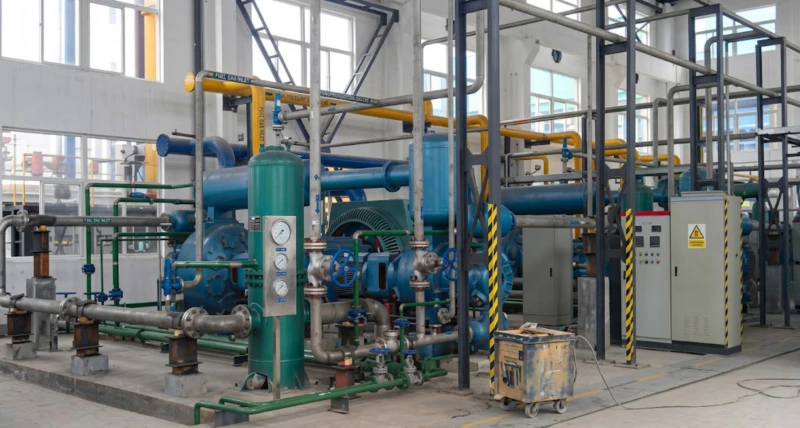
Figure 3: Close-up of the massively anchored 3-stage structural design and the extremely high-grade, totally oxidation-immune 316L stainless steel forged manifolds required to safely transport 810 Nm³/h of highly reactive oxygen at a blistering 30.4 bar.
Operating at 30.4 bar changes the fundamental chemistry of oxygen. At this extreme pressure, oxygen molecules are incredibly dense and aggressive. The ignition temperature of all surrounding materials plummets. If standard carbon steel were utilized anywhere in the high-pressure gas path, microscopic flakes of iron oxide (rust) would inevitably detach. Propelled at extreme velocities within the 810 Nm³/h gas stream, these rust particles become incendiary projectiles. Upon striking a pipe elbow or valve seat, the sheer kinetic impact would spark an instantaneous, devastating metal fire—a phenomenon known as particle impingement ignition. To entirely neutralize this terrifying threat, our proprietary manufacturing protocol relies on a rigorously guarded matrix of aerospace-grade alloys and composites:
- Solid Forged Austenitic 316L Stainless Steel Cylinders: Standard casting methods are completely banned for our 2nd and 3rd stage high-pressure blocks due to the risk of micro-porosity holding trace oils. These cylinders are heavily machined from raw, solid billets of premium, medical-grade 316L austenitic stainless steel. The extreme chromium and nickel content guarantees absolute, 100% chemical immunity to high-pressure oxygen-induced oxidation. The internal bores undergo multi-stage diamond honing to achieve a flawless microscopic mirror-finish (Ra < 0.4 µm), completely eliminating friction hot-spots against the high-pressure piston.
- High-Density High-Pressure PTFE/Bronze Matrix Seals: Because liquid lubricating oil is strictly prohibited by EIGA codes, sealing 30.4 bar of pressure relies entirely on dry composite technology. Standard PTFE would instantly deform and fail under 30.4 bar of force. We utilize an advanced, hyper-dense matrix of Polytetrafluoroethylene structurally reinforced with high ratios of aerospace carbon fiber and bronze powder. This proprietary blend creates a rigid, labyrinth seal capable of containing 30.4 bar without extrusion, while the bronze actively conducts intense frictional heat away from the ring interface.
- Extreme-Duty PEEK Valve Assemblies: The 3rd-stage high-pressure gas valves act as the heart of the system, violently snapping open and violently slamming shut against an unyielding 30.4 bar wall of backpressure millions of times a month. Traditional stainless steel valves shatter rapidly due to extreme high-cycle impact fatigue. We employ massive valve plates machined from raw, virgin PEEK (Polyether ether ketone)—an advanced semi-crystalline thermoplastic aerospace polymer offering unmatched impact strength, extreme fatigue resistance, and total inertness to 30.4 bar oxygen.
5. Core Operational Advantages and Total Cost of Ownership (TCO) Annihilation
In massive heavy manufacturing and chemical synthesis plants, high-pressure equipment must be ruthlessly evaluated on its true Total Cost of Ownership (TCO) across a grueling 15-to-20-year lifecycle. The 3ZW-13.5/30.4 is holistically engineered from the drawing board to systematically dismantle the massive OPEX burdens associated with continuous 30.4-bar high-volume gas transfer, offering strategic operational advantages that directly amplify plant profitability.
100% Oil-Free Absolute EIGA Guarantee
We mandate absolute, zero compromise on high-pressure gas purity. The strict structural separation utilizing specialized, elongated API-618 distance pieces between the heavily lubricated lower iron crankcase and the volatile 30.4 bar stainless steel upper compression cylinders ensures that the 810 Nm³/h gas stream remains entirely immune to hydrocarbon aerosol contamination. This totally eliminates the need for highly expensive, constantly replaced downstream high-pressure coalescing filters and guarantees pristine purity for laser cutting nozzles or sensitive chemical reactors.
Massive Energy Savings via 132 kW VFD Integration
Demand for 30.4 bar oxygen fluctuates wildly based on daily laser cutting production quotas or chemical batch processing. Running a massive 132 kW motor at 100% fixed speed 24/7 is financially ruinous. The 3ZW-13.5/30.4 seamlessly integrates with top-tier Variable Frequency Drives (VFD). The intelligent PLC dynamically scales the heavy compressor’s RPM down in real-time to exactly match downstream pipeline demand. This entirely eliminates wasteful, incredibly dangerous 30.4 bar gas venting to the atmosphere and slashes annual electrical OPEX by huge margins.
Space-Saving Vertical Z-Type Foundation Footprint
Unlike sprawling, massive horizontal opposed high-pressure compressors that consume vast amounts of highly valuable factory floor space and require colossal foundations to handle 3-stage footprints, our unit leverages an exceptionally intelligent vertical Z-Type architecture. This vertical cylinder stacking drastically reduces the overall horizontal footprint while maintaining unparalleled straight-line kinetic stability. This allows aging manufacturing facilities to achieve monumental 810 Nm³/h high-pressure capacity upgrades within tightly confined, pre-existing utility rooms.
6. Extreme Industry 4.0 Automation, High-Pressure Safety Integration, and ATEX Capabilities
Relying on manual, human operator oversight for a heavy machine violently compressing an astonishing 810 cubic meters of gas to 30.4 bar every hour is an utterly unacceptable, highly dangerous safety risk. The 3ZW-13.5/30.4 is rigorously governed by a state-of-the-art, highly fortified Industry 4.0 digital architecture. The central digital brain is a premium, ultra-high-speed programmable logic controller (typically Siemens S7-1500 series or equivalent ABB hardware). If deployed in hazardous chemical environments, the entire machine—including the 132 kW motor, sensor arrays, and PLC cabinet—can be fully certified to strict ATEX Zone 1 / Zone 2 Ex d (Flameproof) standards. The PLC provides a highly intuitive, bilingual (English/Russian/Spanish) touchscreen HMI interface for flawless operator interaction.
The central PLC is continuously fed live, micro-second data from a dense array of specialized high-pressure industrial sensors. High-precision RTDs monitor gas temperatures at the intake, inter-stage, and discharge of all three compression stages. Crucially, high-pressure transmitters and vibration monitors on the massive crossheads ensure the machine operates flawlessly. This sensor matrix enables a highly sophisticated multi-tiered safety protocol. Tier 1 is the “Pre-Alarm” state. Tier 2 is the “Automated Emergency Shutdown (ESD)”. If parameters severely breach critical limits (e.g., 3rd-stage discharge temp > 130°C, or a 30.4 bar overpressure event), the PLC instantaneously kills main 132 kW power, activates massive high-pressure pneumatic blowdown valves to safely and rapidly vent trapped 30.4 bar gas to a safe exterior flare, and mechanically isolates the machine to completely neutralize any hazard.
Furthermore, the entire electrical system is fully SCADA (Supervisory Control and Data Acquisition) ready out of the box. By utilizing standard industrial communication protocols such as Modbus TCP/IP, Profinet, or RS485 RTU via secure fiber-optic lines, the massive compressor skid seamlessly integrates into the mega-plant’s higher-level Distributed Control System (DCS). This grants central control room operators total, unrestricted visibility and remote command capability from kilometers away, enabling highly secure, “lights-out” operation of the high-pressure station.
7. Deep-Dive Industry Use Cases & High-Pressure Application Scenarios
The unmatched combination of a massive 30.4 bar discharge pressure, an immense 810 Nm³/h continuous flow rate, and a fully automated 3-stage architecture makes the 3ZW-13.5/30.4 the definitive solution for powering the world’s most aggressive heavy manufacturing and advanced chemical processes.
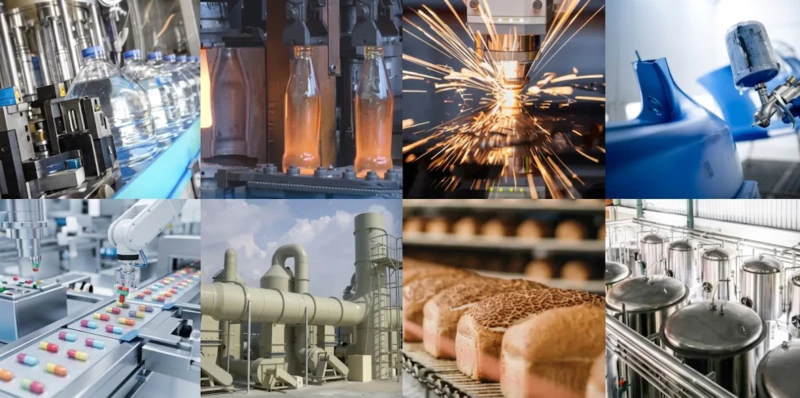
Figure 4: The 3ZW-13.5/30.4 serving as the unrelenting centralized high-pressure booster for a massive integrated manufacturing complex.
Case Study A: Heavy Plate Laser & Flame Cutting Networks
The Extreme Challenge & Solution: In massive shipbuilding yards, heavy heavy-machinery manufacturing, and massive steel fabrication facilities, giant CNC laser cutters and flame cutters must slice through incredibly thick steel plates (frequently >30mm thick). This process strictly requires a continuous, high-velocity jet of extremely pure oxygen at high pressures (typically 20 to 30 bar) to instantly blow away the molten slag and accelerate the exothermic cutting reaction. Liquid oxygen deliveries for this are astronomically expensive. By pairing an on-site VPSA plant with the 3ZW-13.5/30.4, facilities can generate massive volumes of gas for pennies and boost it to an unyielding 30.4 bar. The 810 Nm³/h capacity effortlessly feeds dozens of massive laser cutting machines simultaneously across a sprawling factory floor, guaranteeing flawless, smooth cuts and completely decimating operational overhead.
Case Study B: Advanced High-Pressure Chemical Synthesis
The Extreme Challenge & Solution: In advanced petrochemical processing and complex fine chemical synthesis, producing high-value compounds often involves highly pressurized catalytic oxidation. Reactors for these processes frequently operate at extreme backpressures, requiring the feed oxygen to be delivered reliably at 25 to 30 bar. Absolute 100% oil-free purity is mandatory; even a trace hydrocarbon will instantly poison the multi-million-dollar catalysts or trigger a violent reactor explosion. The ATEX-certified 3ZW-13.5/30.4 effortlessly takes pure oxygen and violently injects it into the sprawling reactor network at 810 Nm³/h. It provides a flawless, unwavering wall of 30.4 bar, totally pure oxygen, ensuring the chemical plant maintains maximum continuous yield while operating within absolute safety margins.
Case Study C: Long-Distance Municipal Pipeline Injection
The Extreme Challenge & Solution: When centralized mega-scale oxygen generation plants (like massive ASUs) need to supply heavy industries located several kilometers away, the friction loss within the long-distance pipeline causes a massive pressure drop. To guarantee the receiving factory gets adequate pressure, the initial injection pressure must be incredibly high, frequently requiring 30 bar. The 3ZW-13.5/30.4 acts as the ultimate centralized injection booster. Its heavy-duty 3-stage, water-cooled design ensures it can run 24/7/365 without pausing, continuously forcing 810 Nm³/h of absolutely pure oxygen into the massive municipal distribution network, guaranteeing consistent, powerful supply to end-users miles down the line.
8. Global Procurement, Complex Logistics, and Heavy Site Civil Engineering
Executing a successful procurement strategy for a highly complex 810 Nm³/h, 132 kW, 3-stage, 30.4 bar machine requires exact engineering diligence, extending far beyond simply signing a standard B2B purchase order. The physical installation of the massive 3ZW-13.5/30.4 requires strict, heavy-duty site civil preparation. When dealing with a colossal reciprocating mass pushing against 30.4 bar of resistance, the fundamental engineering focus shifts to managing immense dynamic rod loads and highly destructive low-frequency vibration.
Proper, heavy civil engineering preparation is absolutely mandatory. The machine strictly requires a deeply excavated, dedicated, vibrationally isolated reinforced concrete foundation block. During the initial procurement phase, our senior engineering team provides exhaustive, dimensionally accurate 3D civil foundation CAD blueprints. The concrete block must be poured precisely, incorporating deep-set, ultra-heavy-duty J-style anchor bolts. The mass of the concrete block is mathematically calculated by our engineers to be typically 4 to 5 times the total static weight of the entire massive compressor skid, an immense mass strictly required to effectively absorb and completely nullify the low-frequency kinetic vibrations that would otherwise literally tear apart the surrounding factory’s highly dangerous 30.4 bar pipework.
For global logistics, our standard manufacturing lead time is exceptionally lean for high-pressure equipment of this sheer scale—averaging 100 to 120 days from final order confirmation to comprehensive Factory Acceptance Testing (FAT). To guarantee absolute zero downtime over the machine’s multi-decade lifecycle, we strongly advise international clients (especially in remote industrial hubs like the Russian/CIS market, interior South America, or the Middle East) to purchase our comprehensive “5-Year Turnkey Operational Spare Parts Kit” concurrently. By shipping highly dense consumable parts (massive PTFE rings, specialized high-pressure PEEK valves) inside the original heavy-timber crating with the main compressor, clients entirely bypass all future international shipping costs and the highly costly delays of reactionary cross-border high-pressure procurement cycles.
9. Strategic Value Comparison vs. Legacy Western Monopoly Brands
Astute EPC Directors, Chief Engineers, and global procurement directors are rapidly recognizing that paying 400% to 500% premiums for a legacy brand name decal does not mathematically equate to better high-pressure thermodynamic performance or higher safety metrics. The 3ZW-13.5/30.4 offers a highly competitive CAPEX structure, yielding an extremely fast return on investment (ROI) for massive private works projects transitioning away from liquid oxygen dependency. Furthermore, while legacy European brands frequently quote 14 to 18 months for manufacturing a mega-machine of this 3-stage complexity—causing massive, highly destructive delays in critical plant construction projects—our agile manufacturing capabilities deliver the finished, heavily tested skid in under 120 days. Long-term OPEX is massively slashed, as we supply factory-direct OEM 30.4 bar rated spare parts at fair, transparent prices, entirely eliminating the monopolistic markups imposed by regional legacy distributors.
10. Executive Technical FAQ: 3ZW-13.5/30.4 High-Pressure Mega-Deployment
To fully support rapid, deep engineering evaluation by global EPC firms, heavy fabrication planners, and chemical process designers, our senior technical team has exhaustively distilled the ten most critical, highly technical inquiries regarding the deployment of the massive 30.4 bar, 3-stage 3ZW-13.5/30.4 compressor system.
1. Why is a 3-Stage architecture absolutely mandatory to reach 30.4 bar, rather than 2-stage?
2. What are the severe thermodynamic management requirements for cooling a 132 kW load at 30.4 bar?
3. How do you prevent particle impingement ignition in the 3rd-stage high-pressure piping?
4. How does the elongated distance piece guarantee 100% oil-free purity per EIGA regulations?
5. Can this massive 132 kW machine be fully winterized for severe cold-climate deployments in the Russian/CIS market?
6. How does the automated emergency shutdown (ESD) system protect a facility from a 30.4 bar overpressure event?
7. Exactly how does integrating a massive 132 kW Variable Frequency Drive (VFD) slash long-term OPEX?
8. Why is aerospace-grade PEEK (Polyether ether ketone) strictly required for the 3rd-stage high-pressure gas valves?
9. What are the massive specific civil engineering challenges for anchoring a 132 kW 3-Stage Z-Type machine?
10. How do you integrate this massive 3-stage high-pressure compressor into a modern, centralized mega-plant DCS?
Command Extreme High-Pressure with Absolute Reliability
Permanently eliminate your dependence on exorbitant liquid oxygen suppliers. Power your colossal heavy-plate laser cutting networks, extreme-pressure chemical synthesis reactors, and massive municipal injection pipelines with the unrelenting 810 Nm³/h, 30.4 bar capacity of the 3ZW-13.5/30.4. Secure world-class 100% absolute oil-free 3-stage compression, unbeatable heavy-duty Z-Type endurance, and highly disruptive factory-direct pricing today.
Request a Factory-Direct Technical Quote
Our dedicated senior high-pressure fluid dynamics engineering team will rigorously review your specific O2 generation mass flow requirements, critical 30.4-bar velocity metrics, and site civil engineering constraints, and respond strictly within 24 hours with mathematically verified 3-stage sizing data, 3D CAD foundation schematics, and fully transparent B2B global pricing.