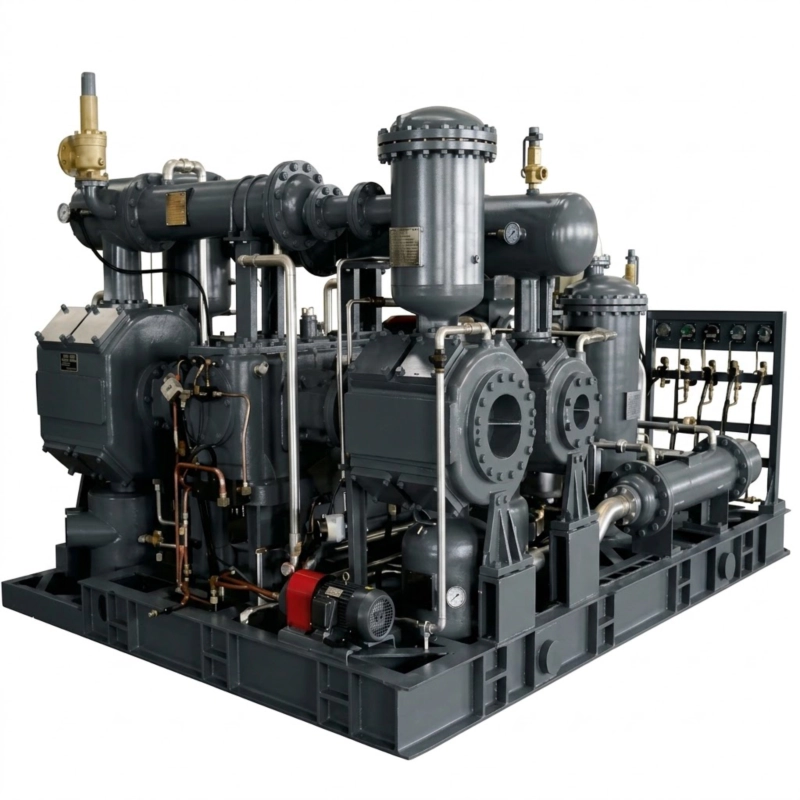
4MW-25/40 Oil-Free High-Pressure Air Compressor
Discover the 4MW-25/40 Oil-Free High-Pressure Air Compressor. Delivers 1500 Nm³/h of ISO Class 0 pure air at 40 bar. 4-stage system for heavy industry.
1. The Macro-Economics of 40-Bar High-Pressure Oil-Free Air
Within the highly specialized macroeconomic landscape of advanced manufacturing, the requirement for 4.0 MPa (40 bar) compressed air represents an extreme engineering frontier. While standard factory pneumatics operate at a mere 7 bar, and standard beverage packaging frequently operates around 22 bar, specific mega-scale industrial processes demand substantially higher kinetic force. In the global PET (Polyethylene Terephthalate) packaging sector, for example, the production of complex, thick-walled carbonated soft drink (CSD) bottles, massive 5-gallon water coolers, or highly intricate cosmetic containers strictly mandates up to 40 bar of instantaneous injection pressure to perfectly form the plastic against the chilled steel molds. Beyond packaging, cutting-edge industries such as mega-watt industrial laser cutting (where 40-bar air is used as an assist gas to violently clear molten metal from the cut kerf) and high-pressure aerospace component testing absolutely depend on a continuous, unyielding 40-bar utility baseload.
However, compressing atmospheric air to 40 bar introduces a profoundly dangerous and complex thermodynamic paradox when utilizing traditional lubricated machinery. At 40 bar, the physical density of the oxygen within the compressed air is drastically multiplied. If a standard oil-injected compressor is used, the synthetic hydrocarbon oil used for lubrication inevitably vaporizes into a high-pressure aerosol. Exposing this dense, highly concentrated oil mist to the extreme adiabatic heat generated by 40-bar compression creates the exact conditions for spontaneous auto-ignition—a phenomenon known in heavy engineering as the “diesel effect.” This can cause catastrophic, fatal explosions within the downstream high-pressure piping infrastructure, completely destroying the facility. Furthermore, even if it does not ignite, oil aerosol contamination at 40 bar will instantly ruin millions of dollars’ worth of consumer food packaging or permanently destroy ultra-sensitive laser cutting optics.
To absolutely, mathematically neutralize these catastrophic thermal and contamination risks, the heavy industrial sector relies entirely on specialized, heavily fortified machinery like the 4MW-25/40 Oil-Free High-Pressure Air Compressor. This megawatt-class industrial asset is systematically designed to completely isolate all mechanical lubrication from the extreme-pressure air zones. By deploying a strictly dry-running, 4-stage thermodynamic architecture equipped with advanced aerospace-grade PTFE sealing matrices, the 4MW-25/40 guarantees that the 1500 Nm³/h of air it delivers at 40 bar is inherently, perfectly clean—meeting and vastly exceeding the stringent ISO 8573-1 Class 0 global purity standards. Integrating this highly specialized machine secures an impregnable, zero-contamination, high-kinetic pneumatic heart for your most profitable manufacturing processes.
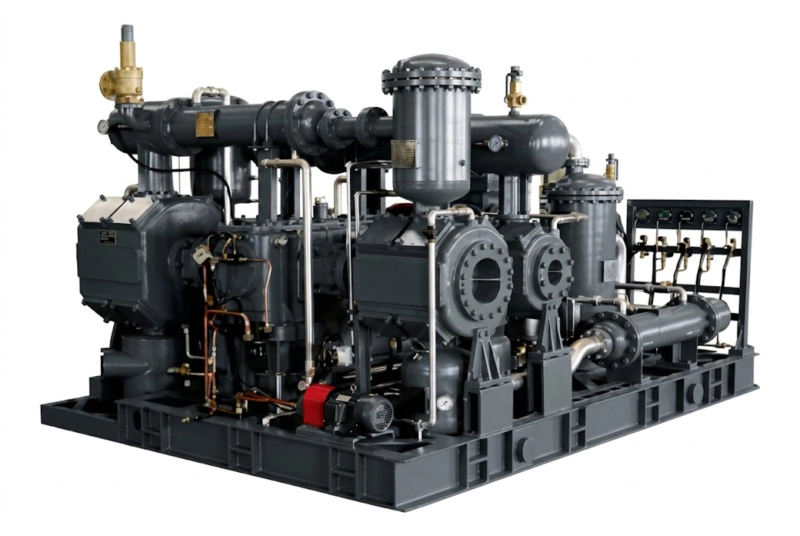
Figure 1: The Flagship 4MW-25/40 Heavy-Duty 4-Stage Assembly. Engineered from the ground up to aggressively draw atmospheric air and forcefully compress it to an uncompromising 40-bar, 100% oil-free state for critical heavy industry.
2. Exhaustive Technical Specifications & 40-Bar Operating Envelope
Precision fluid dynamics at a 40-bar (4.0 MPa) terminal scale mandates that the heavy machine’s internal structural integrity and electrical powertrain are mathematically mapped to the unforgiving laws of multi-stage thermodynamics. Squeezing 1500 Nm³/h of air through a massive 40:1 total compression ratio generates immense kinetic resistance, necessitating a highly robust electrical drive system typically ranging from 250 kW to 315 kW. The following comprehensive technical parameters deeply define the uncompromising operational envelope of the flagship 4MW-25/40 model.
| Technical Parameter | Nominal Value / Engineering Specification |
|---|---|
| Model Designation Architecture | 4MW-25/40 (4-Stage High-Pressure Process Series) |
| Approved Compression Medium | Atmospheric Process Air, High-Purity Nitrogen (N₂) |
| Volumetric Flow Rate (Capacity) | 25.0 Nm³/min (1500 Nm³/hour) – Continuous Baseload Duty |
| Nominal Suction (Inlet) Pressure | Atmospheric (0.1 MPa absolute) via Heavy-Duty Intake Filtration |
| Target Discharge Pressure | 4.0 MPa (40.0 bar / approx. 580 psi) |
| Thermodynamic Architecture | Strict 4-Stage Sequential Compression for Optimal Thermal Control |
| Kinematic Frame & Layout | Heavy-Duty MW-Type (Symmetrical Balanced-Opposed Horizontal) |
| Air Purity Certification | ISO 8573-1 Class 0 (100% Absolutely Oil-Free via distance piece isolation) |
| Thermal Management Protocol | 4-Stage Heavy-Wall Shell-and-Tube Industrial Water Cooling System |
| Primary Sealing Material | Self-Lubricating Glass-Fiber/Carbon Reinforced PTFE Matrix |
| Main Drive Motor Power | 250 kW to 315 kW (Variable dependent on precise ambient density) |
| Manufacturing Compliance Codes | API-618 (structural spacing), CE Machinery Directive, ASME Section VIII |
Extreme Pressure Advisory: Generating 40 bar of pure air requires massive structural reinforcement of downstream piping. Standard commercial schedule 40 pipelines will catastrophically rupture at these pressures. All downstream receiver tanks, moisture separators, and pneumatic routing lines must be constructed from highly certified heavy-wall carbon steel or 316L stainless steel (minimum Schedule 80 or Schedule 160) and rigorously hydro-tested to 60 bar prior to commissioning the 4MW-25/40 compressor.
3. The Thermodynamics of 4-Stage 40-Bar Compression Architecture
Attempting to compress atmospheric gas from a foundational state of 1.0 bar absolute to a terminal state of 40 bar represents an extreme 40:1 volumetric reduction. According to the foundational laws of adiabatic thermodynamics, mechanically forcing a gas into such a dense state results in a proportionately violent spike in kinetic molecular heat. If an engineering team attempted to bridge this immense pressure ratio in only one or two mechanical stages, the instantaneous discharge temperatures would effortlessly exceed 450°C. In this extreme thermal environment, the internal self-lubricating PTFE friction seals would instantly liquefy, the heavy steel valves would warp and shatter under thermal stress, and the volumetric efficiency would completely collapse as the superheated, expanded gas aggressively fights further compression.
To mathematically enforce a strict, unbreakable thermal safety barrier, the 4MW-25/40 meticulously divides the total mechanical workload across four entirely distinct, sequential compression stages. By stepping the pressure up gradually through a precisely calculated thermodynamic cascade, the adiabatic heat spike is segmented into manageable increments.
- Stage 1 (Mass Intake): Massive cylinders draw 1500 Nm³/h from the atmosphere, lightly compressing it to approximately 2.5 bar, preparing the mass density.
- Stage 2 (Intermediate Boost): The cooled air is drawn from the first intercooler and compressed to roughly 6.5 bar, further densifying the oxygen matrix.
- Stage 3 (High-Pressure Transition): The gas enters the smaller, heavy-wall cylinder, aggressively boosting the pressure to 16.0 bar.
- Stage 4 (Terminal 40-Bar Discharge): The final, highly reinforced smallest cylinder forcefully drives the highly dense gas into the critical 40.0 bar industrial target.
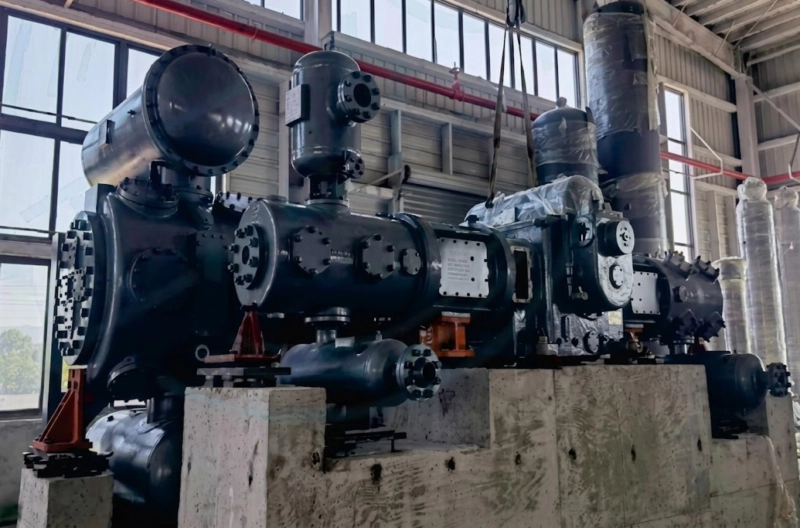
Figure 2: The 4-Stage Thermodynamic Cascade. Notice how the compression cylinders progressively decrease in massive physical diameter from Stage 1 to Stage 4. As the pressure aggressively increases, the physical volume of the air shrinks, requiring significantly smaller, but exponentially thicker, containment cylinders.
The absolute secret to this system’s immense efficiency and extreme longevity is its highly robust inter-stage shell-and-tube thermal management architecture. Between every single compression cylinder stroke, the aggressively heated process air is violently routed through massive, high-pressure heavy-wall heat exchangers. These units require a continuous, high-volume flow of chilled, chemically softened industrial facility water. As the hot 40-bar-bound air passes through the internal tube bundle, the cold water flowing through the surrounding shell rapidly strips away the intense kinetic heat. This deeply intelligent thermal cascading ensures that the air entering the subsequent compression stage is highly dense and cool. This process drastically reduces the total electrical kilowatts required by the massive main motor and mathematically guarantees the final 40-bar discharge temperature remains strictly below 150°C.
4. ISO 8573-1 Class 0: Absolute 100% Oil-Free Sealing Architecture
Achieving 40-bar pressure without utilizing liquid oil for internal cylinder sealing is a profound metallurgical and chemical engineering triumph. As previously detailed, introducing oil into a 40-bar highly oxygen-dense environment risks total catastrophic explosive failure. Furthermore, downstream applications such as blowing pharmaceutical-grade PET bottles or powering sensitive high-power fiber lasers cannot tolerate even a fraction of a part-per-million (PPM) of hydrocarbon aerosol.
To secure the highly coveted ISO 8573-1 Class 0 (zero oil) certification, the 4MW-25/40 entirely abandons liquid lubrication in the extreme-pressure gas path. The massive pistons utilize highly proprietary, extremely rigid piston rings, heavy rider bands, and primary rod packing sets fabricated from virgin Polytetrafluoroethylene (PTFE). Because pure PTFE would rapidly physically extrude and melt under 40 bar of pressure, the polymer matrix is aggressively alloyed with aerospace-grade milled glass fibers, high-temperature carbon graphite, and specialized bronze powder. This creates an incredibly dense, self-lubricating dynamic labyrinth seal. As the heavy piston oscillates, a microscopic layer of the PTFE blend permanently bonds to the highly polished, hardened stainless steel cylinder walls, creating a flawless, frictionless hermetic seal that contains the 40-bar air without any liquid assistance.
However, the massive multi-ton forged crankshaft and crosshead bearings in the lower crankcase strictly require a highly pressurized flood of liquid hydrocarbon oil to survive the 300 kW mechanical loads. To absolutely guarantee this oil never migrates into the pure air stream, the machine is built using extended, deeply ventilated API-618 Type-C Double Distance Pieces. These act as open-air physical isolation chambers structurally separating the oily crankcase from the dry compression cylinders. Specialized heavy-duty oil wiper rings scrape the piston rod entirely dry as it leaves the lower casing. Because of this massive physical open-air gap, it is physically, mechanically, and mathematically impossible for crankcase oil to travel upward and breach the 40-bar clean air zone, ensuring decades of perfectly pure output.
5. The Physics of MW-Type Kinetic Balancing and 40-Bar Structural Rigidity
Mechanically capturing massive volumes of gas and violently forcing it through a 4-stage cascade up to 40 bar generates staggering dynamic rod loads. When the final 4th-stage piston aggressively pushes against an unyielding 40-bar wall of highly dense pneumatic resistance, the resulting kinetic shockwave translating down the connecting rod to the crankshaft is immense. If the four heavy cylinders were arranged vertically or in a standard V-shape, the alternating kinetic forces would induce violent, highly destructive low-frequency vibrations capable of rapidly fatiguing the main compressor frame, shattering the connected high-pressure pipeline infrastructure, and cracking the factory floor.
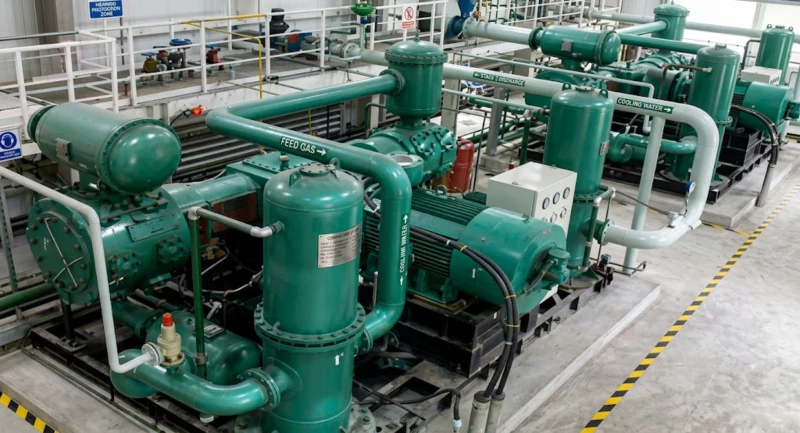
Figure 3: Real-world heavy operational deployment of the massive MW-Type architecture. The four compression cylinders are arranged entirely horizontally across the heavy-duty forged crankshaft, physically neutralizing destructive vibration.
To completely conquer these extreme internal kinetic forces, the 4MW-25/40 utilizes a sprawling, hyper-rigid MW-Type Symmetrical Balanced-Opposed Kinematic Architecture. The foundational crankcase is poured from ultra-dense nodular cast iron. The four compression cylinders are arranged strictly horizontally. Stage 1 is positioned exactly opposite Stage 2, and Stage 3 is exactly opposite Stage 4.
Because the reciprocating masses (the heavy pistons, massive cast crossheads, and connecting rods) are precisely weight-matched down to the gram by our engineers, their high-speed movements perfectly counteract one another. When the Stage 3 piston thrusts aggressively outward to compress gas, the opposing Stage 4 piston simultaneously thrusts in the exact opposite direction. This brilliant geometric symmetry mathematically cancels out the highly destructive primary and secondary shaking inertial forces. The final result is a ~300 kW machine that operates with uncanny smoothness, protecting the structural integrity of your massive 40-bar piping network.
6. Strategic Industrial Synergies: High-Pressure Air & Advanced PET Packaging
As a comprehensive global industrial engineering provider, we deeply understand that generating 1500 Nm³/h of 100% oil-free, 40-bar process air is almost exclusively the foundational utility phase for a much larger, highly profitable manufacturing ecosystem. The most prominent and financially critical application for this specific extreme-pressure class globally is the mass production of heavy-duty, thick-walled PET polymer containers—such as highly pressurized carbonated soft drink (CSD) bottles, massive 5-gallon water cooler jugs, and specialized heavy cosmetic packaging.
To actively support our global EPC clients’ complete end-to-end vertical integration strategies, we proudly design and manufacture deeply complementary, ultra-high-precision downstream polymer processing equipment. For massive beverage or chemical packaging facilities utilizing our 40-bar oil-free compressor networks, we strictly recommend seamlessly integrating our advanced Blow Molding Machine technology directly into your final automated packaging halls. This state-of-the-art injection stretch blow molding system relies exclusively on the pristine, high-pressure 40-bar process air generated by the 4MW-25/40. When the 40-bar air is violently injected into the heated thick-walled polymer preform, it flawlessly expands the dense plastic into the intricate mold cavity in milliseconds, producing absolutely perfect, highly rigid, extreme-barrier consumer bottles. Utilizing this advanced packaging machinery in tandem with our massive 40-bar oil-free compressors guarantees that your high-value consumer products are hermetically packaged with zero risk of catastrophic oil contamination or pneumatic failure.
7. Extreme Valve Material Science and PEEK Integration
The 40-bar high-pressure gas valves located in the 3rd and 4th compression stages are the literal mechanical beating heart of the machine. These valves must aggressively snap open and violently slam shut millions of times a month against an unyielding 40-bar wall of highly dense air. Traditional commercial stainless steel valve plates suffer from rapid high-cycle impact fatigue in these environments. Within months, metallic valves will crack, shatter, and ingest metal fragments directly into the high-pressure cylinders, causing catastrophic internal destruction and massive production downtime.
To permanently solve this critical failure point, the 4MW-25/40 exclusively employs massively oversized valve plates precision-machined from raw, solid PEEK (Polyether ether ketone). PEEK is an incredibly advanced aerospace thermoplastic that offers genuinely unmatched flexural impact strength and ultra-low mass. Because the PEEK valves are lightweight, they open and close instantaneously, practically eliminating aerodynamic pressure drop (∆P) and heavily increasing thermodynamic efficiency. More importantly, PEEK will never shatter under 40-bar impact fatigue. This advanced material science integration extends the Mean Time Between Failures (MTBF) for valve components by over 300% compared to standard metallic alternatives, keeping your highly profitable packaging or laser cutting facility running continuously.
8. Extreme Industry 4.0 Automation and SIL-Rated SCADA Connectivity
Relying entirely on traditional manual human operator oversight for a highly complex 4-stage machine generating 40-bar extreme pressure is totally unacceptable in the modern digital industrial era. To absolutely, scientifically mitigate all dynamic operational risks, the massive 4MW-25/40 is rigorously governed by a state-of-the-art, highly fortified Industry 4.0 digital automation architecture. The central digital brain is a premium, ultra-high-speed programmable logic controller (PLC), typically deploying the advanced Siemens S7-1500 or Allen-Bradley ControlLogix series, widely renowned globally for zero-latency reliability in heavy industrial environments.
The central PLC is continuously fed live, micro-second data from an incredibly dense array of specialized industrial sensors. High-precision RTDs actively monitor critical gas and cooling water temperatures at every single intake, inter-stage cooler, and the extreme 40-bar discharge point simultaneously. Extreme high-pressure transmitters and highly sensitive kinetic vibration monitors strictly ensure the heavy machine operates flawlessly within its mechanical envelope. To slash operational energy costs, the PLC seamlessly integrates with a massive Medium-Voltage Variable Frequency Drive (VFD), which actively modulates the 300 kW motor’s RPM to perfectly match your facility’s real-time 40-bar fluctuating demand, saving hundreds of thousands of dollars in wasted electricity annually.
If critical parameters rapidly breach physical limits (e.g., a massive loss of cooling water flow, or a 45-bar overpressure event indicating a highly dangerous downstream pipe blockage), the PLC instantaneously triggers an automated fail-safe protocol. It severs the massive main power, aggressively activates pneumatically-piloted 40-bar blowdown valves to safely rapidly vent all trapped extreme-pressure gas, and mechanically isolates the machine to neutralize any hazard. Utilizing robust industrial communication protocols like Modbus TCP/IP or Profinet via heavily shielded fiber-optic networks, the massive compressor skid seamlessly integrates into your mega-plant’s primary Distributed Control System (DCS) for complete remote operation.
9. Massive Civil Engineering Requirements & Global EPC Logistics
Executing a highly successful, profitable EPC procurement strategy for a colossal 40-bar, megawatt-class heavy industrial compressor fundamentally requires highly strict, heavy-duty site civil engineering physical preparation. When dealing with an immense reciprocating steel kinetic mass violently pushing against an unrelenting 40-bar wall of dense aerodynamic resistance, driven by a 300 kW motor, the structural engineering focus shifts entirely to safely managing immense dynamic rod loads and low-frequency destructive vibration.
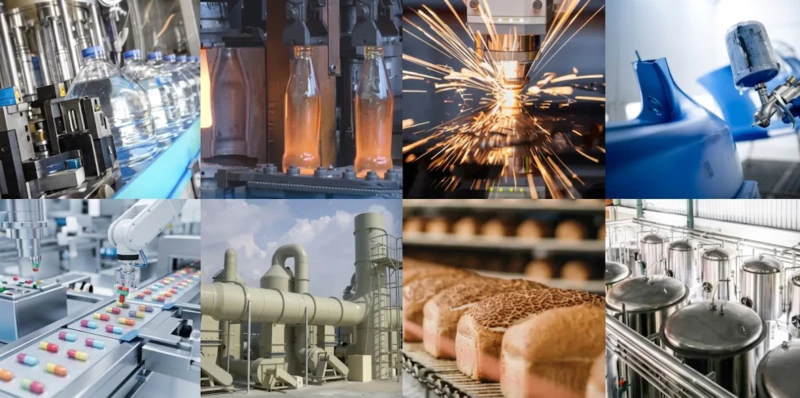
Figure 4: Strategic deployment of massive high-pressure pneumatic infrastructure. Proper heavy civil engineering and a massively deep, isolated concrete foundation block are strictly mandated to safely anchor and operate this 40-bar machinery over a grueling 25-year operational lifecycle.
Proper, vigorously validated heavy civil engineering structural foundation preparation is absolutely critical. The immense overall static and dynamic weight of the colossal 4-stage skid strictly requires a deeply excavated, highly dedicated, vibrationally isolated reinforced concrete foundation block. During the initial technical procurement phase, our senior engineering team provides exhaustive, dimensionally accurate 3D civil foundation CAD blueprints directly to your local EPC contractors. The heavy concrete mass is typically calculated to be 5 to 7 times the total static weight of the entire compressor skid, utilizing deep-set J-style anchor bolts and high-strength industrial epoxy grout. This massive concrete inertia block perfectly absorbs and nullifies any residual kinetic vibrations.
For highly remote international deployments, to mathematically guarantee absolute zero downtime over the machine’s multi-decade lifecycle, we strongly advise all international EPC clients to heavily invest in our comprehensive “5-Year Turnkey Operational Spare Parts Kit” concurrently. By actively shipping highly dense, critical consumable parts (such as massive PTFE heavy piston rings, oversized PEEK 40-bar valve assemblies, and specialized multi-stage packing sealing sets) inside the original heavy-timber shipping crating alongside the main machine, you entirely bypass all future international air-freight shipping costs and complex border customs delays when routine maintenance schedules eventually arise.
10. Executive Technical FAQ: 4MW-25/40 High-Pressure Operations
To effectively support rapid, deep engineering evaluation by massive global EPC firms, heavy packaging plant designers, and advanced laser-cutting facility planners, our senior technical team has exhaustively distilled the ten most critical technical inquiries regarding the deployment of the massive 40-bar 4MW-25/40 compressor.
1. Why is 40 bar (4.0 MPa) specifically required for PET blow molding instead of standard 22-bar air?
2. How is ISO 8573-1 Class 0 “100% Oil-Free” purity mechanically guaranteed at 40 bar?
3. Why does compressing to 40 bar require a complex 4-stage architecture?
4. What materials are used to ensure the extreme 40-bar valves do not shatter?
5. How does the Variable Frequency Drive (VFD) save massive operational electricity costs?
6. What are the heavy foundation civil engineering requirements for this 40-bar machine?
7. Can the compressor seamlessly integrate with our central factory SCADA / DCS system?
8. What exact type of cooling water system is strictly required to operate this machine?
9. How long do the PTFE dry-running piston rings survive under 40-bar stress?
10. What safety protocols trigger if a downstream 40-bar pipe is dangerously blocked?
Command Extreme-Pressure Performance with Absolute Purity
Master the highly demanding, deeply critical 40-bar high-pressure pneumatic requirements of the global thick-walled PET packaging, heavy laser cutting, and advanced aerospace testing sectors. Forcefully power your massive automated lines with the unrelenting 1500 Nm³/h capacity of the 4MW-25/40. Secure world-class ISO 8573-1 Class 0 absolute oil-free air, unbeatable 4-stage thermodynamic endurance, and disruptive factory-direct B2B heavy equipment pricing today.
Request a Factory-Direct Technical Quote
Our highly dedicated, deeply experienced senior pneumatic fluid dynamics engineering team will rigorously review your exact 40-bar flow requirements, ambient site elevation metrics, and massive civil engineering constraints, responding strictly within 24 hours with mathematically verified severe-duty 4-stage sizing data, exact heavy 3D CAD deep foundation schematics, and fully transparent B2B global EPC procurement pricing.