
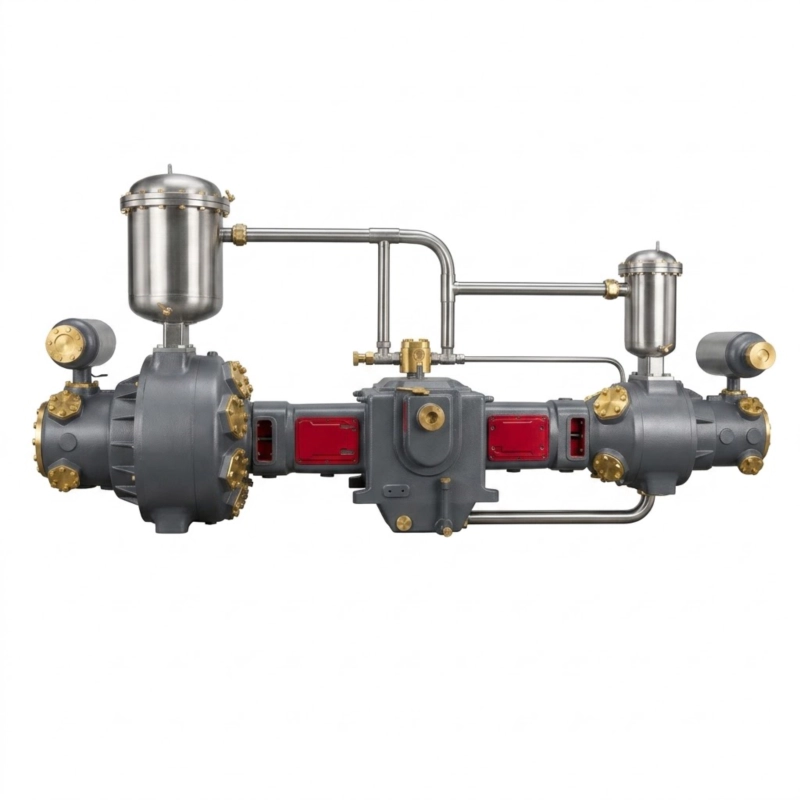
DW-60/5 Oil-Free Hydrogen Compressor
Compress 3600 Nm³/h of pure hydrogen to 5 bar with the DW-60/5 Oil-Free Hydrogen Compressor. ATEX-certified, 100% dry-running for PEM electrolysis & PSA.
1. The Macro-Economics and Strategic Physics of High-Volume Hydrogen Processing
We are currently in the midst of a profound macroeconomic transition toward a decarbonized global energy matrix, deeply driven by the hyper-scaling of the Green Hydrogen (H&sub2;) economy. Hydrogen is the lightest, most abundant element in the universe, but harnessing it for advanced industrial and vehicular fuel cell applications requires massive infrastructural processing. In modern gigawatt-scale electrolysis plants (utilizing PEM or Alkaline electrolyzers), raw green hydrogen is typically generated at very low ambient pressures. To effectively route this massive volume of gas through highly complex purification arrays or to feed it into intermediate low-pressure geological storage and regional pipeline networks, the gas must be efficiently and continuously compressed to a baseline industrial utility pressure of 5 bar.
Processing 3600 cubic meters of hydrogen every single hour presents one of the most uniquely terrifying and complex fluid dynamic challenges in heavy mechanical engineering. Hydrogen is incredibly reactive, possessing an extraordinarily wide flammability limit (spanning from 4% to 75% concentration in air) and requires an exceedingly low minimum ignition energy. If standard, non-specialized gas compressors are utilized to move hydrogen, the results are catastrophic. The microscopic diatomic hydrogen molecules will aggressively leak past standard mechanical seals, accumulate in the factory atmosphere, and violently detonate from a simple static spark. Furthermore, standard lubricated compressors inject hydrocarbon oil into the gas stream. For hydrogen intended for advanced Proton Exchange Membrane Fuel Cells (PEMFC), even parts-per-billion (PPB) levels of oil vapor will aggressively poison the fuel cell’s platinum catalyst, permanently destroying millions of dollars of downstream technology.
The DW-60/5 Oil-Free Hydrogen Compressor is fundamentally engineered to mathematically neutralize every single one of these existential risks. Operating entirely dry without liquid oil in the compression cylinders, it preserves the 99.999% extreme purity of your electrolyzer output. By deploying advanced aerospace-grade PTFE dynamic sealing arrays and a heavily fortified nitrogen-purged API-618 isolation architecture, it mathematically guarantees zero hydrogen leakage into the surrounding factory. This colossal machine provides a continuous, incredibly safe, and highly efficient 5-bar kinetic baseload, bridging the critical gap between raw hydrogen generation and profitable downstream industrial monetization.
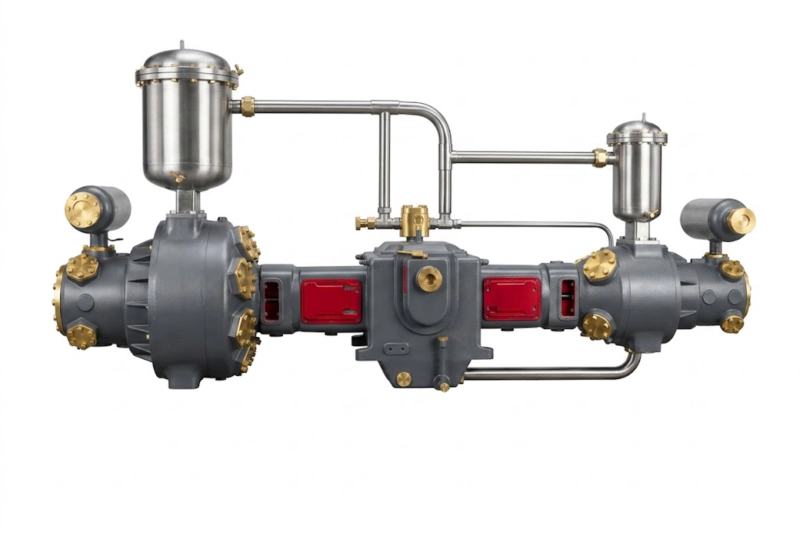
Figure 1: The DW-60/5 Heavy-Duty Hydrogen Assembly. Meticulously designed for massive volumetric throughput (3600 Nm³/h). Notice the fully enclosed, highly rigorous gas-tight piping networks and intrinsically safe electrical housings mandated for strict ATEX Zone 1 explosive environments.
2. Exhaustive Technical Specifications & H&sub2; Operating Envelope
Precision fluid dynamics scaled to process 3600 Nm³/h of the lightest element in the universe mandates an entirely bespoke mechanical approach. Hydrogen’s exceptionally low molecular weight means it inherently resists standard mechanical compression, requiring mathematically precise volumetric clearances and highly specialized thermodynamic mapping. The physical size of the cylinders required to capture 60 cubic meters of gas per minute necessitates a highly robust electrical powertrain, typically ranging from 350 kW to 400 kW. The following comprehensive technical parameters deeply define the uncompromising, explosion-proof operational envelope of the DW-60/5 model.
| Technical Parameter | Nominal Value / Engineering Specification |
|---|---|
| Model Designation Architecture | DW-60/5 (High-Volume Low-Pressure Hydrogen Series) |
| Approved Compression Medium | Pure Hydrogen (H&sub2;), Syngas (H&sub2;+CO mixtures) |
| Volumetric Flow Rate (Capacity) | 60.0 Nm³/min (3600 Nm³/hour) – Continuous Baseload Duty |
| Nominal Suction (Inlet) Pressure | 0.02 MPa to 0.1 MPa (Atmospheric to slightly pressurized) |
| Target Discharge Pressure | 0.5 MPa (5.0 bar / approx. 72 psi) |
| Thermodynamic Architecture | Strict 2-Stage Sequential Compression with Deep Intercooling |
| Kinematic Frame & Layout | Heavy-Duty DW-Type (Symmetrical Balanced-Opposed Horizontal) |
| Gas Purity Certification | 100% Absolutely Oil-Free (Zero Hydrocarbon Addition Guaranteed) |
| Thermal Management Protocol | Austenitic Stainless Steel (316L) Shell-and-Tube Water Cooling |
| Main Drive Motor Power | 350 kW to 400 kW (Low/Medium Voltage with VFD Soft Start) |
| Explosion-Proof Certification | ATEX Zone 1 / Class 1 Div 1 Intrinsically Safe (Ex d IIC T4) |
| Manufacturing Compliance Codes | API-618 (Type C Distance Piece), CE Machinery, ASME Section VIII |
Hydrogen Embrittlement Advisory: High-velocity hydrogen gas dynamically interacts dangerously with standard carbon steels, causing a metallurgical phenomenon known as hydrogen embrittlement where the steel loses its ductility and violently shatters under stress. The DW-60/5 completely mitigates this hazard. All internal wetted parts—including the multi-stage valves, cylinder liners, and massive intercooler tube bundles—are meticulously machined from premium Austenitic Stainless Steel (such as 316L), mathematically rendering the machine immune to structural embrittlement.
3. The Fluid Dynamics of Compressing Diatomic Hydrogen
Mechanically compressing 3600 Nm³/h of hydrogen to 5 bar requires solving a highly complex fluid dynamics equation. Hydrogen (H&sub2;) is the smallest diatomic molecule in existence. Because of its extraordinarily low molecular weight and tiny kinetic diameter, it possesses a massive volumetric leakage rate. In a standard compressor, as the piston thrusts forward, a massive percentage of the hydrogen would simply bypass the piston rings and escape back into the low-pressure suction side. This phenomenon, known as “slip,” drastically destroys the volumetric efficiency of the machine, wasting massive amounts of electrical power.
To mathematically enforce a strict, inescapable volumetric envelope, the DW-60/5 utilizes an incredibly precise, 2-stage sequential compression architecture paired with ultra-tight mechanical tolerances. Rather than attempting to push the gas directly to 5 bar in a single violently inefficient stroke, the massive first-stage cylinders capture the low-pressure hydrogen and gently compress it to an intermediate ratio. The gas is then routed through a massive, 316L stainless steel intercooler. The highly precise second-stage cylinders then draw in this denser gas and push it perfectly to the terminal 5-bar state.
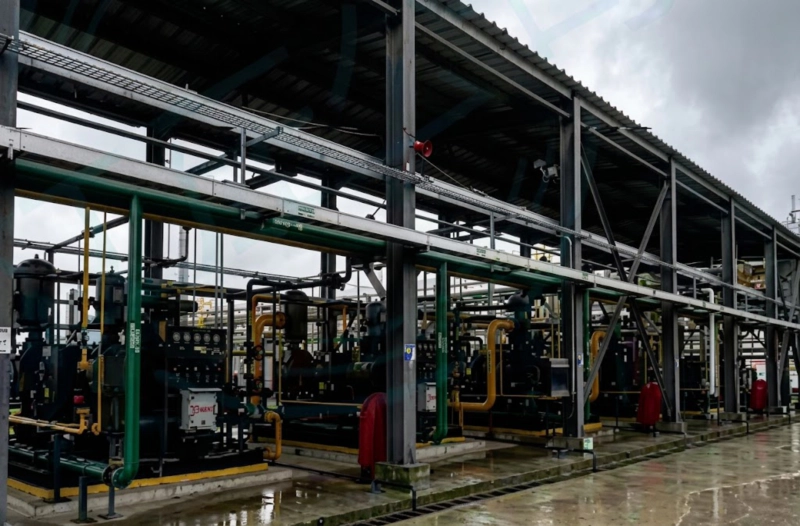
Figure 2: The 2-Stage Volumetric Cascade. Notice the heavily flanged, zero-leakage stainless steel piping routing the hydrogen between the aggressively water-cooled cylinders. This layout mathematically guarantees that the highly elusive hydrogen molecules are efficiently trapped and progressively compressed without suffering from catastrophic volumetric slip.
Furthermore, the internal piston rings are fundamentally different from those used in standard air compressors. The DW-60/5 deploys specialized, multi-segment overlapping PTFE rings reinforced heavily with high-density graphite. These rings are engineered with zero-clearance overlapping step-joints. As the piston oscillates, the dynamic gas pressure physically forces the highly flexible PTFE outward against the stainless steel cylinder walls, actively dynamically sealing the micro-gaps and preventing the microscopic H&sub2; molecules from slipping backwards.
4. ATEX Explosive Safety & API-618 Nitrogen Purging Architecture
Processing highly combustible hydrogen gas at massive volumes requires a paranoid approach to mechanical safety. Because hydrogen ignites with incredibly low energy input, even a microscopic leak accumulating inside the crankcase or venting into the mechanical room can lead to a catastrophic facility-level explosion. Standard compressors lack the deep architectural isolation required to handle this specific chemical threat.
The DW-60/5 completely isolates the hazardous hydrogen gas from both the atmosphere and the lower mechanical crankcase (which contains liquid lubricating oil) by utilizing extended, deeply fortified API-618 Type-C Double Compartment Distance Pieces. The distance piece is a heavy steel structural chamber that physically separates the compression cylinder from the crankcase. The piston rod passes through this massive gap. To mathematically guarantee zero hydrogen leakage, this distance piece is continuously flooded with pressurized, inert Nitrogen gas (N&sub2;).
This creates an impenetrable “Nitrogen Buffer Seal.” If microscopic amounts of hydrogen bypass the primary piston rod packing under the 5-bar pressure, it enters the distance piece and is instantly diluted and safely carried away by the flowing inert nitrogen purge, eventually safely venting to an elevated external atmospheric flare or safe vent stack. It is physically impossible for the explosive hydrogen to migrate down into the oily crankcase, and physically impossible for it to leak outward into your factory floor. Every single electrical component on the skid is heavily armored and strictly ATEX Zone 1 / Class 1 Div 1 intrinsically safe, mathematically eliminating any potential ignition source.
5. Managing High-Volume Loads: The DW-Type Kinematic Framework
Drawing in 60 cubic meters of gas every minute requires physically massive compression cylinders. When the heavy steel pistons inside these colossal cylinders abruptly change direction hundreds of times a minute, they generate staggering dynamic reciprocating inertial forces. If a massive 3600 Nm³/h compressor is not geometrically balanced, these violently alternating kinetic forces induce catastrophic low-frequency dynamic vibrations capable of rapidly fatiguing the main structural frame, violently shattering the highly sensitive hydrogen pipeline infrastructure, and compromising the integrity of the critical PTFE seals.
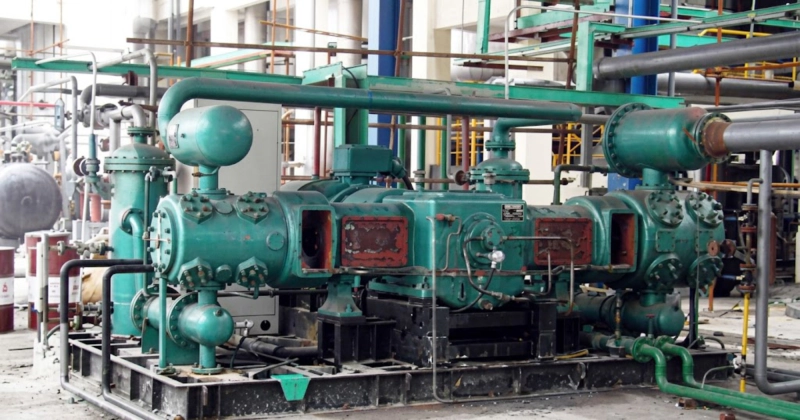
Figure 3: Real-world operational deployment of the massive DW-Type architecture. The large compression cylinders are arranged strictly horizontally across the heavy-duty forged crankshaft. This geometric symmetry physically and mathematically neutralizes destructive vibration, ensuring a perfectly stable platform for handling highly explosive gas.
To completely conquer and domesticate these extreme internal kinetic forces, the DW-60/5 is forged upon a sprawling, hyper-rigid DW-Type Symmetrical Balanced-Opposed Kinematic Architecture. The foundational crankcase is cast from ultra-dense, stress-relieved nodular iron. The massive compression cylinders are arranged strictly horizontally, extending outward from the central crankcase in perfectly opposed pairs. Because the reciprocating masses are precisely weight-matched by our senior engineers, their high-speed reciprocating movements perfectly counteract one another across the crankshaft. The final result is a ~400 kW machine that operates with uncanny, astonishing smoothness, fiercely protecting the structural integrity of your explosive hydrogen gas network.
6. Strategic Industrial Synergies: Hydrogen Infrastructure & Advanced Manufacturing
As a comprehensive global industrial engineering firm, we understand that compressing 3600 Nm³/h of pure hydrogen to 5 bar is a foundational utility phase for massive, vertically integrated industrial complexes. The DW-60/5 is perfectly calibrated to act as the primary kinetic bridge for massive Pressure Swing Adsorption (PSA) purification plants, taking low-pressure tail gas and recovering it, or taking raw electrolyzer gas and boosting it for intermediate steel vessel storage before it is fed into hyper-pressure fueling station compressors.
Furthermore, our engineering expertise spans deeply across multiple advanced manufacturing disciplines. For massive global conglomerates establishing vast chemical processing, packaging, or specialized manufacturing hubs that run parallel to their hydrogen generation sites, we proudly supply complementary mega-scale process equipment. For example, alongside our critical gas compressors, we design and manufacture ultra-high-precision downstream polymer processing equipment, including advanced Blow Molding Machine technology for high-barrier consumer and industrial packaging. By partnering with our firm for both your explosive gas handling infrastructure and your advanced automated manufacturing lines, EPC contractors can mathematically ensure seamless, deeply integrated factory deployment with a single, highly reliable global engineering vendor.
7. Extreme Valve Material Science: Mastering H&sub2; Fatigue
The massive intake and discharge valves inside the DW-60/5 must aggressively snap open and slam shut millions of times a month while submerged in a continuous flow of highly elusive, ultra-light hydrogen gas. Traditional commercial carbon steel valve plates are completely unacceptable; they will rapidly suffer from severe high-cycle impact fatigue and catastrophic hydrogen embrittlement. Within mere weeks, standard metallic valves will crack, shatter, and ingest hardened metal fragments directly into the high-speed cylinders, causing immediate, explosive internal destruction.
To permanently engineer this critical failure point out of existence, the DW-60/5 exclusively employs massively oversized, highly complex valve plates precision-machined from raw, solid PEEK (Polyether ether ketone). PEEK is an incredibly advanced aerospace thermoplastic that offers genuinely unmatched flexural impact strength and ultra-low mass, while being completely chemically immune to hydrogen embrittlement. Because the PEEK valves are exceptionally lightweight, they open and close instantaneously despite the low density of the hydrogen, practically eliminating aerodynamic pressure drop (ΔP) and heavily increasing overall volumetric efficiency.
8. SIL-Rated ATEX Automation, SCADA, & Fail-Safe Security
Relying entirely on traditional manual human operator oversight for a ~400 kW machine violently compressing explosive hydrogen gas is totally unacceptable and immensely dangerous. To strictly mitigate all dynamic operational risks, the massive DW-60/5 is rigorously governed by a state-of-the-art, heavily fortified, SIL-rated (Safety Integrity Level) Industry 4.0 digital automation architecture. The central digital brain is an ultra-high-speed programmable logic controller (PLC), housed securely inside a heavily purged, explosion-proof ATEX Ex-d cabinet.
This premium PLC is continuously fed live, micro-second data from an incredibly dense array of intrinsically safe field sensors. Beyond monitoring critical gas temperatures and 5-bar discharge pressures, the skid is heavily equipped with highly sensitive Lower Explosive Limit (LEL) hydrogen gas detectors positioned directly near the API-618 distance pieces and valve covers. Furthermore, precision transmitters monitor the continuous flow and pressure of the crucial Nitrogen (N&sub2;) purge gas.
If the PLC detects even a microscopic fraction of a percentage of hydrogen leaking into the local atmosphere, or if the nitrogen purge supply suddenly drops, it instantaneously triggers an automated fail-safe protocol. It severs the main power, aggressively closes heavy-duty pneumatic isolation valves to stop the flow of incoming hydrogen, and floods the internal pipe network with emergency nitrogen to rapidly purge the explosive gas to a safe flare stack.
9. Massive Civil Engineering Requirements & Global EPC Logistics
Executing a highly successful EPC procurement strategy for a colossal 3600 Nm³/h hydrogen compressor fundamentally requires highly strict, heavy-duty site civil engineering physical preparation. When dealing with an immense reciprocating multi-ton steel kinetic mass handling explosive gas, the structural engineering focus shifts entirely to safely anchoring the skid to prevent low-frequency destructive kinetic vibration from violently transferring into your highly sensitive rigid stainless-steel hydrogen piping infrastructure.
Figure 4: Strategic deployment of massive high-volume gas infrastructure. Proper heavy civil engineering and a massively deep, highly isolated reinforced concrete foundation block are strictly mandated to safely anchor and operate this immense explosive-gas machinery over a grueling 25-year operational lifecycle.
Proper, vigorously mathematically validated heavy civil engineering structural foundation preparation is absolutely critical. The immense overall static and dynamic weight of the colossal DW-Type skid strictly requires a deeply excavated, highly dedicated, vibrationally isolated reinforced concrete foundation block. During the initial technical procurement phase, our senior civil engineering team provides exhaustive, dimensionally accurate 3D civil foundation CAD blueprints directly to your local EPC contractors. This heavy concrete mass uses deep-set, ultra-heavy-duty anchor bolts to perfectly absorb all residual low-frequency vibrations, ensuring your hazardous-gas piping remains completely stress-free.
10. Executive Technical FAQ: DW-60/5 High-Volume Hydrogen Operations
To effectively support rapid, deep engineering evaluation by massive global EPC firms, highly advanced Green Hydrogen plant designers, and PSA purification planners, our senior technical team has exhaustively distilled the ten most critical technical inquiries regarding the deployment of the massive 3600 Nm³/h DW-60/5 compressor.
1. Why is 5 bar specifically requested for large-scale hydrogen operations?
2. How is absolute 100% Oil-Free purity guaranteed to protect PEM fuel cells?
3. How does the machine mathematically prevent explosive hydrogen leakage?
4. What materials are used to prevent catastrophic Hydrogen Embrittlement?
5. Why does compressing to only 5 bar still require a 2-stage architecture?
6. What are the heavy foundation civil engineering requirements for this DW-Type machine?
7. Can the compressor seamlessly integrate with our central DCS system?
8. What safety protocols trigger if internal hydrogen gas leaks are detected?
9. How long do the PTFE dry-running piston rings survive processing hydrogen?
10. Are all electrical components genuinely certified for ATEX explosive environments?
Command the Massive Scale of the Green Hydrogen Economy
Master the absolute limits of highly volatile, critically pure hydrogen gas processing for gigawatt-scale Green Hydrogen electrolysis, advanced PEM fuel cell infrastructure, and hyper-scale PSA purification. Forcefully and safely power your massive operations with the unrelenting 3600 Nm³/h capacity of the DW-60/5. Secure ATEX-certified explosive safety, 100% oil-free zero-contamination purity, unbreakable DW-Type multi-stage endurance, and highly transparent factory-direct B2B heavy equipment procurement today.
Request a Factory-Direct Technical Quote
Our highly dedicated, deeply experienced senior pneumatic fluid dynamics engineering team will rigorously review your exact explosive-gas flow requirements, nitrogen purging utility capabilities, and massive civil engineering constraints, responding strictly within 24 hours with mathematically verified severe-duty ATEX sizing data, exact heavy 3D CAD deep foundation schematics, and fully transparent B2B global EPC procurement pricing.