
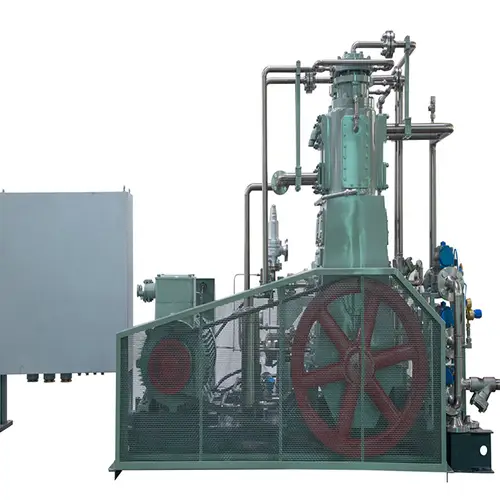
Kina tilpasset oksygen sylinder oljefri påfyllingsmaskin
Product Description
Den oljefrie påfyllingsmaskinen for oksygenflasker fra China Custom er en avansert og effektiv kompressor designet for påfylling av oksygenflasker. Den tilbyr en rekke funksjoner og fordeler for å møte behovene til helsepersonell og pasienter.
Produktspesifikasjoner
| Produktnavn | Oljefri boosterkompressor |
| Modellnr. | BW-3/5/10/15/20/30… |
| Innløpstrykk | 0,4 MPa (G) |
| Eksostrykk | 150/200 MPa (G) |
| Type | Høytrykksoljefri |
| Tilbehør | Påfyllingsmanifold, stempelring osv. |
Forespørselsinformasjon
Hvis du har en forespørsel om en kompressor, vennligst oppgi følgende informasjon:
- Kompressorens arbeidsmedium: Hvis det er én enkelt gass, vennligst spesifiser renheten. Hvis det er blandet gass, vennligst oppgi gassinnholdet i liter.
- Sugetrykk (måletrykk): _____ bar
- Eksostrykk (målertrykk): _____ bar
- Gjennomstrømningshastighet per time for kompressor: _____ Nm³/t
- Kompressorgass-innsugningstemperatur: _____ºC
- Kompressorens arbeidstimer per dag: _____ timer
- Høyde over havet for kompressorens arbeidsplass: _____ m
- Omgivelsestemperatur: _____ºC
- Har stedet kjølevann? ______
- Spenning og frekvens for 3-fase: ____________
- Er det vanndamp eller H2S i gassen? ______
- Søknad om kompressor? _____________
For mer informasjon og for å se hele produktutvalget vårt, klikk på knappen «Vis mer» nedenfor.
Alt innhold på denne siden er hentet fra internett og er kun ment som referanse. Produktene våre er reservedeler og ikke originale reservedeler. Vi er ikke tilknyttet de opprinnelige varemerkeinnehaverne. Hvis du trenger originale reservedeler, vennligst kontakt den opprinnelige leverandøren.
Vanlige spørsmål
1. Kan den oljefrie boosterkompressoren brukes til andre gasser enn oksygen?
Den oljefrie boosterkompressoren er spesielt utviklet for oksygen. Bruk med andre gasser kan føre til uforutsigbare ytelses- og sikkerhetsrisikoer.
2. Hva er anbefalt arbeidstemperatur for kompressoren?
Den anbefalte driftstemperaturen for kompressoren er _____ºC. Bruk utenfor dette området kan påvirke effektiviteten og levetiden.
3. Kan kompressoren brukes i høytliggende omgivelser?
Ja, kompressoren er egnet for bruk i høytliggende omgivelser. Vennligst oppgi den nøyaktige høyden over havet for stedet ditt når du sender en forespørsel.
4. Trenger kompressoren kjølevann?
Kompressoren kan trenge kjølevann avhengig av driftsforholdene. Vennligst spesifiser om det er kjølevann tilgjengelig på stedet ditt i forespørselen din.
5. Kan kompressoren tilpasses for å møte spesifikke krav?
Ja, vi tilbyr tilpasningstjenester for kompressoren. Vennligst oppgi detaljerte spesifikasjoner og krav når du sender en forespørsel.
Merk: De vanlige spørsmålene ovenfor er kun ment som informasjon og bør ikke anses som en erstatning for profesjonell rådgivning. Ta kontakt med våre eksperter for spesifikke produktrelaterte spørsmål.
Hos EVER-POWER GROUP spesialiserer vi oss på å levere diverse industriprodukter, inkludert landbruksgirkasser, kraftutgangsaksler, tannhjul, væskekoblinger, snekkegirreduksjonsgir, gir og tannstenger, rullekjeder, trinser, planetgirkasser, registertrinser, foringer og mer. Vi er stolte av å tilby produkter av høy kvalitet, konkurransedyktige priser og utmerket kundeservice. Vi tar imot tilpasningsforespørsler og kan jobbe med tegninger og prøver for å møte dine spesifikke behov. Kontakt oss i dag for å utforske vårt brede utvalg av produkter og oppleve vår forpliktelse til å levere førsteklasses løsninger.
Performance Characteristics of Oxygen Compressors
1. High Compression Efficiency
Oxygen compressors are designed to efficiently compress oxygen gas, ensuring maximum output and performance. The compression process is carefully engineered to minimize energy consumption while maintaining high compression ratios.
2. Reliable Operation
These compressors are built to provide dependable and consistent operation. By utilizing advanced technology and robust construction, they offer reliable performance even in demanding environments. This ensures continuous and uninterrupted oxygen supply.
3. Compact and Space-Saving
Oxygen compressors are designed to be compact and space-saving. Their small footprint allows for easy installation in various settings, making them suitable for both small-scale and large-scale applications.
4. Low Noise and Vibration
Efforts have been made to reduce noise and vibration during the operation of oxygen compressors. By incorporating soundproofing materials and effective vibration dampening systems, they provide a quieter and more comfortable working environment.
5. Precise Control and Monitoring
Modern oxygen compressors are equipped with advanced control and monitoring systems. These enable precise adjustment of compression parameters and real-time monitoring of key performance indicators, ensuring optimal operation and efficiency.
Types and Characteristics of Oxygen Compressors
1. Piston Compressors
Piston compressors utilize reciprocating motion to compress oxygen gas. They are known for their high compression ratios and are suitable for applications requiring higher pressure output. These compressors can handle a wide range of oxygen flow rates and are often used in industrial and medical settings.
2. Rotary Screw Compressors
Rotary screw compressors use a pair of intermeshing screws to compress oxygen gas. They offer a continuous and smooth operation, making them ideal for applications requiring a constant supply of compressed oxygen. These compressors are widely used in industries such as oxygen generation systems and environmental applications.
3. Scroll Compressors
Scroll compressors utilize two spiral-shaped scrolls to compress oxygen gas. They are compact, lightweight, and known for their quiet operation. These compressors are commonly used in portable oxygen concentrators and medical devices due to their efficiency and reliability.
Advantages of Oxygen Compressors Made of Different Materials
1. Aluminum Alloy
Oxygen compressors made of aluminum alloy offer excellent corrosion resistance and lightweight properties. They are suitable for portable and mobile applications, providing convenience and ease of transportation.
2. Stainless Steel
Oxygen compressors constructed with stainless steel provide superior durability and resistance to harsh environments. They are commonly used in industrial applications where corrosion resistance and longevity are essential.
3. Titanium Alloy
Titanium alloy oxygen compressors are highly regarded for their exceptional strength, low weight, and excellent corrosion resistance. They are often utilized in aerospace and medical industries where high performance and reliability are crucial.
Application of Oxygen Compressors
Oxygen compressors find valuable applications in various fields, including:
Oxygen Therapy
Oxygen compressors play a vital role in delivering concentrated oxygen to patients for therapeutic purposes. They ensure a steady supply of oxygen for individuals with respiratory conditions, promoting better health and well-being.
Oxygen Generation Systems
These compressors are integral components of oxygen generation systems, which produce oxygen from ambient air. They enable the efficient compression of oxygen gas, allowing for its storage and distribution to meet diverse industrial needs.
Medical Applications
In medical settings, oxygen compressors are used for various applications, such as anesthesia, respiratory support, and surgical procedures. Their reliability and performance are essential for maintaining patient safety and providing precise oxygen delivery.
Industrial Applications
Industries utilize oxygen compressors for applications like metal cutting, welding, and chemical processing. The compressors ensure a constant and reliable supply of compressed oxygen, enhancing productivity and efficiency.
Environmental Applications
Oxygen compressors are employed in environmental applications such as water treatment and waste management. They facilitate processes that require the use of oxygen, contributing to effective and sustainable environmental practices.
Safety-Related Purposes
Oxygen compressors are critical for safety-related purposes, including firefighting, emergency response, and hazardous gas detection and control. They provide the necessary oxygen supply for ensuring the safety and well-being of individuals in critical situations.
Future Development Trends and Opportunities
The future of oxygen compressor products holds exciting prospects for innovation and advancement. Some key trends and opportunities include:
1. Enhanced Energy Efficiency
Continued research and development efforts aim to improve the energy efficiency of oxygen compressors. This will help reduce energy consumption, operating costs, and environmental impact.
2. Integration of IoT Technology
The integration of Internet of Things (IoT) technology can enable remote monitoring and control of oxygen compressor systems. This connectivity enhances efficiency, predictive maintenance, and performance optimization.
3. Focus on Sustainable Solutions
The industry is shifting towards more sustainable solutions, including the use of renewable energy sources and eco-friendly materials. This focus on sustainability presents opportunities for the development of greener oxygen compressor technologies.
Choosing a Suitable Oxygen Compressor
When selecting an oxygen compressor, consider the following aspects:
1. Clear Requirements
Clearly define your specific requirements, including the desired oxygen flow rate, pressure levels, and application needs. This will help you choose a compressor that meets your specific demands.
2. Material Selection
Evaluate the materials used in the construction of the compressor. Consider factors such as corrosion resistance, durability, and suitability for the intended environment.
3. Design Optimization
Optimized compressor designs can offer improved efficiency, reduced noise, and better performance. Consider compressors with advanced design features that align with your requirements.
4. Suppliers and After-Sales Service
Choose reputable suppliers who provide quality products and reliable after-sales service. This ensures timely support, maintenance, and spare parts availability.
5. Cost-Effectiveness and Quality Control
Evaluate the overall cost-effectiveness of the compressor, considering factors such as initial investment, operational costs, and maintenance requirements. Additionally, ensure that the compressor undergoes rigorous quality control measures to guarantee its performance and longevity.
Author: Dream