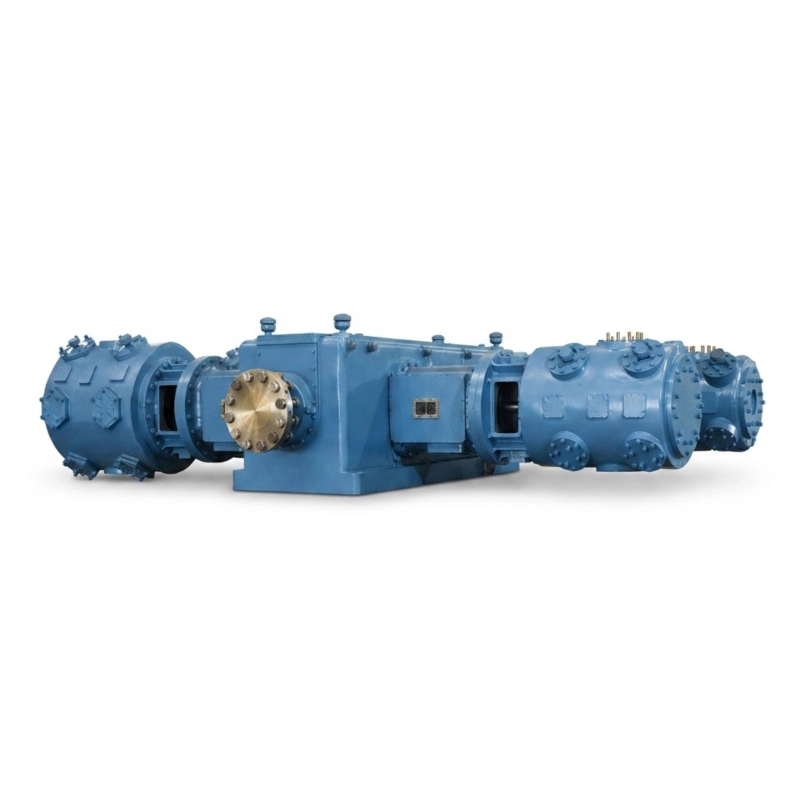
4MW-19.5/1.5-60 PSA Hydrogen / Oxygen Compressor
Discover the 4MW-19.5/1.5-60 PSA Hydrogen/Oxygen Compressor. 4-stage, 100% oil-free system boosting 1.5 bar to 60 bar at 1170 Nm³/h. API-618 compliant.
1. The Macro-Economics of Green Hydrogen and PSA Oxygen Integration
The global industrial landscape is undergoing a monumental energy and metallurgical transition. This transition is characterized by two distinct but frequently overlapping technological vectors: the rapid scaling of the Green Hydrogen (H₂) economy for clean energy storage and mobility, and the widespread decentralization of industrial oxygen production via massive onsite Pressure Swing Adsorption (PSA) networks. Whether a heavy industrial facility is utilizing immense electrolyzer arrays to split water into high-purity hydrogen, or deploying advanced zeolite molecular sieves to extract highly concentrated oxygen from the atmosphere, a universal fluid-dynamic bottleneck immediately presents itself: the raw gas is almost always generated at fundamentally low localized pressures, typically ranging from 0.1 MPa to 0.2 MPa.
To render these vital gases commercially viable and operationally functional across vast industrial grids, they must be safely, continuously, and forcefully compressed to high-pressure thresholds, frequently targeting the 6.0 MPa (60 bar) industrial standard. Achieving 60 bar at a volumetric flow rate of 19.5 Normal cubic meters per minute (1170 Nm³/h) presents an extraordinary engineering paradox when the machine must be rated for dual-gas functionality. Compressing Hydrogen and Oxygen within the same foundational architectural design requires neutralizing two entirely different spectrums of catastrophic risk.
Hydrogen is the smallest, lightest molecule in the universe. It exhibits a terrifying propensity to escape through microscopic material pores and dynamically induces “hydrogen embrittlement” in standard carbon steel, causing the heavy metal to shatter under stress. Conversely, 60-bar Oxygen is an aggressively violent oxidizer; any trace of lubricating oil or high-velocity iron rust particles will trigger an instantaneous, completely unquenchable metal fire. The 4MW-19.5/1.5-60 masterfully bridges this impossible gap. It provides a singular, highly fortified 4-stage mechanical platform forged entirely from bespoke austenitic alloys and advanced dry-running aerospace polymers. Deploying this multi-gas powerhouse secures an uncompromising, future-proof pneumatic heart for heavy chemical synthesis, aerospace testing, and next-generation green energy storage terminals.
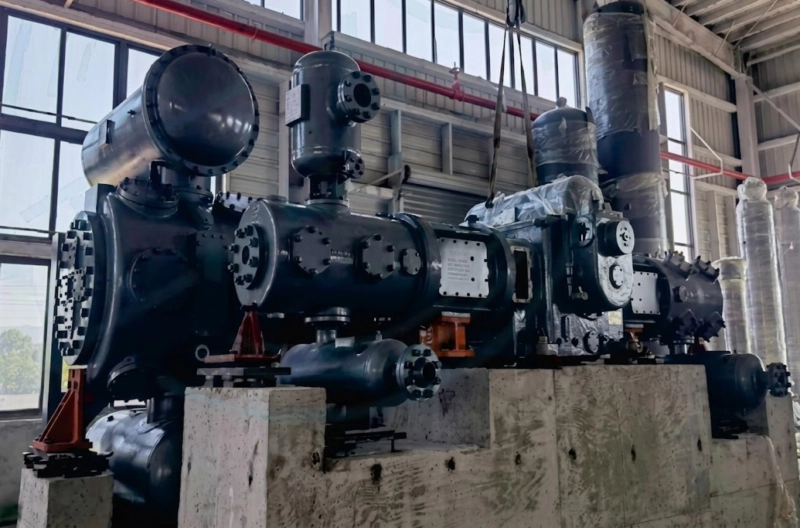
Figure 1: The 4MW-19.5/1.5-60 Heavy-Duty 4-Stage Assembly. A true dual-capability powerhouse designed to safely compress both hyper-reactive Oxygen and hyper-volatile Hydrogen from 1.5 bar up to 60 bar continuously.
2. Exhaustive Technical Specifications & 60-Bar Operating Envelope
Operating at a 60-bar (6.0 MPa) terminal scale with highly volatile molecular mediums dictates that the machine’s absolute physical capabilities must be rigorously mapped to the unforgiving physical laws of multi-stage thermodynamics. Squeezing 1170 Nm³/h of gas through a 40:1 total compression ratio (from 1.5 bar to 60 bar) requires immense kinetic force, necessitating a main drive motor rating typically ranging from 250 kW to 315 kW. The following comprehensive technical parameters deeply define the uncompromising operational envelope of the flagship 4MW-19.5/1.5-60 model.
| Technical Parameter | Nominal Value / Engineering Specification |
|---|---|
| Model Designation Architecture | 4MW-19.5/1.5-60 (4-Stage MW-Type Heavy Duty Series) |
| Approved Compression Mediums | Green Hydrogen (H₂), PSA Oxygen (O₂), Syngas Blends |
| Volumetric Flow Rate (Capacity) | 19.5 Nm³/min (1170 Nm³/hour) – Continuous Baseload Duty |
| Nominal Suction (Inlet) Pressure | 0.15 MPa (1.5 bar / approx. 22 psi) – Direct from PSA/Electrolyzer |
| Target Discharge Pressure | 6.0 MPa (60.0 bar / approx. 870 psi) |
| Thermodynamic Architecture | Strict 4-Stage Sequential Compression for Optimal Thermal Control |
| Kinematic Frame & Layout | Heavy-Duty MW-Type (Symmetrical Balanced-Opposed Horizontal) |
| Lubrication Integrity | 100% Absolute Oil-Free (Utilizing bespoke PTFE/PEEK dry matrix) |
| Safety Containment Design | API-618 Type-C Multi-Chamber Double-Distance Piece with N2 Purge |
| Thermal Management Protocol | High-Pressure Heavy-Wall Shell-and-Tube Water Cooling Integration |
| Main Drive Motor Power | 250 kW to 315 kW (Variable dependent on gas molar mass) |
| Manufacturing Compliance Codes | API618, EIGA IGC 10/07/E (Oxygen), ISO 13631, ATEX Zone 1 Ex-d |
Critical Dual-Gas Molecular Sizing Notice: The immense difference in molecular weight between Hydrogen (approx. 2 g/mol) and Oxygen (approx. 32 g/mol) dictates vastly different thermodynamic behaviors during compression. Hydrogen requires high piston velocities to prevent bypass leakage due to its tiny molecular size, whereas Oxygen requires highly conservative velocities to prevent frictional ignition. Purchasing a compressor rated for both requires our senior fluid dynamics department to configure exact variable-drive programming and hybrid valve dynamics to guarantee safe cross-medium operation.
3. The Thermodynamics of 4-Stage 60-Bar Compression
Attempting to compress any gas from a foundational state of 1.5 bar (0.15 MPa) to a terminal state of 60 bar (6.0 MPa) represents an extreme volumetric reduction. According to the foundational laws of adiabatic thermodynamics, reducing the volume of a gas so drastically results in a proportionate and violent spike in kinetic molecular heat. If an engineering team attempted to bridge this 40:1 pressure ratio in only one or two mechanical stages, the instantaneous discharge temperatures would effortlessly exceed 300°C. In a pure oxygen environment, temperatures above 150°C immediately threaten the auto-ignition threshold of the internal PTFE friction seals. In a hydrogen environment, excessive heat severely degrades volumetric efficiency and poses immense structural challenges to the steel containment boundaries.
To mathematically enforce a strict thermal safety barrier, the 4MW-19.5/1.5-60 divides the total mechanical workload across four distinct, sequential compression stages.
- Stage 1 (Mass Intake): Draws 1170 Nm³/h at 1.5 bar, lightly compressing it to roughly 4.0 bar.
- Stage 2 (Intermediate Boost): The gas is drawn from the first intercooler and compressed to approximately 11.0 bar.
- Stage 3 (High-Pressure Transition): The gas enters the heavy-wall cylinders, boosting to 26.0 bar.
- Stage 4 (Terminal Discharge): The final, smallest cylinder forces the highly dense gas to the critical 60.0 bar industrial target.
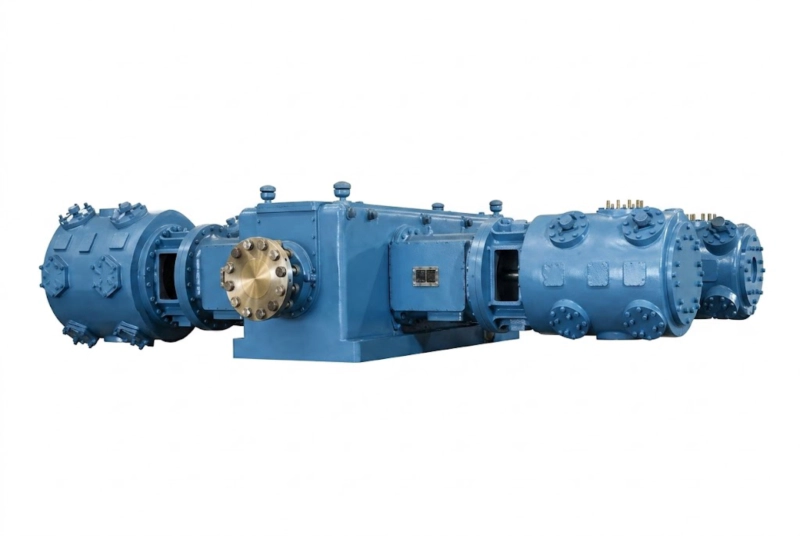
Figure 2: The extensive shell-and-tube thermal management array. Between every single compression stage, the hot gas is forcefully routed through high-efficiency water coolers, mathematically guaranteeing the gas temperature remains safely below EIGA limits.
The secret to this system’s longevity is the massive inter-stage shell-and-tube thermal management architecture. Between every single cylinder stroke, the aggressively heated gas is violently forcefully routed through a highly complex network of heavy-wall stainless steel tubes. These tubes are continuously submerged in a high-velocity flow of chilled industrial facility water. This vital thermodynamic heat exchange rapidly strips the kinetic heat away from the gas, ensuring that the input temperature for the subsequent stage is always drastically reduced. This deeply intelligent thermal cascading ensures the final 60-bar discharge temperature remains strictly below 130°C, providing an impregnable layer of operational safety.
4. Extreme Material Science: Solving the Hydrogen and Oxygen Paradox
Designing a machine capable of switching between Hydrogen and Oxygen service is arguably the most complex metallurgical challenge in modern heavy engineering. Oxygen requires materials that fundamentally cannot oxidize or spark, as 60-bar oxygen transforms microscopic rust particles into incendiary projectiles (particle impingement ignition). Hydrogen, conversely, presents a deeply insidious molecular threat. Because H₂ molecules are small enough to literally migrate between the atomic lattice of standard carbon steel, they cause a phenomenon known as “hydrogen embrittlement.” Over time, the steel loses its ductility, becomes highly brittle, and violently ruptures under 60-bar pressure.
To mathematically neutralize both the oxygen fire threat and the hydrogen structural threat simultaneously, the 4MW-19.5/1.5-60 abandons standard cast iron and carbon steel entirely in its high-pressure gas path, deploying an uncompromising, multi-million dollar metallurgical matrix:
- Massive Solid Billet 316L Austenitic Stainless Steel: All compression cylinders (Stages 1 through 4), extreme-pressure pulsation dampeners, and complex interconnecting manifolds are painstakingly CNC-machined from heavily forged, massive solid billets of medical-grade 316L austenitic stainless steel. The highly elevated nickel and molybdenum content of 316L alters the steel’s molecular lattice, effectively blocking hydrogen permeation and entirely preventing embrittlement. Simultaneously, the massive chromium layer provides absolute chemical immunity to oxygen-induced rusting, stopping particle ignition at the source.
- Hyper-Density PTFE/Bronze/Glass-Fiber Matrix Seals: Liquid lubricating oil is legally prohibited in both 60-bar Oxygen (due to explosion) and 60-bar Hydrogen (due to gas contamination). We create a flawless dynamic hermetic seal using a highly proprietary matrix of virgin Polytetrafluoroethylene (PTFE) aggressively reinforced with aerospace-grade milled glass fiber and bronze powder. This self-lubricating labyrinth seal contains 60 bar without physical extrusion, trapping both the massive oxygen molecules and the tiny, elusive hydrogen molecules.
- Extreme-Duty PEEK High-Pressure Valve Assemblies: The high-pressure gas valves snap open and shut millions of times per month against an unyielding 60-bar wall. Traditional stainless steel valves shatter rapidly due to severe high-cycle impact fatigue. We employ massively oversized valve plates machined directly from raw PEEK (Polyether ether ketone)—an advanced thermoplastic aerospace polymer offering unmatched flexural impact strength and absolute chemical inertness to both gases.
5. The Physics of MW-Type Kinetic Balancing and Structural Rigidity
Mechanically managing 1170 cubic meters of gas every hour and forcing it through a 4-stage thermodynamic cascade generates staggering dynamic rod loads. If the four heavy cylinders were arranged vertically or in a standard V-shape, the alternating kinetic forces would induce violent, low-frequency vibrations capable of rapidly fatiguing the compressor frame and shattering the connected 60-bar chemical pipeline infrastructure.
The 4MW-19.5/1.5-60 utilizes a sprawling, hyper-rigid MW-Type Symmetrical Balanced-Opposed Kinematic Architecture. The foundational crankcase is cast from ultra-dense nodular iron. The four compression cylinders are arranged entirely horizontally across the heavy-duty forged crankshaft. Stage 1 is positioned exactly opposite Stage 2, and Stage 3 is exactly opposite Stage 4.
Because the reciprocating masses (the heavy pistons, massive cast crossheads, and connecting rods) are precisely weight-matched, their movements perfectly counteract one another. When the Stage 3 piston thrusts aggressively outward to compress gas, the opposing Stage 4 piston simultaneously thrusts in the opposite direction. This brilliant geometric symmetry mathematically cancels out the highly destructive primary and secondary shaking inertial forces. The final result is a ~300 kW machine that operates with uncanny smoothness, protecting the structural integrity of your massive petrochemical or green hydrogen plant.
6. API-618 Double Distance Piece Containment and 100% Zero-Leak Recovery
While the four compression cylinders run entirely dry, the massive forged crankshaft and crosshead bearings located in the lower crankcase strictly require a pressurized bath of liquid hydrocarbon oil to survive the immense mechanical loads. The defining safety feature of the 4MW-19.5/1.5-60 is ensuring this oil never migrates up the piston rod to interact with the 60-bar Oxygen or Hydrogen.
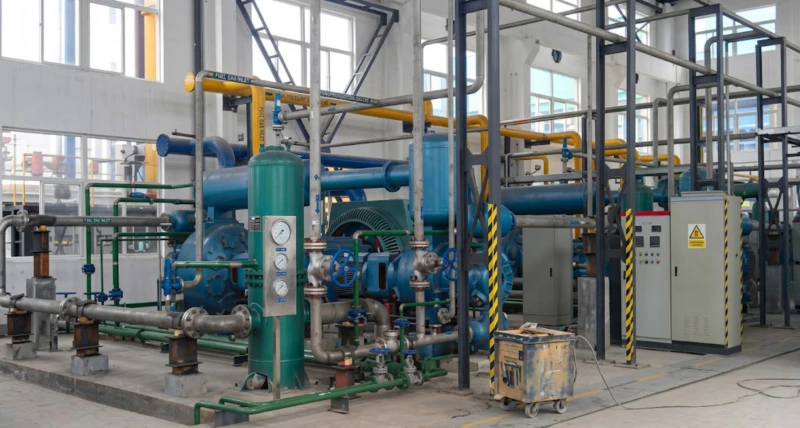
Figure 3: The critical API-618 Type-C double-compartment distance pieces. These elongated physical gaps mathematically separate the oil-lubricated lower crankcase from the ultra-pure, extreme-pressure compression cylinders above.
We achieve absolute safety by deploying deeply elongated, highly engineered API-618 Type-C double-compartment distance pieces. These act as ventilated, physical isolation chambers. The lower chamber contains aggressive oil wiper rings that scrape the piston rod clean on every stroke. The upper chamber features the high-pressure gas packing seals. If any microscopic volume of 60-bar gas naturally migrates past the primary seals, it is immediately trapped in this intermediate chamber. Because both Hydrogen (explosive) and Oxygen (oxidizer) are highly dangerous if vented into a closed facility, this chamber is forcefully swept by a low-pressure Nitrogen purge line, safely capturing the leaked gas and securely piping it back into a recovery loop. This guarantees 100% oil-free purity and absolute zero environmental leakage.
7. Extreme Industry 4.0 Automation, ATEX Safety Integration, and SCADA
Operating a dual-gas, 60-bar compression system requires decision-making speeds far beyond human capability. To scientifically mitigate all dynamic operational risks, the 4MW-19.5/1.5-60 is governed by a state-of-the-art, SIL-rated (Safety Integrity Level) Industry 4.0 digital automation architecture. The central digital brain is an ultra-high-speed programmable logic controller (PLC), typically deploying the advanced Siemens S7-1500 series. Because both Hydrogen and Oxygen dictate hazardous environments, all local field sensor arrays, heavy pneumatic actuators, and the reinforced PLC cabinet itself are certified to strict ATEX Zone 1 / Zone 2 Ex d (Flameproof) standards.
The Siemens PLC is continuously fed micro-second data from a dense array of specialized industrial sensors. High-precision RTDs monitor gas temperatures at every one of the four stages. Extreme high-pressure transmitters and kinetic vibration monitors ensure the machine operates flawlessly. If critical parameters rapidly breach limits (e.g., a 65-bar overpressure event indicating a pipeline blockage), the PLC instantaneously triggers an Automated Emergency Shutdown (ESD). It severs main power, violently activates pneumatically-piloted blowdown valves to safely vent trapped gas to a flare system, and isolates the machine. Utilizing standard Modbus TCP/IP protocols via secure fiber-optic networks, the unit seamlessly integrates into the plant’s primary DCS (Distributed Control System) for complete remote operation.
8. Strategic Industrial Synergies: From Gas Processing to Advanced Polymer Packaging
As a highly comprehensive global industrial engineering provider, we recognize that supplying 60-bar pure oxygen or hydrogen to drive massive chemical oxidation loops (such as the processing of pharmaceutical-grade resins or specialized polymers) is merely the foundational utility phase of the supply chain. The highly refined liquid or raw polymer derivatives originating from these extreme-pressure chemical reactors must ultimately be transformed into secure, rigid finished products for global distribution.
To actively support our EPC clients’ complete end-to-end vertical integration strategies—bridging raw gas utility generation and final consumer product packaging—we design and manufacture complementary, ultra-high-precision polymer processing equipment. For heavy industrial facilities extracting high-value resins utilizing our high-pressure gas networks, we strongly recommend seamlessly integrating our advanced Blow Molding Machine technology directly into your final downstream automated chemical packaging lines. This state-of-the-art injection stretch blow molding system is the definitive solution for rapidly manufacturing absolutely leak-proof, highly sterile, high-barrier medical bottles and rigid pharmaceutical packaging from synthesized polymers. Integrating this machinery ensures your high-value derivatives are safely hermetically packaged without risk of degradation.
9. Global EPC Procurement, Logistics, and Heavy Site Civil Engineering
Executing a successful procurement strategy for a colossal 4-stage, 60-bar heavy industrial compressor requires rigorous advanced engineering diligence. The real-world field installation of the 4MW-19.5/1.5-60 requires strict, heavy-duty site civil engineering preparation. When dealing with a massive reciprocating mass pushing against an unrelenting 60-bar wall of aerodynamic resistance, the structural engineering focus shifts entirely to safely managing dynamic rod loads and kinetic vibration.
Figure 4: Strategic deployment of the compressor farm. Proper heavy civil engineering and solid concrete foundations are strictly mandated to safely operate 60-bar megawatt-class machinery over a 25-year lifecycle.
While the balanced geometry of the MW-Type frame naturally cancels out shaking forces, the massive overall static and dynamic weight of the skid requires a deeply excavated, vibrationally isolated reinforced concrete foundation block. Our senior engineering team provides exhaustive 3D civil foundation CAD blueprints to your EPC contractors. The heavy concrete block must be poured precisely, utilizing deep-set J-style steel anchor bolts and high-strength epoxy grout. The physical mass of the block is calculated to be typically 5 to 7 times the static weight of the compressor skid to effectively absorb residual vibrations. Furthermore, we advise all international clients to invest in our “5-Year Turnkey Operational Spare Parts Kit” concurrently, shipping critical consumable parts inside the original crating to bypass future customs delays and secure continuous operation.
10. Executive Technical FAQ: 4MW-19.5/1.5-60 Operations
To support rapid engineering evaluation by global EPC firms, our technical team has distilled the ten most critical inquiries regarding the deployment of the massive 4MW-19.5/1.5-60 dual-gas compressor system.
1. How can one compressor safely compress both Hydrogen and Oxygen?
2. Why is a 4-stage architecture necessary for 60-bar compression?
3. What happens if the upstream pressure from the PSA or Electrolyzer drops below 1.5 bar?
4. How does the API-618 distance piece prevent oil contamination?
5. What makes the MW-Type frame superior for 4-stage compression?
6. How frequently do the dry-running PTFE seals need to be replaced?
7. Are the electrical components safe for a Hydrogen facility?
8. What are the cooling water requirements for the inter-stage heat exchangers?
9. Can the compressor be integrated into the plant’s central DCS system?
10. Why is virgin PEEK used for the 60-bar gas valves?
Command the Future of Extreme-Pressure Gas Processing
Whether you are bridging a massive PSA Oxygen farm to a heavy metallurgical reactor, or securing the high-pressure storage network for a next-generation Green Hydrogen electrolyzer plant, the 4MW-19.5/1.5-60 delivers the unrelenting 60-bar kinetic force you require. Secure 100% oil-free, API-618 multi-gas flexibility with disruptive factory-direct B2B procurement pricing today.
Request a Factory-Direct Technical Quote
Our dedicated senior fluid dynamics engineering team will rigorously review your exact 1.5-bar to 60-bar flow requirements, precise gas molecular weights, and site civil engineering constraints. Expect mathematically verified severe-duty sizing data, exact heavy 3D CAD deep foundation schematics, and highly transparent global EPC pricing within 24 hours.