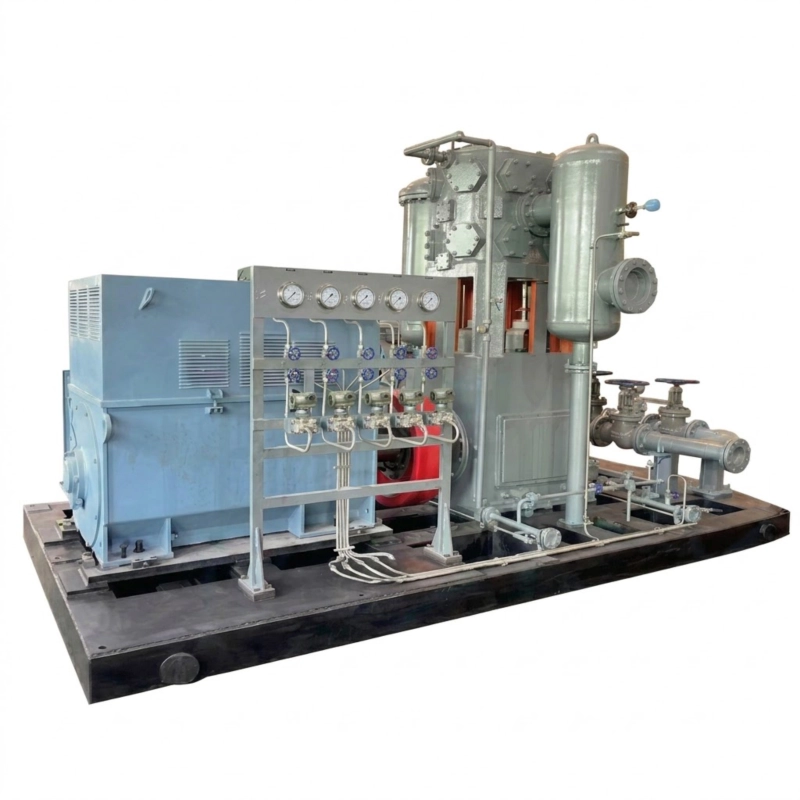
ZW-30/7-12 Oil-Free Oxygen Compressor
ZW-30/7-12 100% oil-free oxygen compressor (1800 Nm³/h, 12 bar). Mega-capacity booster for cryogenic ASU and steel mills. API618 & EIGA compliant.
1. The Macro-Economics of Mega-Scale Gas Compression & Product Overview
In the vanguard of modern heavy industrial manufacturing and global energy processing, the scale of production has reached unprecedented magnitudes. The shift away from decentralized, logistics-heavy liquid gas deliveries toward massive, localized on-site gas generation has fundamentally restructured the economics of mega-plants. Sprawling Cryogenic Air Separation Units (ASU) and colossal Vacuum Pressure Swing Adsorption (VPSA) facilities now dominate the landscape of mega-scale steel mills, massive chemical refineries, and cutting-edge coal gasification plants. However, these gargantuan generators frequently output high-purity oxygen at intermediate pressures—typically around 0.7 MPa (7 bar). To weaponize this enormous volume of gas for violently aggressive industrial applications, such as mega-blast furnace enrichment or extremely high-pressure chemical reactor oxidation, an absolute titan of intermediary compression technology is required.
Enter the ZW-30/7-12 Oil-Free Oxygen Compressor. This machine represents the absolute zenith of reciprocating compression technology; it is the immovable beating heart of the world’s most demanding centralized industrial pipeline networks. Engineered from the ground up as an extreme-duty, mega-capacity pipeline booster, the ZW-30/7-12 is meticulously calibrated to receive an astronomical volume of 0.7 MPa (7 bar) gas directly from upstream generation plants and thrust it into the facility’s main utility grid at an unyielding, relentless discharge pressure of 1.2 MPa (12 bar). What truly separates this proprietary architectural marvel from conventional market offerings is its staggering volumetric throughput capability. It seamlessly and continuously processes a breathtaking 30 Normal cubic meters per minute (30 Nm³/min), which equates to an immense 1800 Nm³ per hour or an unbelievable 43,200 Nm³ per standard 24-hour operational cycle.
Moving this sheer, violently dense volume of gas requires exceptional thermodynamic management, unparalleled cast-iron structural rigidity, and uncompromising metallurgical purity. By completely eliminating hydrocarbon-based oil lubrication from the compression cylinders through highly advanced PTFE composite sealing technologies and uncompromising physical structural isolation, this unit guarantees 100% pure, uncontaminated gas delivery. This absolute purity satisfies the most stringent regulatory mandates governing the metallurgical, aerospace, and high-stakes petrochemical sectors, entirely eliminating the catastrophic, existential risks associated with oxygen auto-ignition. For plant operators and global procurement directors, deploying the ZW-30/7-12 represents a highly strategic economic maneuver: eliminating the bottlenecks of mid-pressure gas, slashing the operating expenditures (OPEX) associated with running multiple smaller, inefficient compressors in parallel, and securing a single, highly reliable, heavily armored conduit for all heavy-duty pneumatic energy.
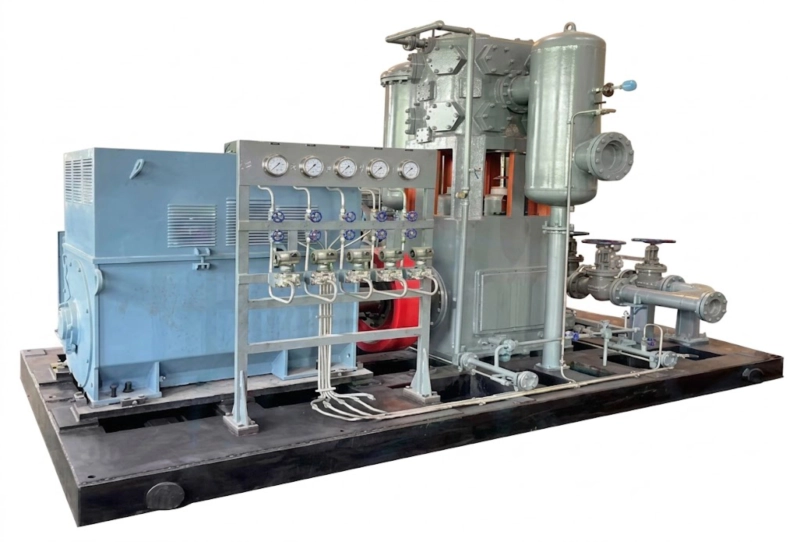
Figure 1: The ZW-30/7-12 Heavy-Duty Assembly – Delivering a relentless 1800 Nm³/h continuous flow for global industrial mega-projects.
2. Exhaustive Technical Specifications & Operating Envelope
Precision mechanical engineering dictates that a heavy machine’s capabilities must be perfectly mathematically mapped to the facility’s thermodynamic and volumetric demands. The following highly comprehensive technical parameters define the standard operational envelope of the ZW-30/7-12 model. Designed for extreme-duty, continuous 24/7/365 heavy operation, this unit is built to strictly adhere to international API618 design codes for reciprocating equipment and EIGA IGC 10/07/E rigorous safety mandates for high-pressure oxygen service.
| Technical Parameter | Nominal Value / Engineering Specification |
|---|---|
| Model Designation Architecture | ZW-30/7-12 (Mega-Capacity Vertical High-Pressure Series) |
| Approved Compression Mediums | Pure Oxygen (O₂), Pure Nitrogen (N₂), Argon, High-Purity Synthesizing Gas |
| Volumetric Flow Rate (Capacity) | 30.0 Nm³/min (1800 Nm³/hour) – Uninterrupted Continuous Duty |
| Nominal Suction (Inlet) Pressure | 0.7 MPa (7.0 bar / approx. 101.5 psi) – High-Pressure ASU matched |
| Target Discharge Pressure | 1.2 MPa (12.0 bar / approx. 174.0 psi) |
| Kinematic Frame Architecture | Heavy-Duty Z-Type Vertical Layout, massively double-acting cylinder configuration |
| Lubrication Integrity | 100% Oil-Free (Utilizing multi-stage aerospace-grade PTFE composite seals) |
| Thermodynamic Management | Industrial Mega-Capacity Shell-and-Tube Water Cooling (Strict closed-loop required) |
| Motor Power (Nominal Requirement) | 132 kW to 160 kW (Dynamically calculated based on extreme load specific gravity) |
| Crankshaft Rotational Speed | Ultra-Low Speed Design (Typically 300 – 380 RPM to mitigate massive kinetic wear) |
| Safety & Manufacturing Compliance | API618 compliant design, EIGA IGC 10/07/E certified, ISO 9001:2015, CE Directive Compliant |
Critical Thermodynamic Sizing Notice: The specifications detailed above represent our highly standardized, heavy-duty off-the-shelf ZW-30/7-12 configuration based on standard atmospheric conditions. Because gas density and severe compression ratios are deeply affected by real-world environmental physics, actual site performance may fluctuate marginally based on your specific altitude above sea level, ambient barometric pressure, and the maximum extreme summer temperatures of your facility. We absolutely mandate a direct consultation with our technical department to generate a verified, site-specific thermodynamic performance curve prior to final B2B procurement.
3. The Deep Physics and Mechanics of Mega-Volume Thermodynamics
Mechanically displacing 30 cubic meters of dense, 7-bar gas every sixty seconds continuously over a grueling 24-hour cycle demands extraordinary volumetric displacement and utterly flawless gas flow dynamics. At this breathtaking scale, the fundamental principles of Boyle’s Law, Charles’s Law, and fluid dynamics become hyper-amplified. The ZW-30/7-12 systematically overcomes the immense kinetic, structural, and thermal challenges of this mass flow rate by utilizing an oversized, deeply ribbed, vibration-absorbing cast-iron Z-frame crankcase. This monolithic, massively heavy structure serves as the rigid, immovable anchor against the intense, violently pulsating reciprocating forces generated by the enormous 132 kW to 160 kW main drive motor.
To successfully achieve the 1.2 MPa (12 bar) final discharge pressure smoothly from a 0.7 MPa (7 bar) baseline without generating catastrophic, localized heat pockets, the system employs highly specialized, oversized-bore, double-acting compression cylinders heavily forged from high-tensile stainless steel. Unlike cheap, standard single-acting cylinders that only compress gas on the forward pushing stroke, this highly sophisticated double-acting configuration means that the heavy cylinder is perfectly sealed at both the top and bottom ends. Gas is forcefully inhaled, compressed, and expelled on both the upward and downward strokes of the massive piston assembly. As the piston drives downward, it violently compresses gas in the lower chamber while simultaneously drawing in a fresh rush of gas into the upper chamber, and vice versa. This mechanical architectural masterpiece effectively doubles the volumetric efficiency and continuous throughput of the machine without enlarging the physical horizontal footprint of the compressor skid.
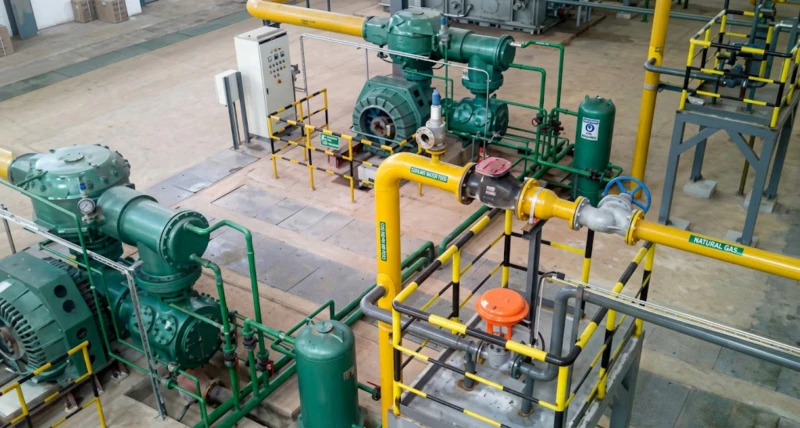
Figure 2: Real-world heavy operational deployment explicitly demonstrating the massive structural rigidity, thick-walled steel construction, and large-bore piping arrays strictly required to safely handle the immense turbulence of 1800 Nm³/h gas flows.
The mega-volume thermodynamic cycle unfolds in a highly orchestrated, micro-second perfect sequence. Dense gas resting at 0.7 MPa is forcefully drawn from the upstream high-pressure ASU buffer tank through incredibly expansive main compression manifolds. This is facilitated by specialized, high-dynamic-response multi-concentric valve assemblies that snap open instantly to maximize the massive swept volume. These valves are explicitly and mathematically engineered to completely eliminate internal flow turbulence (destructive eddy currents) and minimize parasitic pressure drop during the inhalation phase. The heavy-duty steel pistons, precision-guided by ultra-wide, anti-galling carbon-filled PTFE guide rings, drive relentlessly into the gas chamber. Because no liquid oil is permitted within the cylinders, the system relies entirely on these advanced, self-lubricating composite rings sliding seamlessly against the mirror-honed 304/316L stainless steel bore liners to create a hermetic, absolute high-pressure seal capable of safely containing the explosive 12 bar force.
Unforgiving adiabatic physics dictates that compressing 1800 Nm³/h using a massive 160 kW energy source generates immense, fundamentally hazardous thermal energy (the heat of compression). If left unchecked for even a few moments, this extreme heat would rapidly expand the PTFE rings beyond their tight geometric tolerances, causing immediate, catastrophic mechanical seizure. Therefore, the superheated compressed gas is instantly expelled through large-diameter discharge manifolds and thrust violently into industrial-scale, continuous-flow water-cooled heat exchangers. This aggressive, highly calculated inter-cooling and after-cooling ensures the massive thermal energy is violently stripped away from the gas stream. The gas is forced to exit the system completely stabilized and well below the 130°C absolute safety limit mandated by EIGA, comprehensively and totally neutralizing any auto-ignition risk before it enters the factory’s main distribution pipeline.
4. Advanced Material Science & Metallurgy for Extreme Reactive Environments
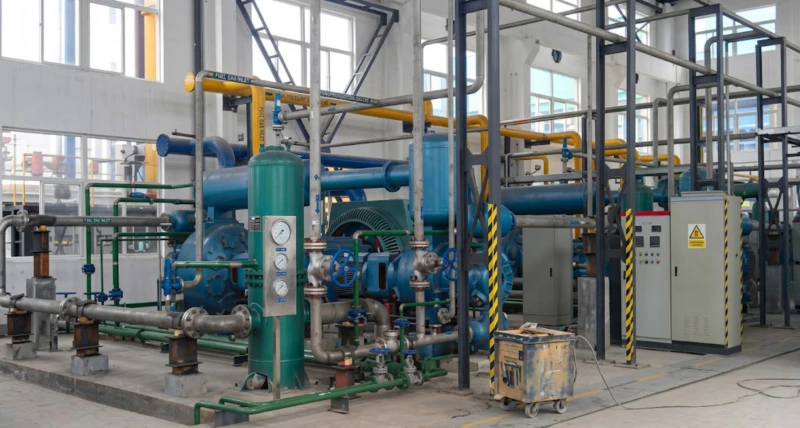
Figure 3: Close-up of the massive foundational structural design and the extremely high-grade, totally oxidation-immune stainless steel manifolds required to safely transport an astounding 30 Nm³/min of highly reactive gas.
To successfully and safely withstand the relentless mechanical rod loads, extreme frictional forces, and the intensely abrasive gas flow velocities associated with a continuous 1800 Nm³/h operation at 12 bar, standard industrial materials are entirely, dangerously inadequate. When dealing with highly dense, pure oxygen at these elevated pressures, the gas velocity itself becomes a significant hazard; if microscopic particles strike a standard carbon steel surface at high speeds, particle impingement ignition can instantaneously occur. Any compromise in material metallurgy can lead to rapid internal oxidation, severe abrasive wear, and ultimately, catastrophic plant fires. Our proprietary ZW-30/7-12 relies heavily on a highly classified matrix of carefully selected aerospace-grade alloys and microscopic-precision CNC machining:
- Massive Large-Bore 304/316L Stainless Steel Cylinders: The massive cylinder blocks are not cast iron; they are heavily forged from solid blocks of premium medical-grade 304 or 316L austenitic stainless steel. This guarantees absolute, chemical immunity to oxidation against the high-flow pure oxygen, completely preventing internal rust flaking that would otherwise instantly destroy the delicate PTFE piston seals. Furthermore, the internal bores undergo multi-stage CNC boring and specialized diamond honing to achieve a microscopic mirror-finish (Ra < 0.4 µm), profoundly slashing frictional heat generation.
- Aerospace-Grade PTFE Matrix Seals: Because liquid boundary lubrication (oil) is strictly and legally prohibited under EIGA rules, our proprietary piston rings, extra-wide rider bands, and high-pressure rod packings are fabricated from an advanced, highly guarded matrix of Polytetrafluoroethylene (PTFE), structurally reinforced with aerospace carbon fiber, bronze powder, and temperature-resistant glass compounds. These unique composite rings maintain microscopic tight seals against the large bore walls while enduring immense heat, providing thousands of hours of self-lubricating, wear-resistant performance that vastly outclasses standard virgin Teflon.
- Mega-Throughput PEEK Valve Assemblies: The immense gas valves act as the lungs of the compressor, snapping open and shut violently millions of times a month. Traditional 420 stainless steel valves shatter rapidly under these massive flow rates due to severe high-cycle fatigue. We employ oversized, highly responsive valve plates machined from raw PEEK (Polyether ether ketone)—an advanced semi-crystalline thermoplastic polymer that offers incredible flexural fatigue resistance, high impact strength, and zero reactivity to pure oxygen. This ensures the valves maintain perfect airtight volumetric sealing without ever succumbing to flutter, galling, or cracking.
- Massive Nodular Cast Iron Foundation: The foundational crankcase is poured from incredibly high-density nodular cast iron (ductile iron) and subjected to rigorous, multi-day thermal stress-relief annealing in massive industrial ovens. This creates a monolithic, hyper-rigid anchor that effortlessly absorbs the violent kinetic shockwaves and alternating dynamic rod-load forces generated by the 160 kW powertrain, ensuring the entire mega-compressor skid remains utterly stable and dimensionally true for decades of punishment.
5. Core Operational Advantages and Total Cost of Ownership (TCO) Annihilation
In heavily capital-intensive industries, mega-equipment must be ruthlessly evaluated not just on its initial purchase price, but on its true Total Cost of Ownership (TCO) across a grueling 15-to-20-year lifecycle. The ZW-30/7-12 is holistically engineered from the drawing board to systematically dismantle the traditional OPEX burdens associated with large-scale gas compression, offering five highly distinct operational advantages that directly impact the plant’s bottom line profitability.
100% Oil-Free EIGA Purity Guarantee
We mandate absolute, zero compromise on gas purity. The strict structural separation utilizing an elongated API-standard distance piece between the heavily lubricated lower crankcase and the highly volatile upper compression cylinders ensures that the 1800 Nm³/h gas stream remains entirely immune to hydrocarbon aerosol contamination. This totally eliminates the need for highly expensive, constantly replaced downstream coalescing filters and massive carbon towers, saving huge consumable costs while aggressively protecting highly sensitive downstream plant catalysts.
Dynamic VFD Load-Matching Intelligence
The unit seamlessly and beautifully integrates with top-tier mega-capacity Variable Frequency Drives (VFD). Instead of blindly running the massive 160 kW motor at 100% speed regardless of actual plant demand, the intelligent PLC dynamically scales the compressor’s RPM up or down in real-time to perfectly match the downstream pipeline consumption. This entirely eliminates wasteful gas venting to the atmosphere and slashes annual electrical OPEX by tens of thousands of dollars, yielding an incredibly rapid ROI on the VFD hardware.
Space-Saving Vertical Z-Type Footprint
Unlike sprawling, massive horizontal opposed (balanced-opposed) mega-compressors that consume vast amounts of highly valuable factory floor space, our high-capacity unit leverages an exceptionally intelligent vertical Z-type architecture. This vertical stacking of the massive double-acting compression stages allows aging facilities to achieve massive 1800 Nm³/h capacity upgrades within tightly confined, pre-existing utility rooms, drastically reducing the massive civil engineering costs normally associated with facility expansion.
6. Extreme Industry 4.0 Automation, SCADA Integration, and Predictive Diagnostics
Relying on manual, human operator oversight for a heavy machine moving an astonishing 1800 cubic meters of highly reactive, 12-bar high-pressure oxygen per hour is an utterly unacceptable safety risk in modern mega-plants. The ZW-30/7-12 is rigorously governed by a state-of-the-art, highly fortified Industry 4.0 architecture, centered entirely around a premium, ultra-high-speed programmable logic controller (typically utilizing the renowned Siemens S7-1500 series or equivalent top-tier ABB digital hardware). This digital brain provides a fully bilingual (English/Russian) high-definition touchscreen HMI interface for intuitive, highly data-rich interaction.
The central PLC is constantly fed live, micro-second data from a dense, highly accurate array of industrial sensors. High-precision RTDs (Resistance Temperature Detectors) monitor gas temperatures down to the tenth of a degree at every single discharge stage, as well as tracking cooling water inlet/outlet temperatures. Industrial pressure transmitters constantly poll the high-pressure ASU inlet pressure, inter-stage gas pressures, the final 12-bar discharge pressure, and the critical crankcase oil pressure. This sensor matrix enables a highly sophisticated multi-tiered safety protocol. Tier 1 is the “Pre-Alarm” state: If a parameter deviates slightly from normal, the HMI triggers a loud alert and logs a timestamped code, allowing proactive maintenance without stopping production. Tier 2 is the “Automated Emergency Shutdown (ESD)”. If parameters severely breach critical EIGA limits (e.g., gas temp > 130°C), the PLC instantaneously kills main power to the 160 kW motor, activates massive pneumatic blowdown valves to dump trapped gas, and completely mechanically isolates the machine to prevent fire propagation.
Furthermore, the entire electrical system is fully SCADA (Supervisory Control and Data Acquisition) ready out of the box. By utilizing standard industrial communication protocols such as Modbus TCP/IP, Profinet, or RS485 RTU, the compressor skid seamlessly integrates into the mega-plant’s higher-level Distributed Control System (DCS). This grants central control room operators total visibility and remote command capability from kilometers away. Advanced options include mounting Bently Nevada-style highly sensitive vibration sensors on the crosshead guides and main bearing housings, allowing sophisticated predictive maintenance algorithms to analyze vibration harmonics and alert operators to bearing wear months before a mechanical failure can ever occur.
7. Deep-Dive Industry Use Cases & Mega-Plant Application Scenarios
The unique, powerful intersection of a 12-bar discharge pressure and an immense 1800 Nm³/h continuous flow rate makes the ZW-30/7-12 the absolutely premier solution for completely eliminating critical gas supply bottlenecks in the world’s largest, most demanding, high-stakes industrial environments.
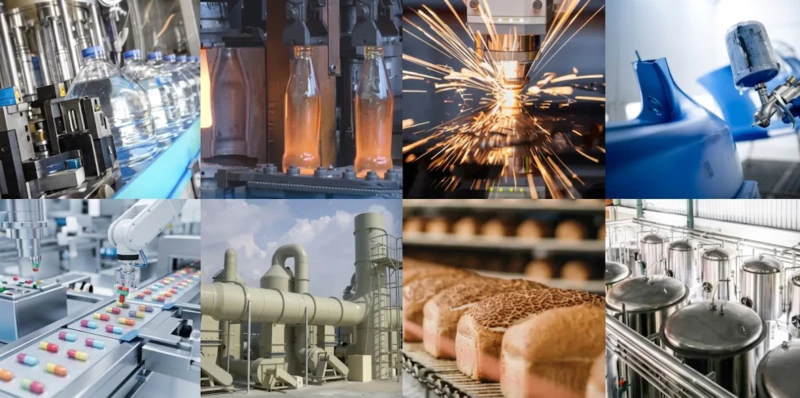
Figure 4: The ZW-30/7-12 serving as the unrelenting heart of a centralized, multi-kilometer high-pressure pipeline distribution network in a sprawling petrochemical refinery.
Case Study A: Mega-Scale Steel Mills & Basic Oxygen Furnaces (BOF)
The Extreme Challenge & Solution: In a massive modern 10-million-ton integrated steel plant, the Basic Oxygen Furnace (BOF) relies heavily on the supersonic injection of absolutely massive volumes of pure oxygen to rapidly oxidize and remove carbon impurities from the molten pig iron. The plant’s high-pressure cryogenic Air Separation Unit (ASU) generates tens of thousands of cubic meters of oxygen, but at a pipeline pressure of 0.7 MPa, which lacks the extreme kinetic energy required to deeply penetrate the thick molten slag layer. The ZW-30/7-12 acts as the ultimate plant booster. Deployed in massive parallel banks, these compressors take the bulk oxygen from the ASU and violently thrust it into the steel plant’s main heavy-duty lance manifold at 12 bar. This extreme high pressure guarantees a continuous, violently energetic, and completely uninterrupted smelting operation that maximizes daily steel tonnage output while utterly eliminating the risks of oil-induced explosions within the highly volatile lancing system.
Case Study B: Heavy Petrochemical Coal Gasification & Syngas Production
The Extreme Challenge & Solution: In the advanced petrochemical sector, particularly in coal-to-liquids (CTL) or coal gasification plants, massive reactors require an immense, continuous supply of high-pressure pure oxygen to partially oxidize pulverized coal and create valuable syngas (synthesis gas). These reactors operate at extremely high pressures and cannot tolerate even a drop in oxygen feed or the introduction of lubricating oils, which would poison the highly expensive synthesis catalysts. The ZW-30/7-12 acts as the highly reliable baseload compressor, effortlessly taking 7-bar ASU gas and boosting it to 12 bar at a rate of 1800 Nm³/h per machine. It provides a flawless, unwavering wall of high-pressure, 100% oil-free oxygen, ensuring the gasification reactors maintain perfectly stable operating temperatures and maximum syngas yield yields year-round.
8. Global Procurement, Complex Logistics, and Heavy Site Civil Engineering
Executing a successful procurement strategy for an 1800 Nm³/h, 160 kW machine requires exact engineering diligence, extending far beyond simply signing a standard purchase order. The physical installation of the ZW-30/7-12 requires strict, heavy-duty site preparation. When dealing with a massive reciprocating mass of heavy steel pistons driven violently by a 160 kW motor, the fundamental engineering focus shifts radically from static weight to immense dynamic rod loads and highly destructive low-frequency vibration.
Proper, heavy civil engineering preparation is absolutely mandatory. The machine cannot simply be bolted to a standard warehouse floor. It strictly requires a deeply excavated, dedicated, vibrationally isolated reinforced concrete foundation block. During the initial procurement phase, our senior engineering team provides exhaustive, dimensionally accurate civil foundation CAD blueprints. The concrete block must be poured precisely, incorporating deep-set, heavy-duty J-style anchor bolts. The mass of the concrete block is mathematically calculated by our engineers to be typically 3 to 5 times the total static weight of the entire massive compressor skid, an immense mass required to effectively absorb and completely nullify the low-frequency kinetic vibrations that would otherwise destroy the surrounding facility.
For global logistics, our standard manufacturing lead time is exceptionally lean for equipment of this titanic scale—averaging 90 to 110 days from final order confirmation to comprehensive Factory Acceptance Testing (FAT). To guarantee zero downtime over the machine’s multi-decade lifecycle, we strongly advise international clients (especially in remote regions like the CIS, interior South America, or the Middle East) to purchase our “5-Year Turnkey Operational Spare Parts Kit” concurrently. By shipping highly dense, easily storable consumable parts (PTFE rings, PEEK valves, packings) inside the original heavy-timber crating with the main compressor, clients entirely bypass all future international shipping costs, bureaucratic customs hold-ups, and the highly costly delays of reactionary cross-border procurement cycles.
9. Strategic Value Comparison vs. Legacy Western Monopoly Brands
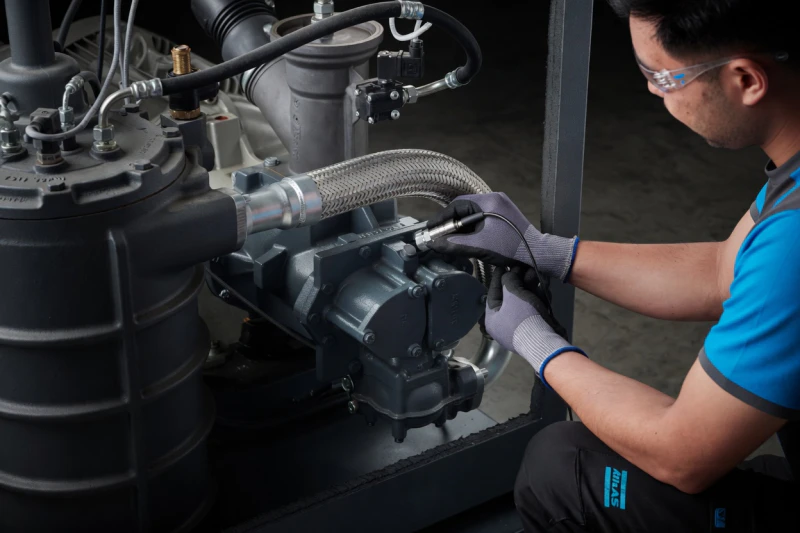
Figure 5: Intelligently designed, fully accessible top-mounted valve covers drastically reduce scheduled downtime, massively lowering overall lifecycle OPEX.
Astute Chief Engineering Officers, Plant Managers, and global procurement directors are rapidly recognizing that paying 300% to 500% premiums for a legacy brand name decal does not mathematically equate to better thermodynamic performance or higher safety metrics. The ZW-30/7-12 offers a highly competitive CAPEX structure, yielding an extremely fast return on investment (ROI). Furthermore, while legacy European brands frequently quote 12 to 18 months for manufacturing a machine of this sheer size—causing massive, highly destructive delays in critical plant construction projects—our agile manufacturing capabilities deliver the finished, heavily tested skid in under 110 days. Most importantly, long-term OPEX is massively slashed, as we supply factory-direct OEM spare parts at fair, transparent prices, entirely eliminating the monopolistic 400% markups imposed by regional distributors of western brands.
10. Deep-Dive Engineering FAQ: ZW-30/7-12 Mega-Deployment
To fully support rapid, deep engineering evaluation by global EPC firms and plant designers, our senior technical team has exhaustively distilled the ten most critical, highly technical inquiries regarding the deployment of the massive 1800 Nm³/h ZW-30/7-12 compressor system.
1. How does the compressor flawlessly synchronize its massive 1800 Nm³/h intake with a high-pressure ASU without collapsing plant pressure?
2. What are the severe thermodynamic management requirements for hitting 12 bar with a 160 kW motor?
3. How does the elongated distance piece guarantee 100% oil-free purity per EIGA regulations?
4. What is the expected lifespan of the PTFE piston rings under the brutal forces of 1800 Nm³/h flow rates?
5. Can this massive machine be fully winterized for severe cold-climate deployments in the CIS region?
6. How does the automated emergency shutdown (ESD) system specifically protect the facility from fire hazards?
7. Exactly how does integrating a Variable Frequency Drive (VFD) slash long-term OPEX?
8. Why is PEEK (Polyether ether ketone) used for the massive gas valves instead of standard steel?
9. What are the specific civil engineering challenges for anchoring a machine of this sheer size?
10. How do you integrate this compressor into a modern, centralized plant DCS (Distributed Control System)?
Command Your Mega-Plant Capacity with Absolute Reliability
Power your colossal blast furnaces, massive coal gasification reactors, and mega-scale regional distribution networks with the unrelenting 1800 Nm³/h capacity of the ZW-30/7-12. Secure world-class 100% oil-free compression, unbeatable heavy-duty endurance, and highly disruptive factory-direct pricing today.
Request a Factory-Direct Technical Quote
Our dedicated senior engineering team will rigorously review your massive flow requirements and respond within 24 hours with exact sizing data, 3D CAD facility schematics, and fully transparent, highly competitive B2B pricing.