
Master the massive thermodynamic forces and absolute pneumatic purity required to drive continuous, high-yield beverage packaging. Discover how heavy-duty API-618 architectures eliminate hydrocarbon taint and ensure flawless polymer distribution.
In the relentless, hyper-competitive landscape of global beverage manufacturing, production lines operate at staggering velocities, routinely eclipsing 80,000 bottles per hour. Whether packaging purified mineral water, carbonated soft drinks, or sensitive liquid dairy, the modern PET (Polyethylene Terephthalate) bottle is an engineering marvel of lightweight structural integrity. However, transforming a small, dense preform into a rigid, perfectly formed 2-liter bottle in a fraction of a second requires a violent injection of pneumatic energy. As premier heavy-duty compressor engineers at oxygen-compressor-machine.com, we recognize that the beating heart of these megawatt-scale facilities is the 40-bar high-pressure pneumatic utility system.
For EPC (Engineering, Procurement, and Construction) contractors, plant directors, and packaging technologists, selecting the correct compressed air architecture is the single most critical CAPEX decision for a blow molding plant. The 40-bar air literally becomes the inner mold of the food container. Any fluctuation in pressure results in catastrophic material deformation; any microscopic presence of lubricating oil permanently destroys the organoleptic properties (taste and odor) of the beverage. This comprehensive engineering guide dissects the thermodynamics of high-speed polymer stretching, the eradication of hydrocarbon taint, and why deploying heavy-duty, refinery-grade oil-free air compressors is the only sustainable strategy for continuous food-grade production.
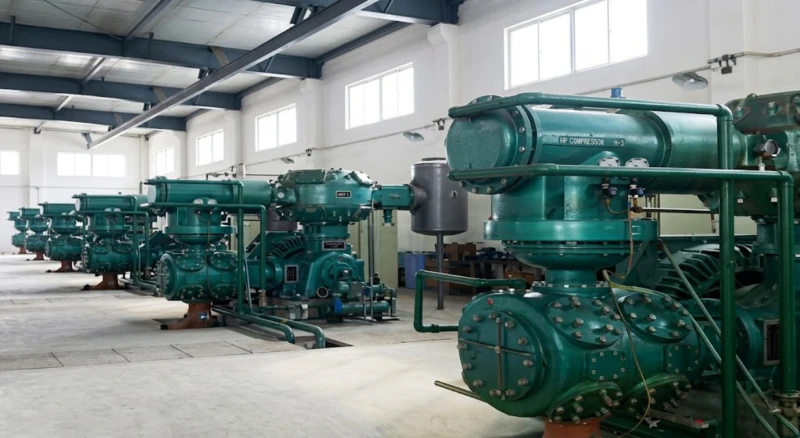
Figure 1: A megawatt-scale array of heavy-duty, 100% oil-free air compressors. These machines act as the continuous thermodynamic engines driving high-speed PET blow molding lines globally.
1. The Thermodynamics of High-Speed Polymer Distribution
To engineer the pneumatic supply, we must first analyze the physics of the blow molding cycle. When a heated PET preform (typically conditioned to 105°C – 115°C) enters the mold, it undergoes Biaxial Orientation. A mechanical stretch rod drives the preform downward to create axial length, while a massive pulse of 40-bar air expands it outward to create hoop (radial) diameter. This biaxial stretching aligns the polymer chains, exponentially increasing the bottle’s mechanical strength and gas barrier properties (vital for keeping carbonated drinks fizzy).
The aerodynamic flow rate required during this expansion is immense. The compressed air must achieve a specific flow coefficient ($C_v$) to fill the mold in roughly 0.1 to 0.2 seconds. If the upstream 40-bar air compressor network suffers from capacity lag or excessive pressure drop during this instantaneous peak demand, the polymer bubble will expand unevenly. This results in microscopic variations in wall thickness. Even a 0.1mm deviation can compromise the bottle’s top-load strength, causing it to buckle when stacked on pallets in the warehouse.
To guarantee perfect material distribution across thousands of bottles per minute, the air compressor network must be integrated with massive, mathematically tuned high-pressure pulsation dampeners and buffer receivers. This ensures the blow molding machine draws from an infinite, unwavering wall of kinetic energy, maintaining absolute pressure stability through millions of consecutive cycles.
2. Eradicating Hydrocarbon Taint: The ISO 8573-1 Class 0 Mandate
While pressure stability guarantees structural integrity, pneumatic purity guarantees food safety. The 40-bar air injected into the preform makes direct, pressurized contact with the interior surface of the final food container. Standard industrial air compressors rely on hydrocarbon-based lubricating oils for piston or screw sealing. Under extreme adiabatic compression heat, this oil vaporizes into sub-micron aerosols.
If 40-bar air containing even parts-per-million (PPM) of oil vapor enters the hot PET preform, the hydrocarbons instantaneously embed into the polymer matrix. This contamination is permanent. Once the bottle is filled with purified water or a delicately flavored beverage, the embedded oil leaches out, causing severe organoleptic failure—altering the taste, odor, and clarity of the product, leading to devastating consumer recalls and brand destruction.
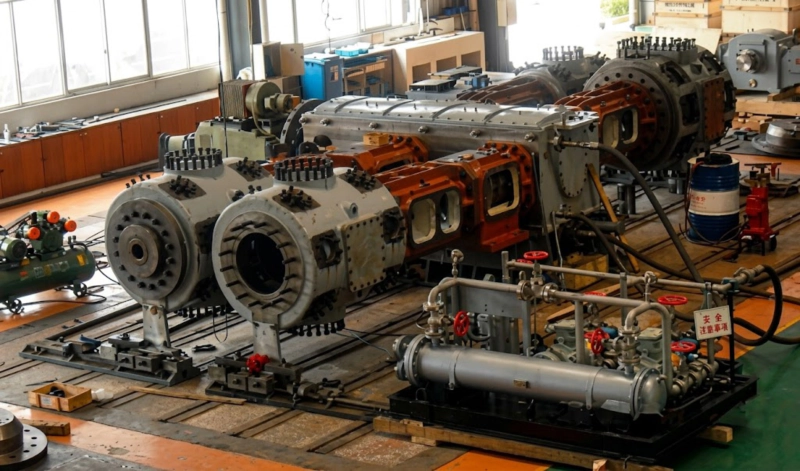
Figure 2: Rigorous Factory Acceptance Testing (FAT). Before a compressor is certified for food-grade beverage production, it must pass stringent particulate and vapor emission tests to guarantee absolute ISO 8573-1 Class 0 oil-free purity.
To completely eradicate this threat, premium beverage plants strictly deploy 100% Oil-Free Reciprocating Air Compressors. By leveraging advanced tribology—specifically filled PTFE (Polytetrafluoroethylene) rider rings and dry-running piston seals—these machines achieve extreme pressures without a single drop of lubrication in the compression chamber. This explicitly satisfies the ISO 8573-1 Class 0 standard, providing absolute legal and technical protection against hydrocarbon contamination.
Engineering Truth: Acoustic Pulsation & API-618 Rigor
“A massive 40-bar reciprocating compressor generates severe low-frequency acoustic pulsations. If these pressure waves resonate with the plant’s pneumatic piping network, the resulting vibration will fatigue and shatter the stainless steel headers. We mandate API-618 Design Approach 3 acoustic simulations for all megawatt-scale beverage installations. By mathematically tuning the pulsation dampeners with internal orifice plates and choke tubes, we trap the acoustic energy at the compressor, delivering a perfectly silent, laminar flow of 40-bar air to the blow molding hall.”
3. High-Baseline Energy Recovery Thermodynamics
Compressing atmospheric air to 40-bar consumes an astronomical amount of electrical power, often representing the largest single energy draw in a beverage plant. In early blow molding systems, after the bottle was formed, the 40-bar air was simply exhausted directly into the atmosphere—a catastrophic waste of kinetic energy.
Modern, highly efficient beverage lines now utilize Air Recovery Systems (ARS). Instead of venting to atmosphere, the exhaust valves on the blow molder route the escaping air into a recovery manifold, typically at a baseline pressure of 10-bar to 15-bar. This recovered air is used for low-pressure plant utility (pneumatic cylinders, actuators) or fed back into a specialized secondary booster compressor to be pushed back to 40-bar.
.webp)
Figure 3: Complex pneumatic valving and recovery manifolds. Managing the violent decompression of 40-bar air and routing it for energy recovery requires mathematically tuned, low-differential flow control.
However, feeding 15-bar baseline air into a compressor creates immense mechanical challenges. Because the gas is already in a “dense phase,” the aerodynamic drag through the compressor valves is multiplied, and the continuous high baseline pressure prevents the crosshead pin from achieving mandatory API-618 rod-load reversal. Handling this extreme low-differential boosting strictly requires heavy-duty compressors engineered with specialized tail-rod architectures and mass-dampened poppet valves to prevent catastrophic bearing failure.
4. Cross-Industry Synergies: Refinery Kinematics in Food Production
The mechanical demands of running a blow molding plant 24 hours a day, 365 days a year, at 40-bar, vastly exceed the capabilities of standard commercial air compressors. The engineering solutions that guarantee survival in this environment are actually ported directly from the hazardous petrochemical sector.
The exact same API-618 horizontally opposed (boxer) frame architectures used to balance massive inertial forces when compressing explosive hydrogen in a refinery are deployed to drive advanced injection blow molding machines. Furthermore, the API-618 elongated distance piece—originally designed to prevent toxic gas from entering a crankcase—is used in reverse in beverage plants: physically guaranteeing that crankcase lubricating oil can never migrate along the piston rod into the sterile food-grade air supply. This cross-industry architectural synergy provides beverage producers with unparalleled mechanical longevity and absolute operational peace of mind.
Figure 4: The ultimate result of extreme pneumatic engineering: a pristine, highly automated blow molding line delivering flawless, optically perfect containers at unprecedented speeds with absolute food-safety compliance.
5. The EPC & Plant Manager Procurement Checklist for Blow Molding
When specifying pneumatic utilities for megawatt-scale PET beverage lines, compromising on compressor architecture leads directly to multi-million-dollar production losses and FDA/HACCP violations. Demand the following engineering standards from your equipment vendor:
- ☑
Verified ISO 8573-1 Class 0 Certification: Do not accept “technically oil-free” claims. Demand formal, independent certification (e.g., TÜV) proving the compressor achieves absolute Class 0 zero-oil-vapor emission. - ☑
API-618 Symmetrical Balancing: To prevent the massive 40-bar compressors from destroying their concrete foundations, ensure the kinematics feature horizontally opposed throws engineered for zero primary unbalanced forces. - ☑
High-Baseline Recovery Integration: If your plant utilizes air recovery logic, mandate that the compressor manufacturer provides certified rod-load reversal calculations for high-suction (e.g., 15-bar) dense-phase boosting applications. - ☑
316L Stainless Steel Heat Exchangers: To prevent rust flakes from entering the PET bottle and causing structural stress risers, all high-pressure intercoolers and aftercoolers must feature 316L stainless steel tubes, rejecting standard carbon steel.
By enforcing strict ISO Class 0 purity, adopting rigorous API-618 mechanical architectures, and managing the thermodynamics of air recovery, high-speed beverage facilities can achieve unyielding pneumatic stability. The result is millions of flawless, pristine PET containers, absolute protection of brand integrity, and maximum energy efficiency across the production lifecycle.
Drive Your Blow Molding Lines with Uncompromised Power.
Our elite engineering team specializes in designing, manufacturing, and verifying 100% absolute oil-free, continuous-duty 40-bar air compressors. Tailored specifically for the brutal, high-cycle demands of megawatt-scale PET beverage production and advanced ISBM packaging lines. Do not risk your beverage safety on commercial-grade pneumatics.