
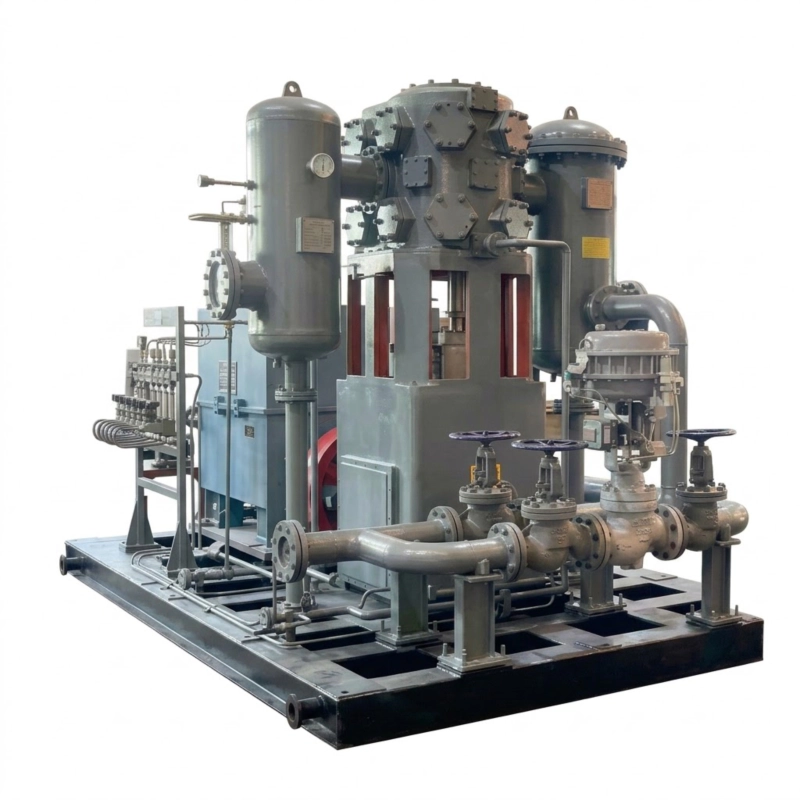
ZW-50/3.5 PSA Oxygen Compressor
Discover the ZW-50/3.5 PSA Oxygen Compressor. Boost 3000 Nm³/h of VPSA oxygen to 35 bar (3.5 MPa). 100% oil-free and EIGA compliant for heavy industry.
1. The Macro-Economics of PSA Oxygen Generation and Heavy Compression
Over the past decade, the global industrial gas sector has witnessed a profound paradigm shift. Traditional, capital-intensive cryogenic Air Separation Units (ASUs) are increasingly being supplemented or replaced by advanced Pressure Swing Adsorption (PSA) and Vacuum Pressure Swing Adsorption (VPSA) technologies for applications requiring oxygen purities between 93% and 95%. These modular onsite generation systems utilize synthetic zeolite molecular sieves to separate oxygen from atmospheric nitrogen, dramatically reducing localized energy consumption and eliminating the complex logistics of liquid oxygen transport. However, this technological evolution presents a distinct mechanical bottleneck: PSA and VPSA systems inherently produce oxygen at relatively low pressures, typically ranging from 0.02 MPa to 0.5 MPa. To utilize this gas in heavy industrial applications—such as injecting it into a blast furnace, feeding a high-pressure ozone generator, or filling localized storage buffer tanks—the gas must be safely and forcefully compressed to a medium-high pressure of 3.5 MPa (35 bar).
Bridging this exact pressure gap at a massive industrial scale is the sole design mandate of the ZW-50/3.5 PSA Oxygen Compressor. Processing a volumetric flow rate of 50 Normal cubic meters per minute (equivalent to 3000 Nm³ per hour) requires a compressor of exceptional mechanical fortitude. When handling pure oxygen at these volumes, the compression dynamics become exponentially hazardous. As the gas is squeezed from a low-pressure state to 35 bar, localized adiabatic temperatures spike, and the gas velocity increases dramatically. If the compressor introduces even a microscopic trace of hydrocarbon-based lubricating oil into this high-pressure, oxygen-rich environment, the resulting chemical reaction is an instantaneous, catastrophic detonation.
To mathematically eliminate this risk and provide decades of uninterrupted service, the ZW-50/3.5 is built strictly to comply with EIGA (European Industrial Gases Association) guidelines for high-pressure oxygen service. The machine leverages a heavy-duty, multi-stage reciprocating architecture constructed from specialized non-sparking alloys and medical-grade stainless steel. By deploying this unit downstream of your VPSA plant, you ensure a continuous, pulsation-free supply of 35-bar oxygen, stabilizing your production line, optimizing your thermodynamic combustion processes, and decisively lowering your facility’s total cost of ownership (TCO) through maximum energy efficiency.
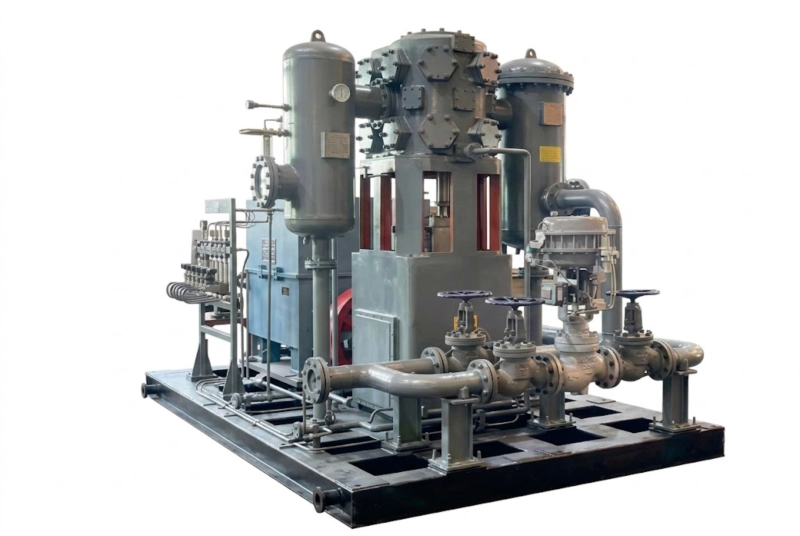
Figure 1: The ZW-50/3.5 Heavy-Duty PSA Oxygen Compressor – Engineered for continuous 24/7 onsite oxygen boosting, transforming low-pressure generator output into a relentless 35-bar industrial supply.
2. Exhaustive Technical Specifications & 35-Bar Operating Envelope
Industrial baseload reliability requires a rigorous alignment between thermodynamic theory and mechanical execution. The ZW-50/3.5 is meticulously calibrated to intercept PSA oxygen output and elevate it across multiple engineered stages. Driven by a massive, high-efficiency induction motor, the compressor manages dynamic kinetic forces through an oversized cast-iron crankcase and precisely balanced reciprocating assemblies. The technical parameters below outline the operational boundaries and strict design standards governing this multi-megawatt-class boosting solution.
| Technical Parameter | Nominal Value / Engineering Specification |
|---|---|
| Model Designation | ZW-50/3.5 (Heavy-Duty VPSA/PSA Booster Series) |
| Approved Compression Medium | Pure Oxygen (O₂), VPSA/PSA Oxygen (93%-95% Purity) |
| Volumetric Flow Rate (Capacity) | 50.0 Nm³/min (3000 Nm³/hour) – Continuous Baseload |
| Nominal Suction (Inlet) Pressure | 0.02 MPa to 0.4 MPa (Adjustable via buffer tank buffering) |
| Target Discharge Pressure | 3.5 MPa (35.0 bar / approx. 507 psi) |
| Compression Stages | 2-Stage or 3-Stage (Customized based on specific inlet pressure) |
| Kinematic Frame & Layout | ZW-Type (Vertical/Horizontal Opposed or specialized inline reciprocating) |
| Lubrication Integrity | 100% Absolute Oil-Free Cylinders (API-618 distance piece isolation) |
| Thermal Management Protocol | Heavy-Wall Shell-and-Tube Industrial Water Cooling |
| Main Drive Motor Power | Approx. 315 kW to 400 kW (Depending on motor efficiency rating) |
| Manufacturing Compliance Codes | API618, EIGA IGC 10/07/E (O2 safety), CE Machinery Directive |
Important Procurement Advisory: The rated capacity of 3000 Nm³/h is calibrated at standard atmospheric conditions. When integrated downstream of a VPSA plant, the actual motor power draw and localized compression ratios are highly sensitive to the exact inlet pressure provided by the oxygen buffer tank. Our engineering team requires the exact maximum and minimum suction pressure values from your PSA provider to custom-machine the cylinder bore diameters, ensuring perfect volumetric efficiency and preventing motor overload.
3. The Kinematic Architecture of the Heavy-Duty ZW-Type Frame
Processing 50 cubic meters of gas every minute requires a foundational structure capable of absorbing massive, alternating dynamic forces. The ZW-50/3.5 is built upon a specialized ZW-Type reciprocating frame. The central crankcase is cast from ultra-dense, premium nodular iron, aged to relieve internal metallurgical stresses before final precision machining. This provides a rigid, vibration-damping bedrock for the entire rotating assembly.
Inside the crankcase, the massive main crankshaft is forged from high-tensile alloy steel, precision-ground, and dynamically balanced to exact tolerances. The connecting rods utilize oversized, hydrodynamic babbitt bearings that are pressure-lubricated by a dedicated internal oil pump. It is crucial to understand that while the compression cylinders are 100% oil-free, the lower crankcase maintains an oil bath strictly to lubricate the heavy crankshaft and crosshead guides. The crosshead mechanism itself is a critical design feature; it absorbs all the severe lateral thrust generated by the rotating crankshaft, ensuring that the piston rod moves in a perfectly straight, linear path into the compression cylinder. This absolute linearity prevents uneven wear on the high-pressure packing seals, which is vital for maintaining gas containment and preventing catastrophic leaks at 35 bar.
4. Uncompromising 100% Oil-Free Sealing & EIGA Compliance
The primary engineering challenge in boosting oxygen to 3.5 MPa is the absolute prohibition of liquid lubricants in the gas path. At 35 bar, oxygen is incredibly reactive. To ensure strict compliance with EIGA IGC 10/07/E safety mandates, the ZW-50/3.5 relies on a highly sophisticated, dry-running mechanical sealing architecture.
To achieve a hermetic seal against the massive cylinder walls without oil, the piston rings, rider rings, and the primary rod packing sets are manufactured from a proprietary, hyper-dense matrix of virgin Polytetrafluoroethylene (PTFE). To prevent the PTFE from melting or extruding under the intense pressure and heat of 3000 Nm³/h operation, it is heavily alloyed with aerospace-grade milled glass fibers and specialized bronze powders. This composite material possesses a remarkable self-lubricating property. As the piston oscillates, microscopic layers of the PTFE blend transfer to the cylinder wall, creating a highly polished, near-frictionless surface capable of containing 35 bar.
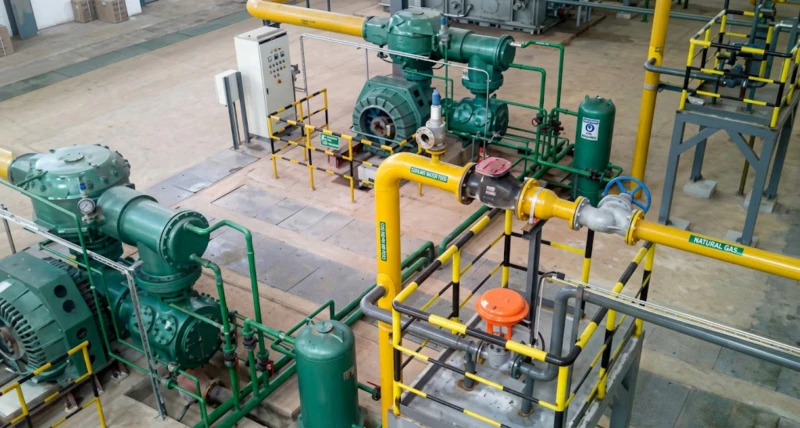
Figure 2: Real-world installation view demonstrating the critical API-618 distance pieces located between the lubricated crankcase and the dry compression cylinders. This physical separation absolutely guarantees that hydrocarbon oil can never migrate upward into the oxygen flow.
Furthermore, to guarantee that the oil splashing inside the lower crankcase never travels up the piston rod and enters the compression chamber, the ZW-50/3.5 features API-618 compliant Double Distance Pieces. These elongated, open-air physical isolation chambers sit between the crankcase and the cylinder. They are equipped with oil wiper rings at the bottom and high-pressure gas packing at the top. Even if a mechanical failure occurs, the design ensures that oil and oxygen will leak harmlessly into this ventilated isolation zone rather than mixing under pressure, structurally averting the possibility of a catastrophic explosion.
5. Advanced Material Science: Combating Particle Impingement Ignition
At a flow rate of 3000 Nm³/h and a pressure of 35 bar, the physical velocity of the oxygen gas traveling through the internal manifolds is extremely high. The greatest operational hazard in this state is “particle impingement ignition.” If standard carbon steel is used for the piping, microscopic flakes of iron oxide (rust) will inevitably form. When the high-velocity oxygen sweeps these particles up, they become incendiary projectiles. If a rust particle strikes a pipe elbow or a valve seat at high speed, the kinetic energy transforms into a spark, instantaneously igniting a metal fire in the oxygen-rich environment that will rapidly melt the entire compressor block.
To completely neutralize this threat, all oxygen-wetted components within the final high-pressure stages of the ZW-50/3.5—including the pulsation dampeners, internal connecting manifolds, and high-pressure intercoolers—are fabricated exclusively from high-grade 316L austenitic stainless steel. The elevated chromium and nickel content of 316L guarantees absolute immunity to oxidation. The internal surfaces are meticulously acid-pickled, passivated, and ultrasonically cleaned during manufacturing, ensuring zero particulate generation and providing a mathematically safe gas path.
The suction and discharge valves represent another critical material challenge. These valves must snap open and slam shut thousands of times per minute against a 35-bar wall of dense oxygen. Standard metallic valve plates suffer from rapid impact fatigue and eventual shattering. The ZW-50/3.5 exclusively employs valve plates machined from virgin PEEK (Polyether ether ketone). This advanced aerospace thermoplastic offers incredible flexural strength, high-temperature resilience, and absolute chemical inertness to oxygen, ensuring years of safe, reliable valve operation without the risk of metallic fragmentation.
6. Thermodynamic Mastery: Multi-Stage Compression and High-Efficiency Water Cooling
Compressing a gas inevitably generates heat, dictated by the laws of thermodynamics (adiabatic heating). If a compressor attempted to boost oxygen from a low PSA output pressure directly to 35 bar in a single stroke, the resulting temperature spike would immediately exceed the auto-ignition threshold of the internal PTFE seals, leading to instantaneous mechanical failure. To strictly control thermal dynamics, the ZW-50/3.5 splits the workload across multiple, sequentially smaller compression stages.
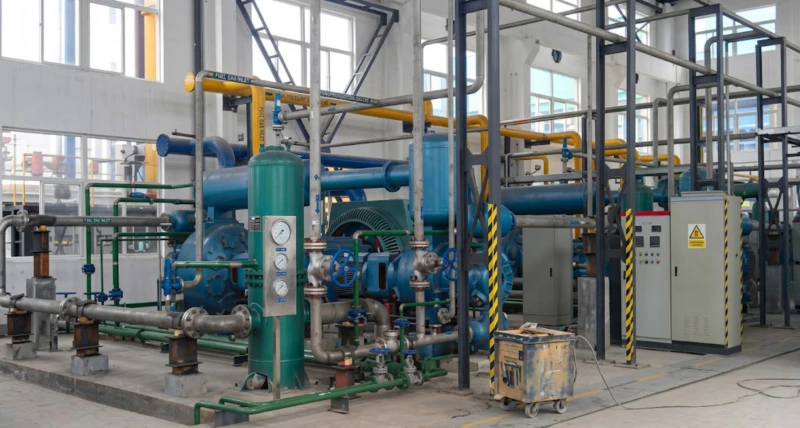
Figure 3: Inter-stage shell-and-tube heat exchangers. By forcing the hot compressed oxygen through a network of 316L stainless steel tubes surrounded by cold circulating industrial water, the gas temperature is drastically reduced before entering the next compression stage.
Between each compression stage, the high-temperature oxygen is routed through massively oversized, heavy-wall shell-and-tube water coolers. These intercoolers actively strip the heat away using a constant flow of chilled industrial facility water. This meticulous thermal management ensures that the oxygen entering the next cylinder is dense and cool, drastically improving the volumetric efficiency of the machine and lowering the overall power draw on the motor. More importantly, this cooling architecture mathematically guarantees that the final discharge temperature of the oxygen never exceeds 130°C, remaining safely below the strict thermal limits mandated by international industrial gas safety boards.
7. Strategic Industrial Synergies: High-Pressure Gases to Advanced Downstream Packaging
The reliable production and compression of high-purity industrial gases often represent just the foundational utility phase of a much larger, complex manufacturing ecosystem. For example, in large-scale pharmaceutical facilities or advanced medical processing plants, the high-purity oxygen generated by PSA systems and boosted by our compressors is frequently utilized in specialized oxidation reactions to produce high-value medical-grade chemical derivatives and highly refined polymers.
To support our clients’ end-to-end vertical integration strategies—bridging the gap between raw gas utility generation and final consumer product packaging—we actively design and deploy specialized polymer processing equipment. For automated manufacturing lines handling pharmaceutical-grade polymers or specialized medical PET resins derived from these oxidation processes, we strongly recommend seamlessly integrating our advanced Blow Molding Machine technology directly into your downstream packaging sector. This state-of-the-art injection stretch blow molding system is the definitive solution for rapidly manufacturing leak-proof, highly sterile, precision rigid pharmaceutical bottles. Integrating this advanced machinery guarantees that the high-value medical chemicals originating from your heavy gas processing facility are securely, hermetically packaged for global distribution without risk of contamination.
8. Industry 4.0, SCADA Integration, and Fail-Safe Automation
Managing 50 Nm³/min of reactive 35-bar oxygen requires decision-making speeds far beyond human capability. The ZW-50/3.5 is governed by an advanced, SIL-rated (Safety Integrity Level) programmable logic controller (PLC), typically standardized on Siemens S7 or Allen-Bradley platforms. This digital brain processes continuous, live micro-second data from a dense array of specialized industrial sensors mounted across the skid. High-precision RTD temperature probes monitor gas heat at every inter-stage junction, while premium pressure transmitters constantly evaluate the suction stability from the VPSA plant and the discharge pressure to the facility pipeline.
To optimize energy consumption, the PLC is directly integrated with a massive Variable Frequency Drive (VFD). As the downstream demand for oxygen fluctuates (e.g., a steel mill furnace varying its injection rate), the VFD dynamically adjusts the rotational speed of the compressor’s main motor. This prevents the machine from constantly running at 100% capacity, dramatically reducing mechanical wear and significantly lowering annual electrical OPEX.
In the event of a severe process anomaly—such as a sudden loss of cooling water pressure, an unexpected spike in discharge temperature, or a downstream pipeline blockage causing overpressure—the PLC instantly activates a hardwired Automated Emergency Shutdown (ESD) sequence. It severs power to the motor, triggers pneumatic blowdown valves to safely vent trapped oxygen, and isolates the machine to neutralize the hazard. Utilizing industrial protocols like Modbus TCP/IP, this entire digital architecture seamlessly integrates into the plant’s centralized SCADA/DCS system for complete remote monitoring.
9. Deep-Dive Industry Use Cases & Strategic Deployment
The robust 3000 Nm³/h capacity and stringent 100% oil-free safety matrix of the ZW-50/3.5 make it the definitive choice for modern industrial facilities transitioning to onsite VPSA/PSA oxygen generation.
Electric Arc Furnace (EAF) Steelmaking
Modern EAF steel mills rely on massive volumes of oxygen lancing to accelerate scrap melting and decarburize the molten bath. The ZW-50/3.5 effortlessly takes low-pressure onsite VPSA oxygen and boosts it to the high pressures required for supersonic injection nozzles, directly increasing steel yield while slashing the costs associated with liquid oxygen truck deliveries.
High-Capacity Ozone Generation
For municipal wastewater treatment and large-scale industrial water purification, ozone is generated by passing high-pressure oxygen through corona discharge tubes. The compressor provides a steady, totally oil-free 35-bar feed, ensuring the delicate electrodes within the ozone generator remain uncontaminated, maximizing ozone yield and extending maintenance intervals.
Figure 4: Strategic deployment of the ZW-50/3.5 inside a large-scale industrial processing facility. The machine acts as the critical bridge, transforming bulk low-pressure generated gas into high-value, high-pressure utility power.
10. Global EPC Procurement, Logistics, and Site Civil Engineering
Executing a successful procurement strategy for a multi-megawatt oxygen booster requires rigorous coordination. Due to the significant dynamic weight and reciprocating inertia of the ZW-50/3.5, substantial site civil engineering preparation is mandatory. Our engineering team provides detailed, highly accurate 3D CAD foundation schematics during the initial design phase. The client’s EPC contractor must pour a dedicated, vibration-isolated reinforced concrete block, typically calculated to be 5 to 7 times the static weight of the compressor skid, utilizing deep-set J-style anchor bolts and high-strength epoxy grout. This foundation absorbs residual low-frequency kinetic forces, ensuring absolute stability for the attached 35-bar piping network.
To ensure zero operational downtime over the machine’s multi-decade lifecycle, we mandate comprehensive Factory Acceptance Testing (FAT) before shipment. We strongly advise international clients to procure the specialized “5-Year Turnkey Consumable Spare Parts Kit” simultaneously. Shipping dense, customized parts—such as bespoke PTFE sealing rings and heavy PEEK valve assemblies—inside the main heavy-timber export crating eliminates future complex border customs delays and expensive emergency air-freight costs, securing continuous facility operation.
11. Executive Technical FAQ: ZW-50/3.5 Operations
To support rapid engineering evaluation by global procurement teams and heavy industry designers, we have detailed the ten most critical technical inquiries regarding the deployment of the ZW-50/3.5 PSA Oxygen Compressor.
1. What is the ideal inlet pressure from the PSA generator for this compressor?
2. How does the multi-stage compression manage the heat generated by boosting to 35 bar?
3. Is this compressor compatible with 93% to 95% VPSA/PSA oxygen purity?
4. What are the foundation requirements for the ZW-type frame?
5. How often do the PTFE piston rings and packing seals need replacement?
6. Can the compressor be integrated into an existing steel mill’s SCADA system?
7. Why is 316L stainless steel used instead of carbon steel for the piping?
8. Does this unit require liquid oil, and how is it kept away from the oxygen?
9. What is the role of the VFD (Variable Frequency Drive) in this specific model?
10. How does the machine react to a sudden downstream pressure spike in the pipeline?
Maximize Your PSA Plant’s True Potential
Transform your low-pressure VPSA and PSA oxygen output into a relentless, high-velocity 35-bar industrial utility stream. Designed for continuous baseload heavy metallurgy and chemical operations, the ZW-50/3.5 delivers 3000 Nm³/h with uncompromising 100% oil-free safety. Secure EIGA-compliant equipment with disruptive factory-direct B2B heavy machinery pricing today.
Request Technical Sizing & Factory Quote
Our dedicated fluid dynamics engineering team will rigorously review your PSA plant’s exact pressure output metrics, required duty cycles, and specific site layout to engineer a highly customized, mathematically verified compressor solution. Expect detailed sizing schematics and full EPC procurement pricing within 24 hours.